Motor skills development Letter Recognition Worksheets for 6-Year-Olds
5 filtered results
-
From - To
Enhance your child's learning experience with our Motor Skills Development Letter Recognition Worksheets designed for 6-year-olds. These educationally crafted worksheets combine essential letter recognition practice with activities that promote fine motor skills. Each worksheet features engaging exercises that require kids to trace, color, and draw, helping them improve hand-eye coordination and muscle control while learning the alphabet. With fun and interactive tasks, these worksheets ensure your child will enjoy mastering their ABCs in an engaging and effective way. Unlock the full potential of early learning with our specialized resources, ideal for building a robust educational foundation.
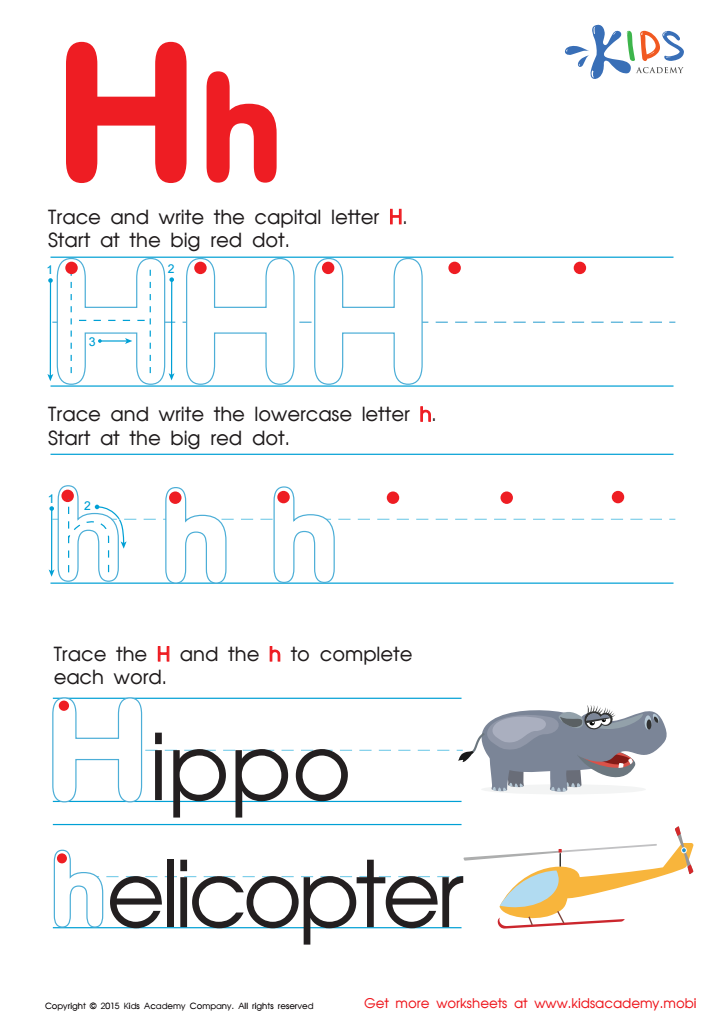
Letter H Tracing Page
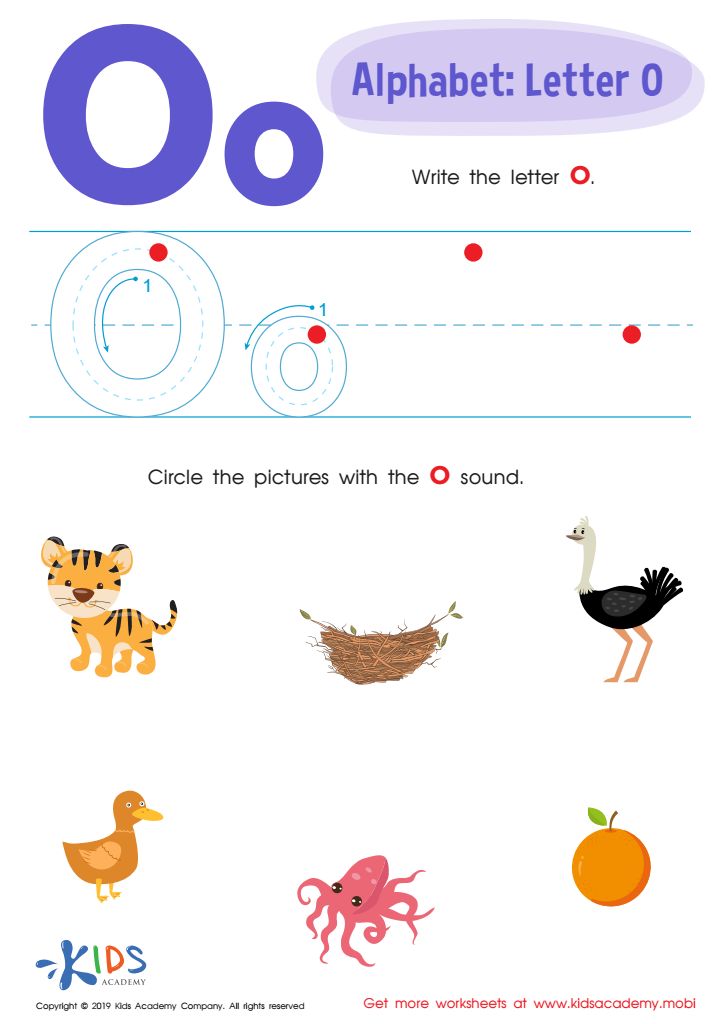
Letter O Tracing Worksheet
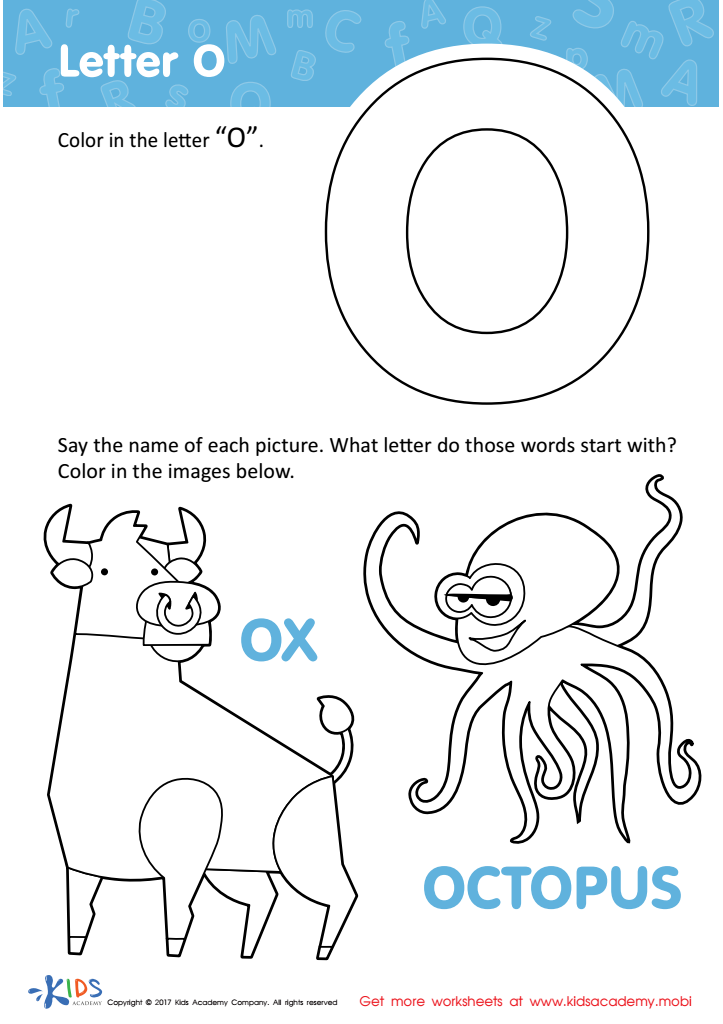
Letter O Coloring Sheet
 Assign to My Students
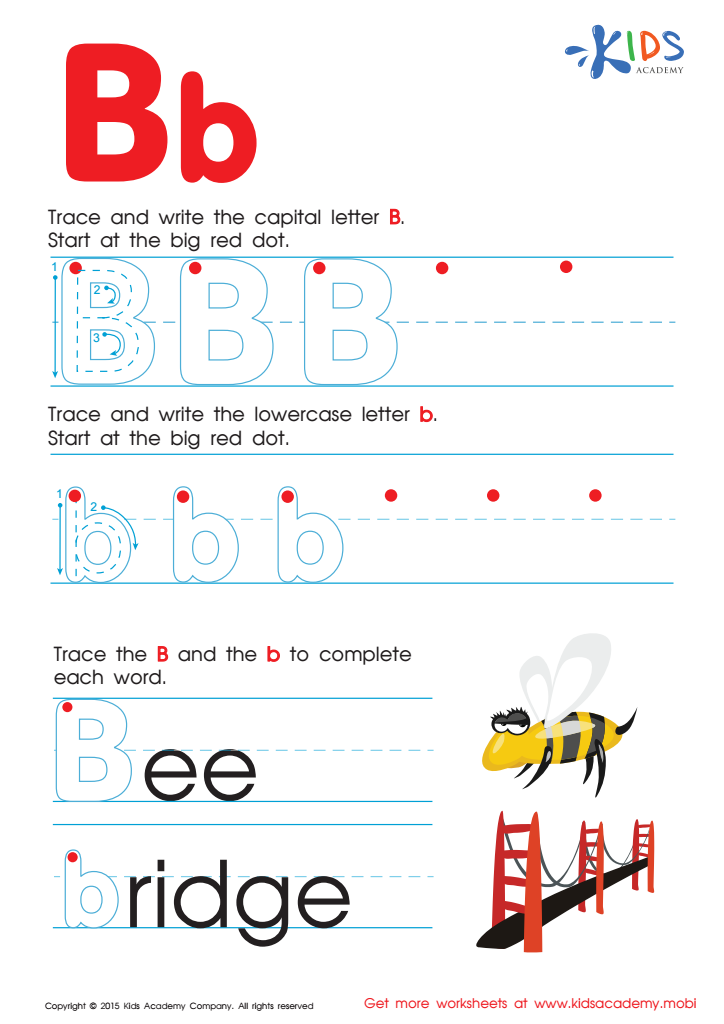
Letter B Tracing Page
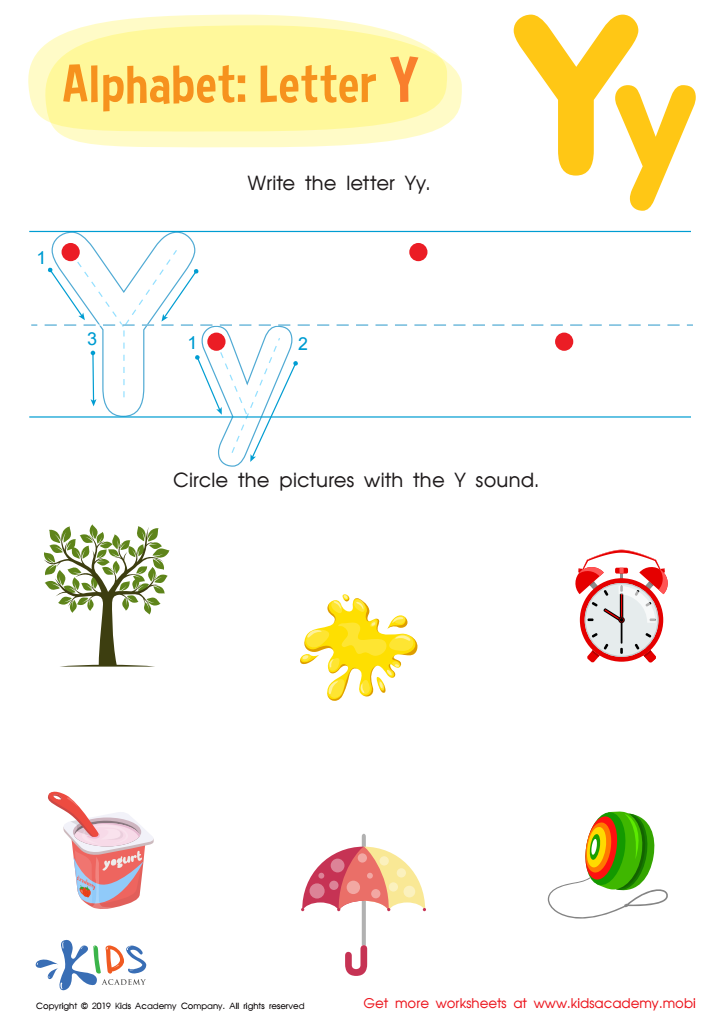
Letter Y Tracing Worksheet








Motor skills development and letter recognition are fundamental aspects of a child's early learning and are vital for their overall academic and life success, especially by the age of 6. Fine motor skills, which involve the coordination of small muscles in the hands and fingers, are crucial for tasks such as writing, buttoning clothes, and using utensils. These skills contribute significantly to a child’s independence and self-confidence. When children practice activities like cutting with scissors or drawing, they enhance their hand-eye coordination and dexterity, laying the groundwork for more complex movements needed in everyday life.
Similarly, letter recognition is a cornerstone of early literacy. By recognizing letters, children begin to understand the relationship between written and spoken language, which is foundational for reading and writing. Early literacy skills acquired through letter recognition not only influence a child's ability to read words but also enhance comprehension and communication abilities as they grow.
Moreover, integrating motor skill activities with letter recognition exercises, such as tracing letters or playing alphabet games, can make learning more engaging and effective. By caring about and fostering these skills, parents and teachers create a supportive environment that promotes cognitive development, school readiness, and lifelong learning enthusiasm. Prioritizing these areas ultimately helps children reach important developmental milestones and sets them on a path to academic success.







