
Phonics enhancement Letter Recognition Worksheets for 6-Year-Olds
3 filtered results
Difficulty Level
Grade
Age
-
From - To
Subject
Activity
Standards
Discover our engaging Phonics Enhancement Letter Recognition Worksheets designed specifically for 6-year-olds! These printable resources help young learners build crucial reading skills through fun activities that reinforce letter identification and phonemic awareness. Each worksheet includes vibrant illustrations and interactive exercises that encourage kids to recognize letters, sound out phonemes, and improve their spelling capabilities. Ideal for classroom use or at-home learning, these worksheets foster a love for reading while enhancing foundational literacy skills. Get your child excited about learning with our educational and engaging letter recognition activities today! Let them explore the world of letters through play and creativity!
Favorites
With answer key
Interactive
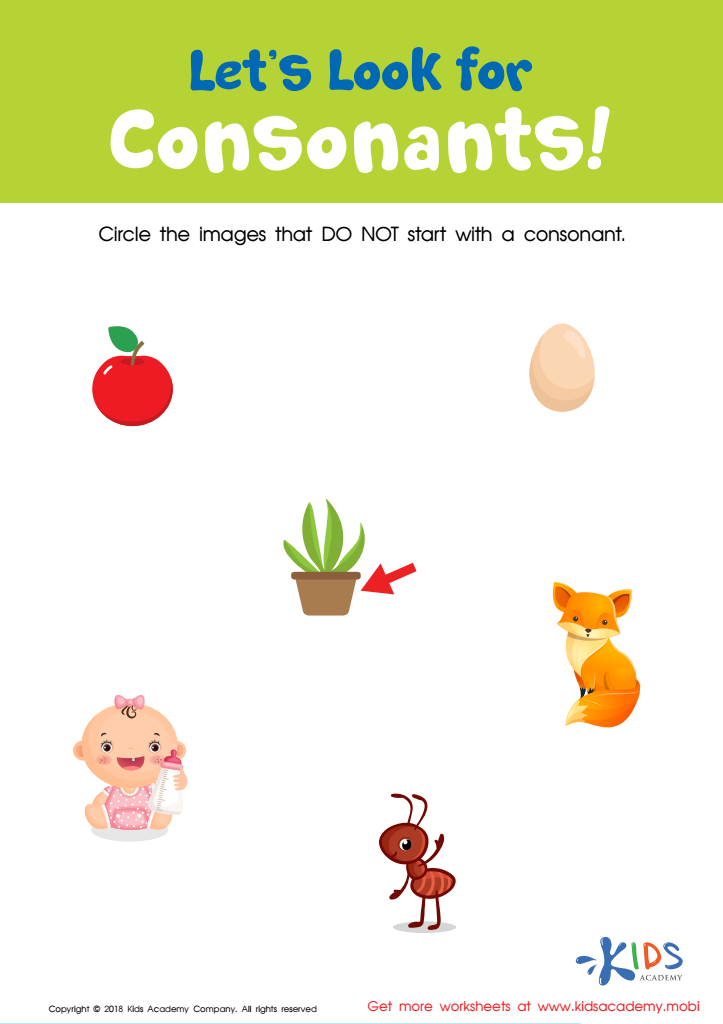
Let's Look for Consonants Worksheet
Help kids learn consonants and words that start with them. Ask them to recite the alphabet, then explain consonants are all letters but the 5 vowels. Use the worksheet to ask them to circle items without a consonant. Emphasize that's 21 consonants.
Let's Look for Consonants Worksheet
Worksheet
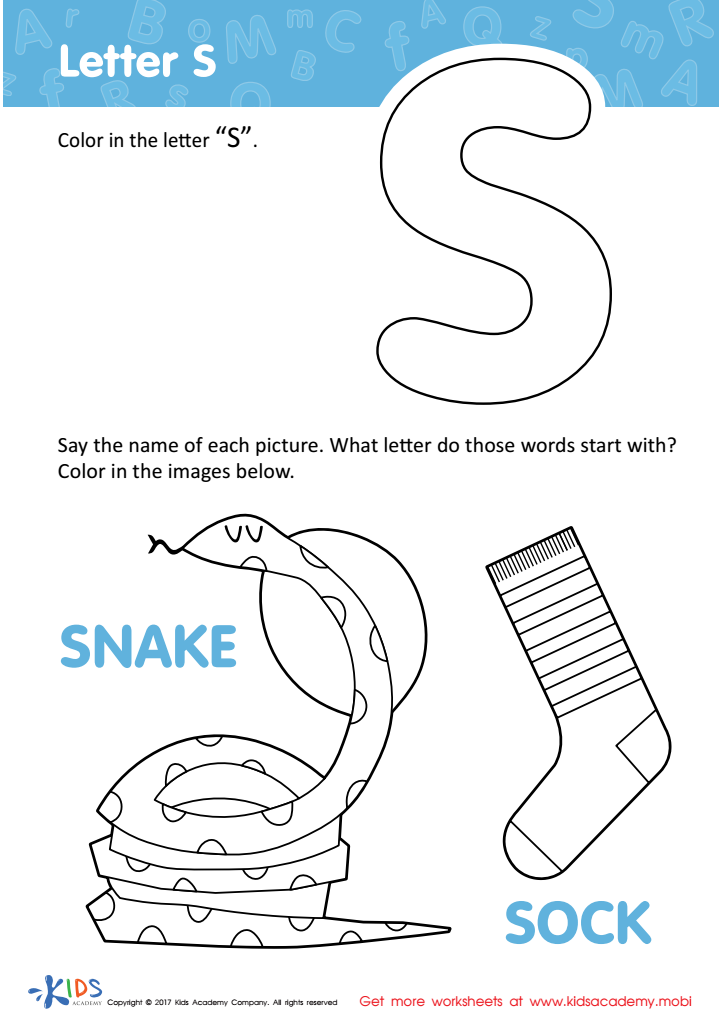
Letter S Coloring Sheet
Help your child practice recognizing the letter "S" and the sound it makes with this fun coloring page. It features a slippery snake, smelly sock and more! Give them extra practice by coming up with more "S" sounds and words.
Download (PDF)
 Assign to My Students
Assign to My Students
Letter S Coloring Sheet
Worksheet
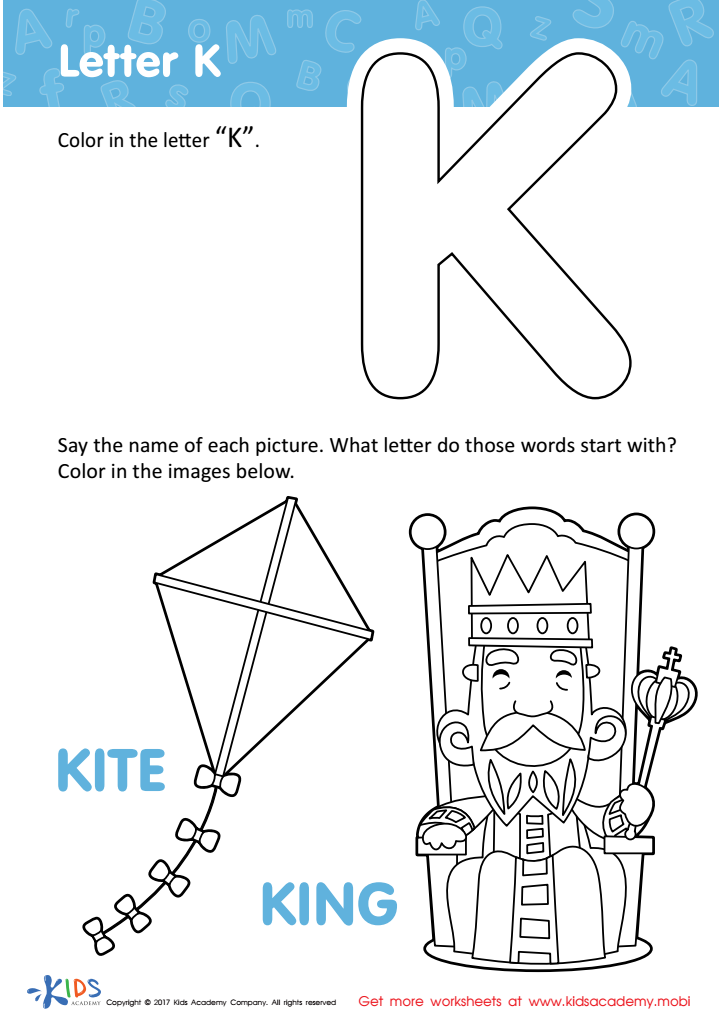
Letter K Coloring Sheet
This letter K coloring page captivates your child's creativity while learning the letter! Showcasing a king and kite, common words for their age group, it's sure to spark their imagination.
Download (PDF)
Assign to My Students
Assign to My Students
Letter K Coloring Sheet
Worksheet
Join Kids Academy for Free
Who is primarily going to use this learning content?








Phonics enhancement and letter recognition are crucial components of early literacy education for 6-year-olds, and it's essential for both parents and teachers to prioritize them for several key reasons. First, strong letter recognition skills lay the foundational groundwork for reading. When children can swiftly identify letters, they can move more easily into understanding phonics, which involves connecting specific sounds to these letters.
Parents and teachers should also recognize that early phonics instruction encourages effective decoding strategies, enabling children to read words independently and fluently. This boosts their confidence and motivation, making reading a more enjoyable experience.
Moreover, enhanced letter recognition and phonics skills promote overall cognitive development. Engaging with letters and sounds aids memory retention, cognitive reasoning, and problem-solving abilities. Additionally, these skills facilitate better communication and language development, which is critical for social interactions and academic success.
Finally, fostering a strong phonic and letter understanding helps bridge the literacy gap that many children face, particularly those from disadvantaged backgrounds. By emphasizing phonics and letter recognition, educators and parents play a vital role in equipping children with the tools necessary for lifelong learning and literacy.







