
Uppercase identification Letter Recognition Worksheets for 6-Year-Olds
5 filtered results
Difficulty Level
Grade
Age
-
From - To
Subject
Activity
Standards
Discover engaging and effective Uppercase Identification Letter Recognition Worksheets tailored for 6-year-olds at Kids Academy. These expertly designed worksheets enhance young learners' ability to recognize and differentiate uppercase letters, fostering essential reading and writing skills. With vibrant illustrations and fun activities, children can practice letter identification while enjoying a stimulating learning experience. Perfect for parents and educators, these printable worksheets serve as a valuable tool in building a strong literacy foundation. Visit Kids Academy to access a variety of age-appropriate worksheets that make mastering uppercase letters an exciting adventure for your child.
Favorites
With answer key
Interactive
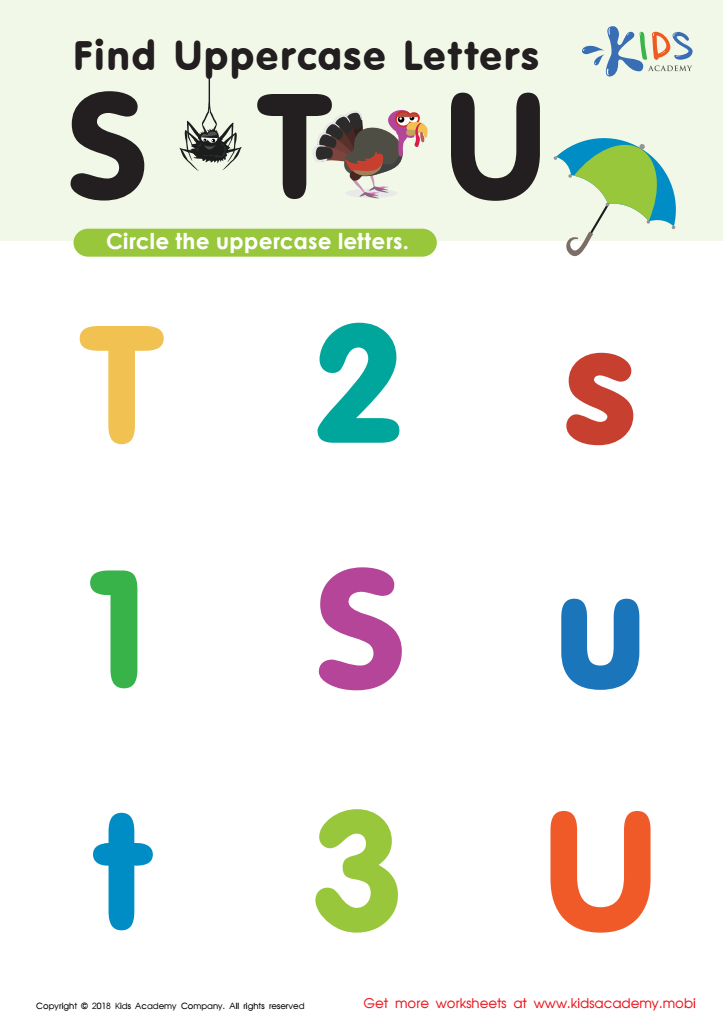
Find Uppercase Letters Worksheet
What level is your kid at now? Can they tell the difference between small and uppercase letters? Ask them to name words beginning with S, T and U, then help them find and circle the uppercase letters S, T and U in a mix of small letters, numbers and uppercase letters.
 Assign to My Students
Find Uppercase Letters Worksheet
Worksheet
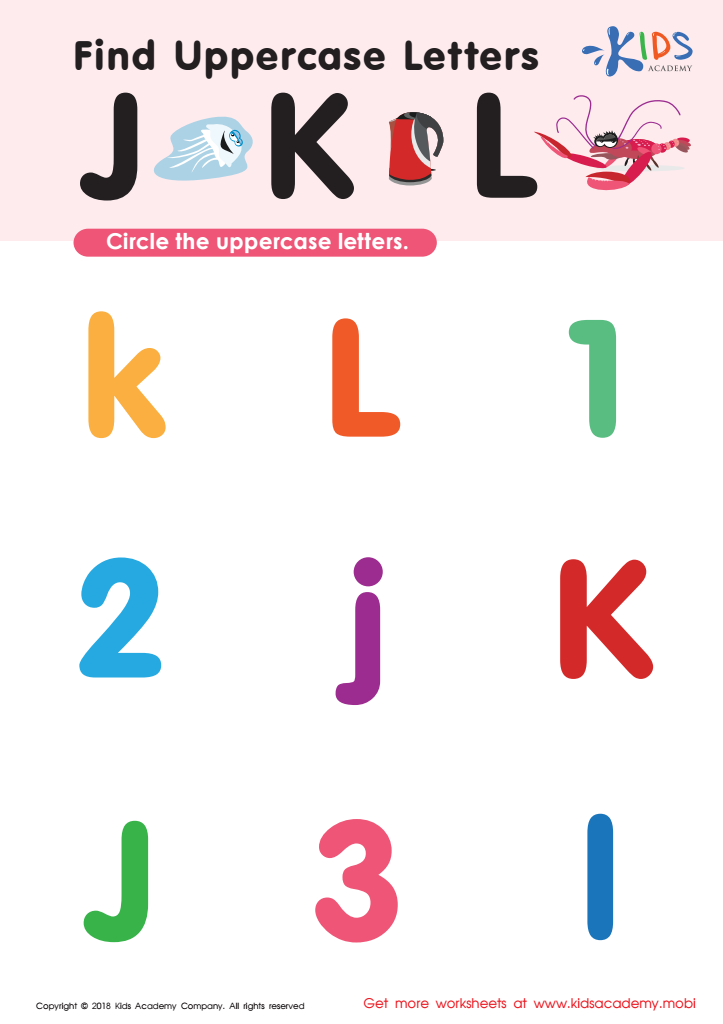
Find Uppercase Letters J, K, and L Worksheet
Search for the uppercase letters J, K, and L in this fun worksheet! Help your child identify the starting sound of each picture, then look for the letters. Keep an eye out for numbers that look like letters. Swim with the jellyfish and solve this delightful puzzle!
Find Uppercase Letters J, K, and L Worksheet
Worksheet
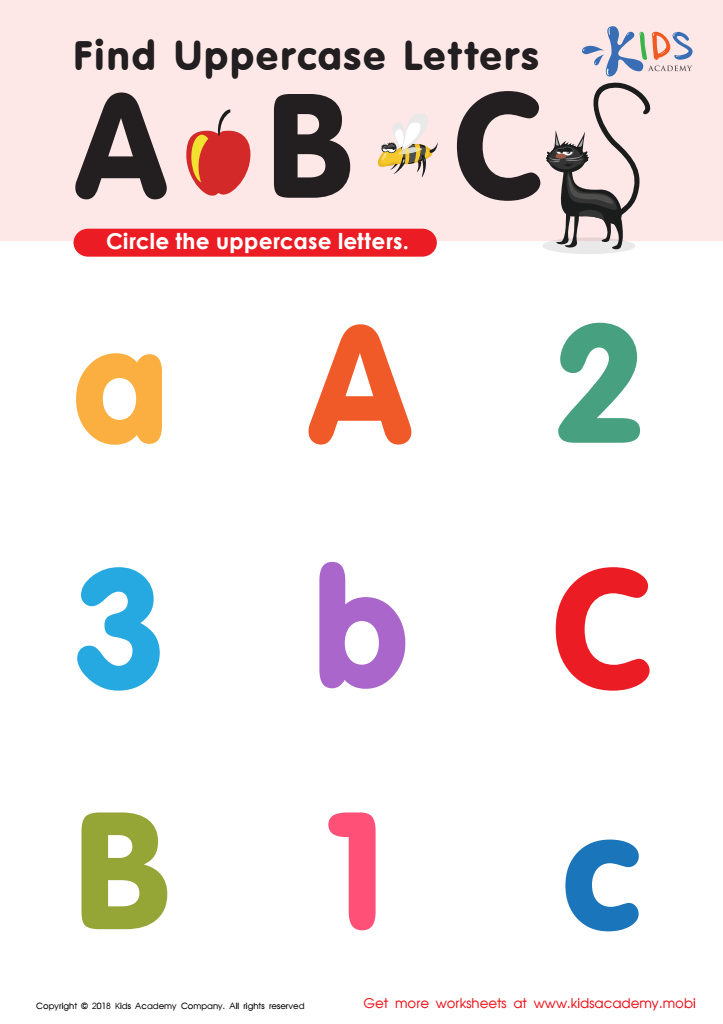
Find Uppercase Letters A, B, and C Worksheet
Check out this PDF worksheet and spot all the capital letters! Arranged as a puzzle, this exercise will test little learners to read and recognize uppercase letters and tell the difference between letters and numbers. To help them, use the pictures on top of the page to practice the sounds A, B and C make! 80 words.
Find Uppercase Letters A, B, and C Worksheet
Worksheet
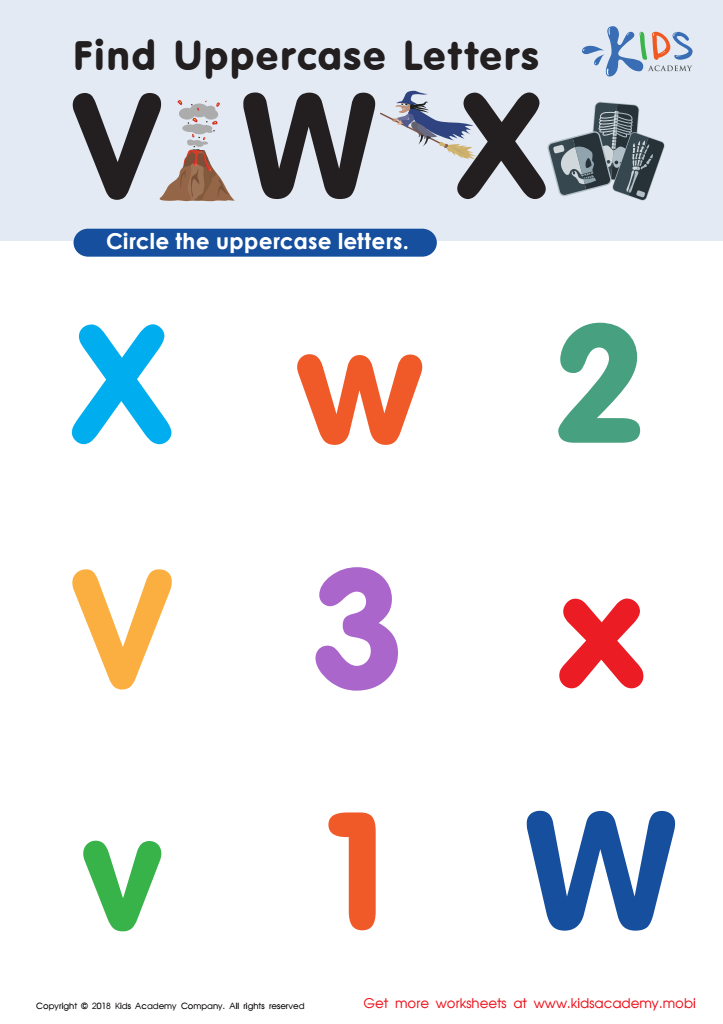
Find Uppercase Letters V, W, X Worksheet
Ask your kids if they can spot the uppercase letters V, W and X hidden in the lowercase letters and numbers, then have them circle them. After that, ask them to give you examples of words beginning with those letters. This worksheet will help them get started.
Find Uppercase Letters V, W, X Worksheet
Worksheet
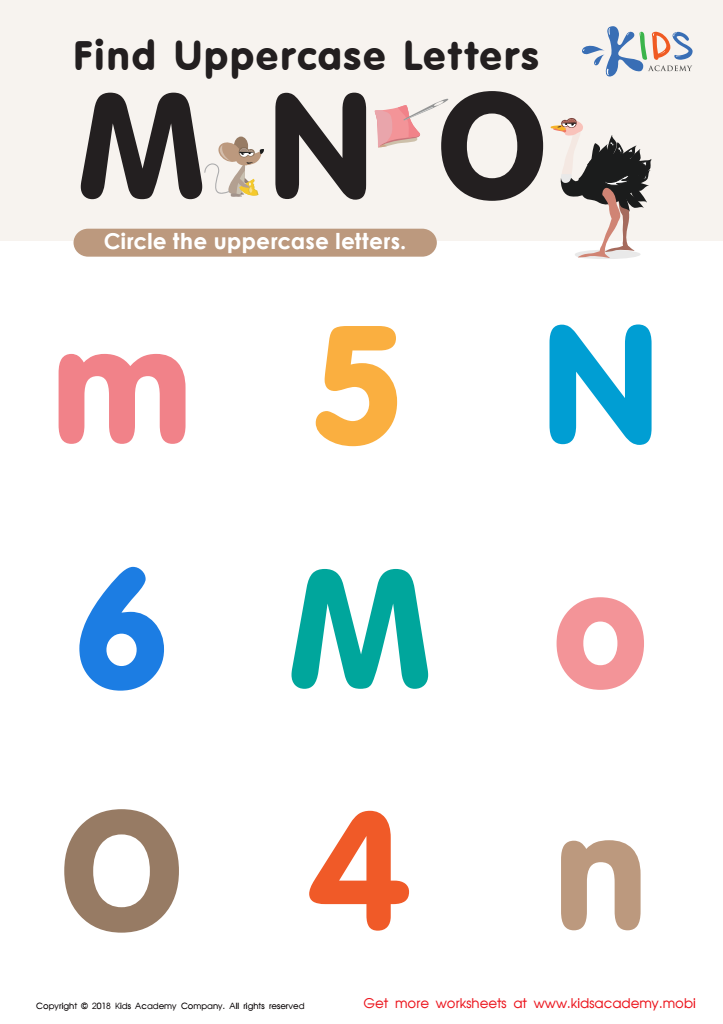
Find Uppercase Letters M, N, and O Worksheet
Kids love puzzles! This one scrambles up letters and numbers. Help your learner spot the capital letters, then search for the uppercase M, N, and O. For an extra challenge, cover the large letters and have kids circle the capitals using only beginning letter sounds.
Find Uppercase Letters M, N, and O Worksheet
Worksheet
Join Kids Academy for Free
Who is primarily going to use this learning content?








Parents and teachers should prioritize uppercase letter recognition for 6-year-olds because it is a fundamental building block for literacy development. At this age, children are emerging readers and writers, and recognizing uppercase letters facilitates their ability to decode written language. When children can readily identify uppercase letters, they build confidence and a sense of accomplishment, motivating them to engage more in reading and writing activities.
Uppercase letters are often the first way children encounter the alphabet, making them crucial for early literacy. They are prominently used in signs, books, learning materials, and beginning language lessons. For example, uppercase letters are typically larger and more distinguishable, helping children differentiate and remember them more easily. This helps in developing the necessary visual discrimination skills for reading.
Additionally, uppercase letter recognition supports phonemic awareness, the ability to hear, identify, and manipulate phonemes, which is essential for effective reading and spelling. Recognizing these letters also sets a foundation for introducing lowercase letters, enabling a smoother transition into more complex literacy skills.
Furthermore, schools' expectations and curriculums often include uppercase recognition as a metric of reading readiness and cognitive development. Providing children with a strong start by ensuring they know their uppercase letters can lead to greater academic success and instill a lifelong love of reading.







