Word Recognition Letter Recognition Worksheets for 6-Year-Olds
3 filtered results
-
From - To
Boost your 6-year-old's literacy skills with our engaging Word Recognition and Letter Recognition Worksheets! Designed specifically for young learners, these worksheets encourage a fun, hands-on approach to mastering the alphabet and recognizing common words. Each activity promotes essential reading skills, enhancing both visual recognition and letter identification through colorful illustrations and interactive exercises. Perfect for home or classroom use, our comprehensive resources tailored for 6-year-olds will create a solid foundation for language development. With a variety of creative tasks, your child will enjoy practicing word recognition while building confidence in their reading abilities. Explore our collection for delightful learning experiences today!
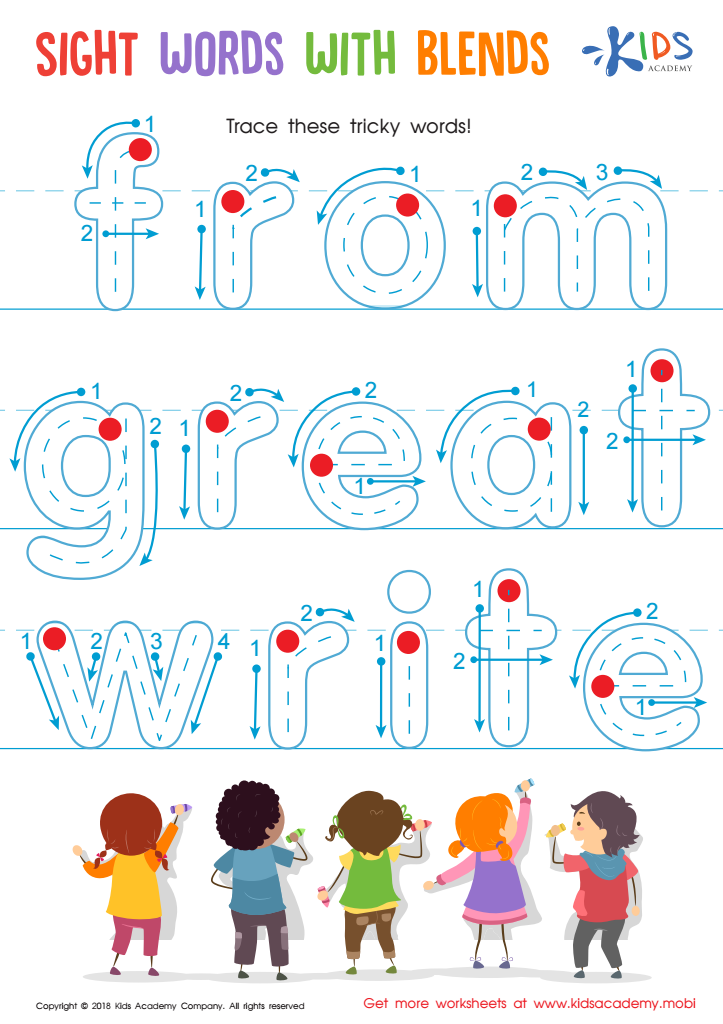
Sight Words with Blends Worksheet
 Assign to My Students
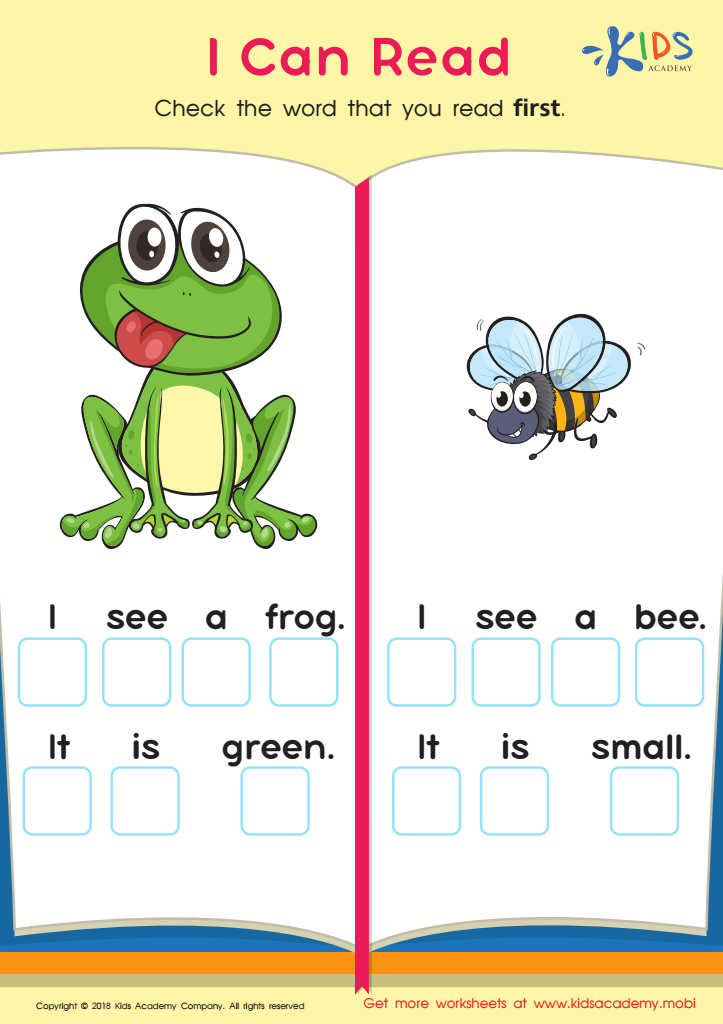
I Can Read Worksheet
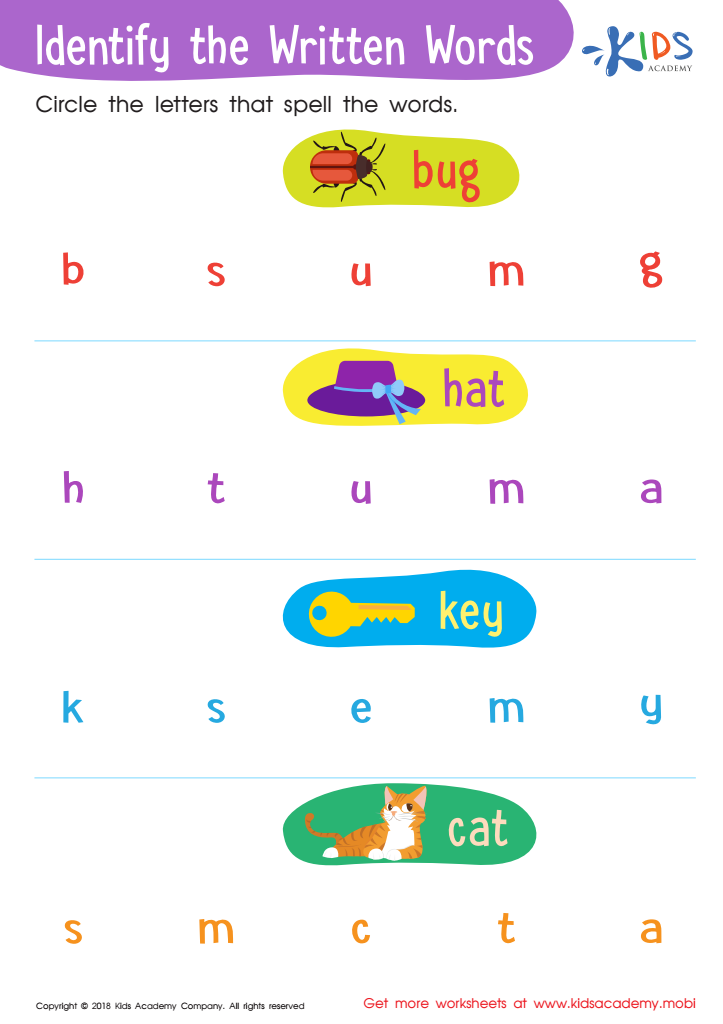
Identify the Written Words Worksheet








Word and letter recognition are foundational skills that significantly impact a child's literacy development, especially for 6-year-olds who are often in the early stages of reading. Parents and teachers should prioritize these skills because they serve as the building blocks for more advanced literacy competencies. At this age, children are typically learning to link letters to sounds and to decode words, which are essential for reading fluency and comprehension.
When children can recognize letters, they can start identifying words, enhancing their ability to read sentences and understand stories. This recognition fosters confidence and motivation, encouraging a love for reading that can benefit them culturally and academically throughout their lives.
Moreover, strong word and letter recognition skills not only support reading but also improve writing. As children learn to read words, they also become better equipped to spell them correctly. Consequently, investing time in supportive activities at home or in class—like reading alphabet books or engaging in phonics games—can create a richer learning environment.
In summary, prioritizing letter and word recognition in young learners lays the groundwork for their future success in reading, writing, and overall communication skills, making it crucial for parents and teachers to be actively involved in nurturing these competencies.







