Phonics Skills Letter Sounds Worksheets for 6-Year-Olds
3 filtered results
-
From - To
Unlock your child’s reading potential with our engaging Phonics Skills Letter Sounds Worksheets tailored for 6-year-olds. Designed to enhance letter recognition and sound association, these worksheets provide a fun learning experience that fosters early literacy skills. With colorful illustrations and interactive activities, kids will enjoy practicing their phonics mastery while developing critical thinking and phonemic awareness. Perfect for classroom use or home study, our resources make learning exciting and effective. Empower your young learner to read confidently and lay a strong foundation for future success. Explore our collection today and watch your child's love for reading flourish!
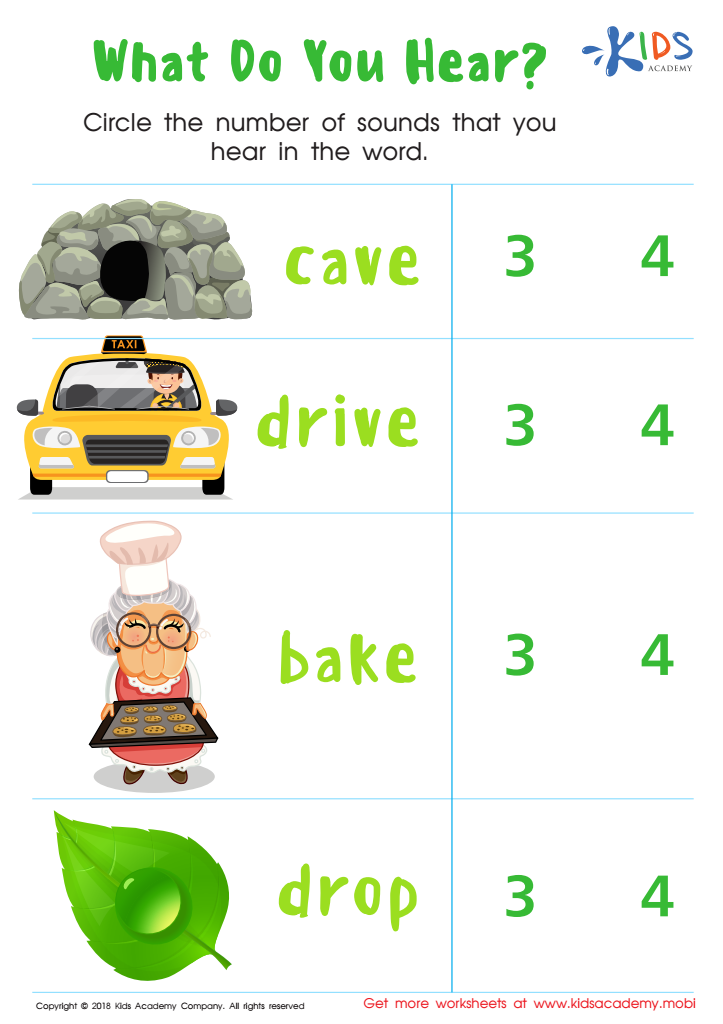
What Do You Hear? Worksheet
 Assign to My Students
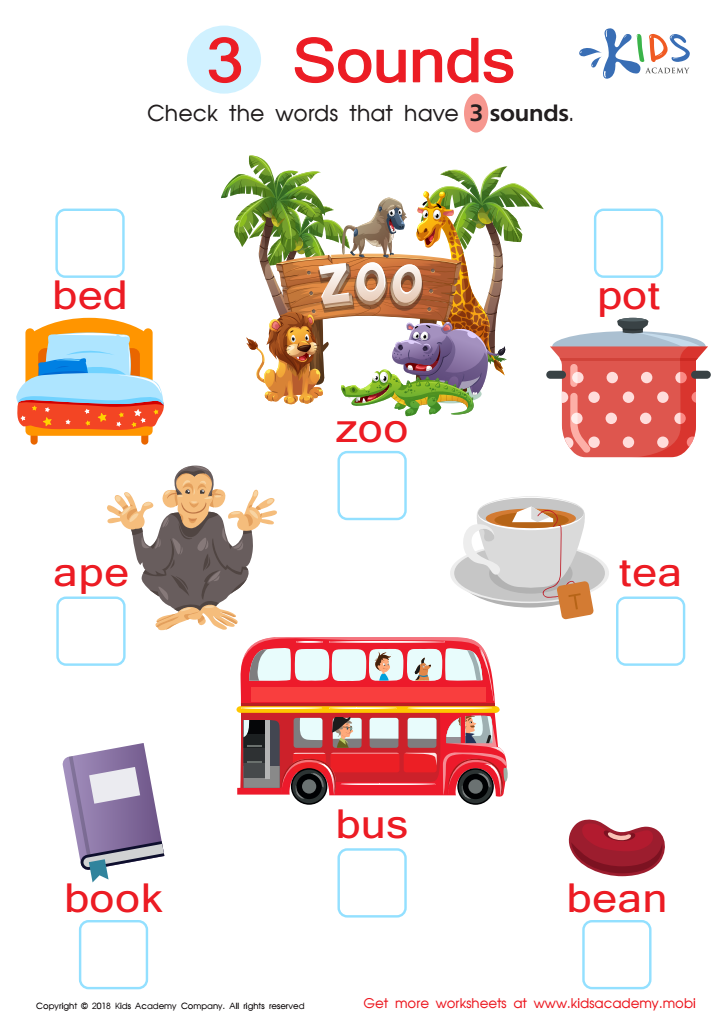
3 Sounds Worksheet
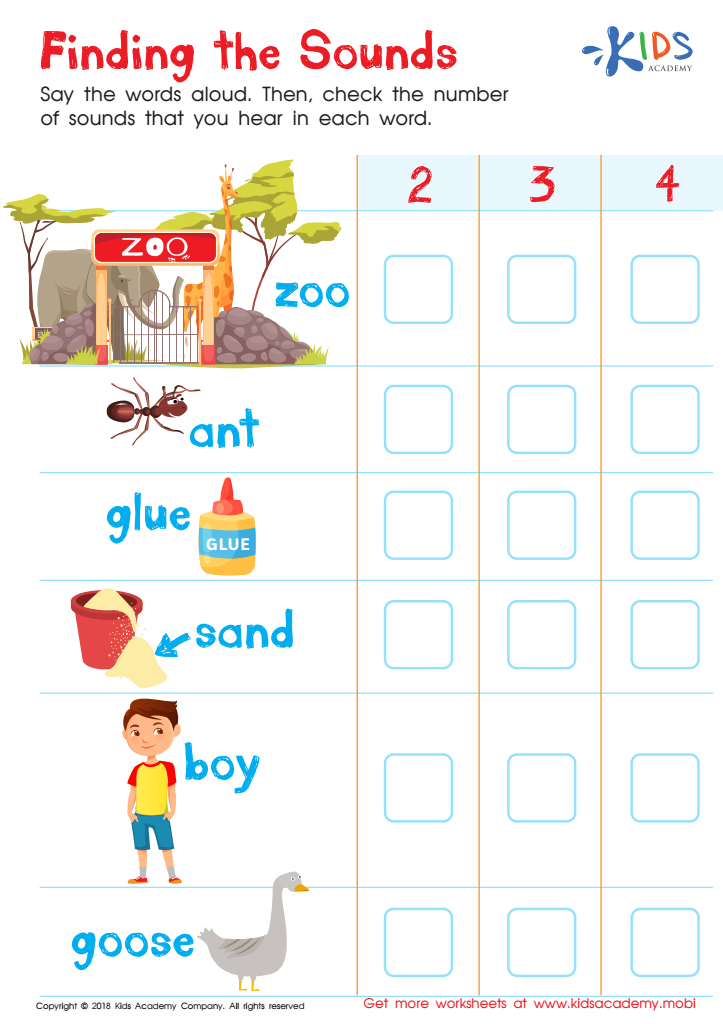
Finding the Sounds Worksheet








Phonics skills, particularly letter sounds, are fundamental for young children’s reading and overall language development. At age six, children are typically in early primary education, where they start to connect letters with their corresponding sounds. This connection lays the groundwork for decoding words, enhancing their reading fluency and comprehension. Parents and teachers should care about phonics skills because they directly impact a child’s ability to read independently.
Furthermore, strong phonics skills boost a child's confidence and motivation to learn. When children understand that sounds can be blended to form words, they become more engaged and excited about reading. This foundational skill also aids in spelling and promotes better writing abilities as children learn to break down and reconstruct words.
Additionally, phonics instruction addresses diverse learning styles, helping those who may struggle with traditional learning methods. Early intervention through phonics can mitigate future reading difficulties and foster a lifelong love for reading. As such, parents and teachers can work collaboratively to support phonics development in the classroom and at home, setting children on a successful educational path. Ultimately, nurturing phonics skills at this early age empowers children to become proficient readers and learners.







