Sound Association Letter Sounds Worksheets for 6-Year-Olds
6 filtered results
-
From - To
Introduce your 6-year-old to the magic of letters and sounds with our Sound Association Letter Sounds Worksheets. Designed to make learning fun and engaging, these printable worksheets help children develop phonemic awareness, fundamental phonics skills, and early reading abilities. With colorful illustrations and interactive exercises, kids can passionately and confidently connect letters to corresponding sounds. Our worksheets are perfect for classroom use or at-home practice, providing a strong foundation for future literacy success. Boost your child's educational journey and watch as they eagerly enhance their sound association and decoding skills effortlessly!
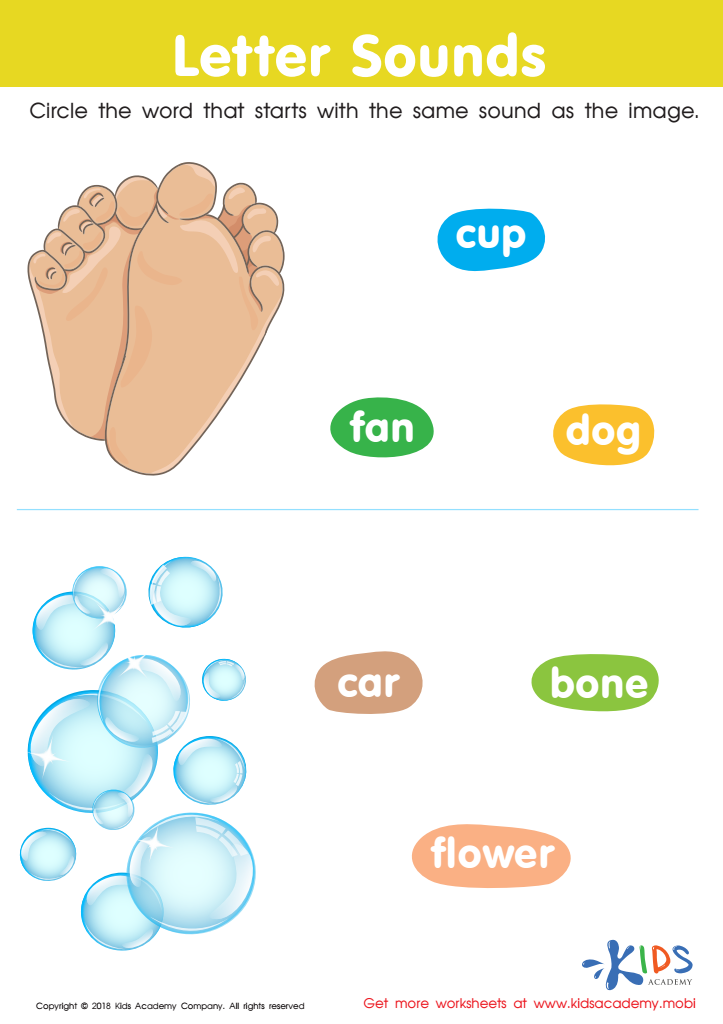
letter sounds Worksheet
 Assign to My Students
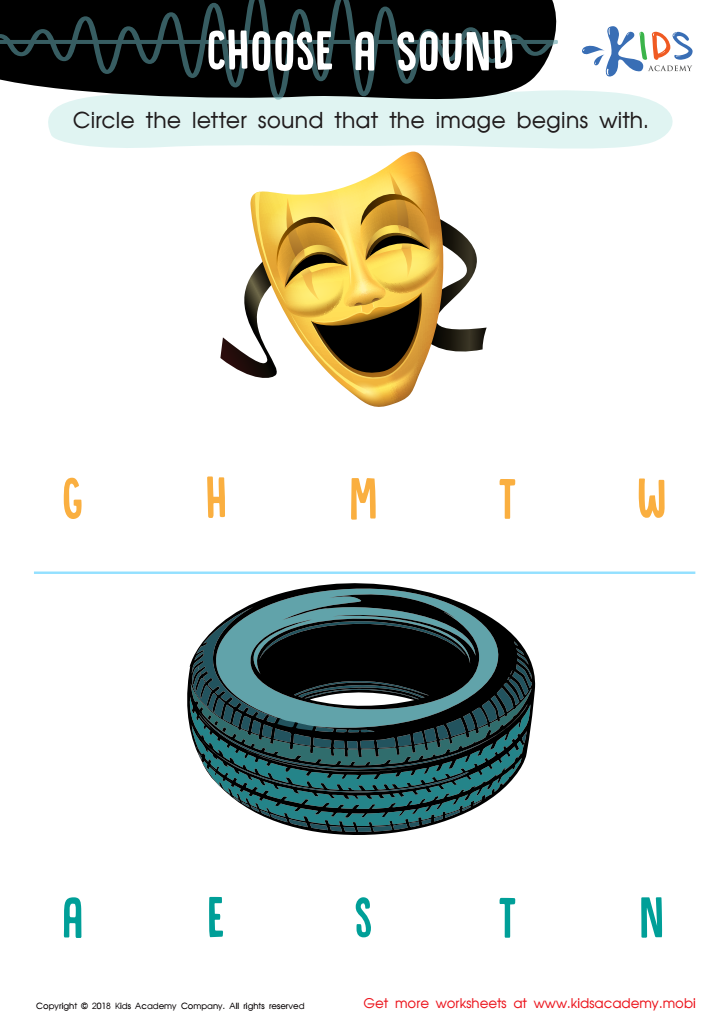
Choose a Sound Worksheet
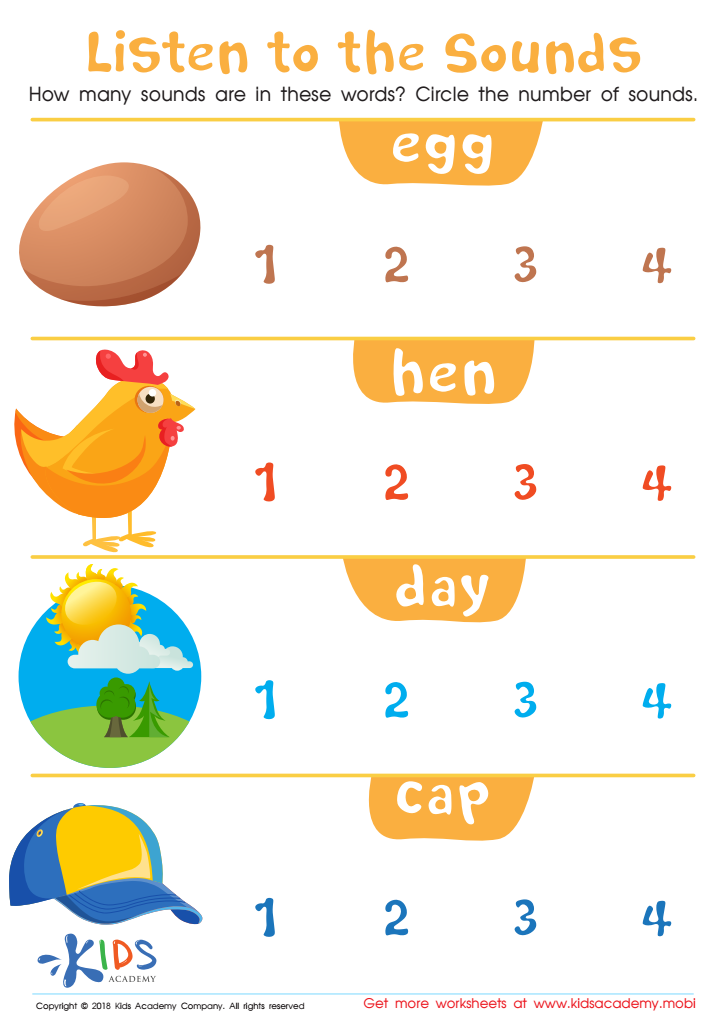
Listen to the Sounds Worksheet
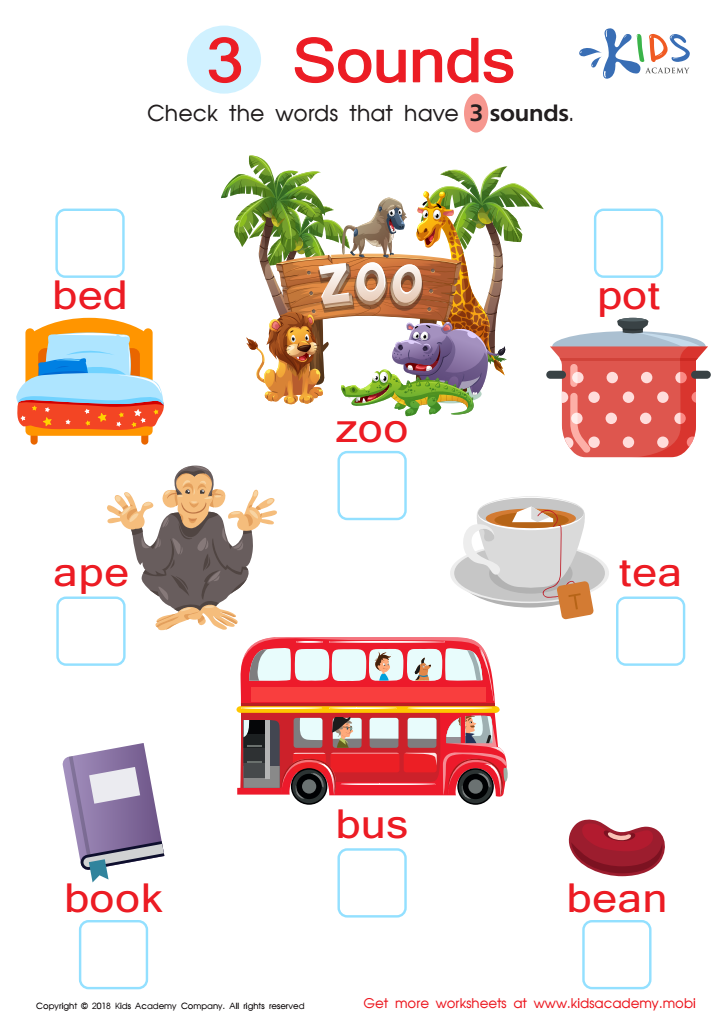
3 Sounds Worksheet
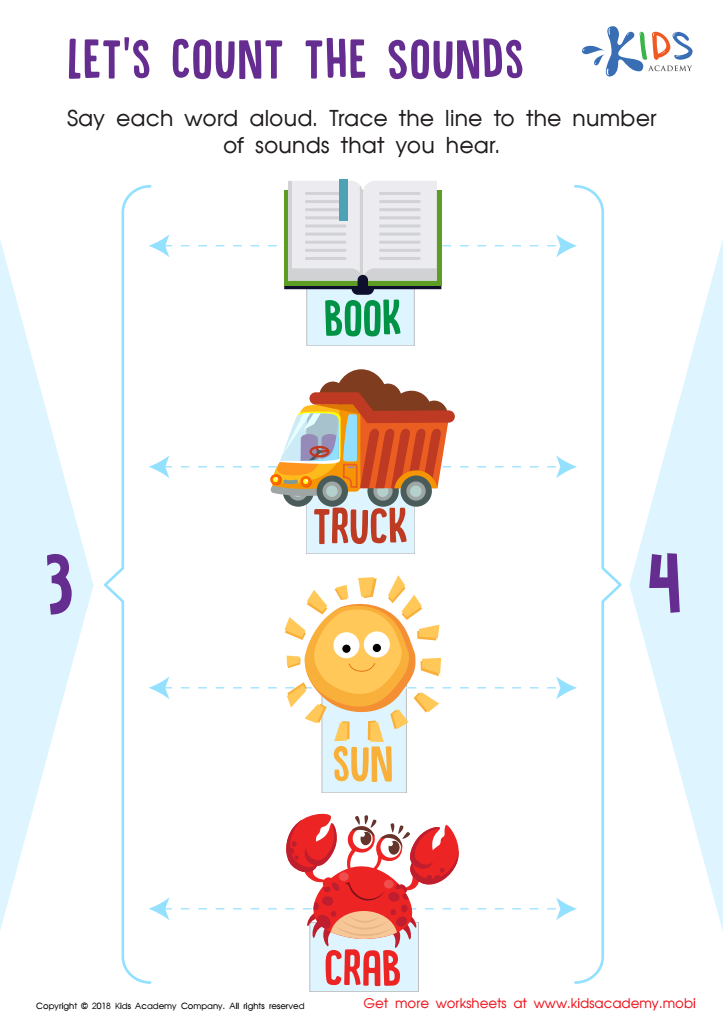
Let's Count the Sounds Worksheet
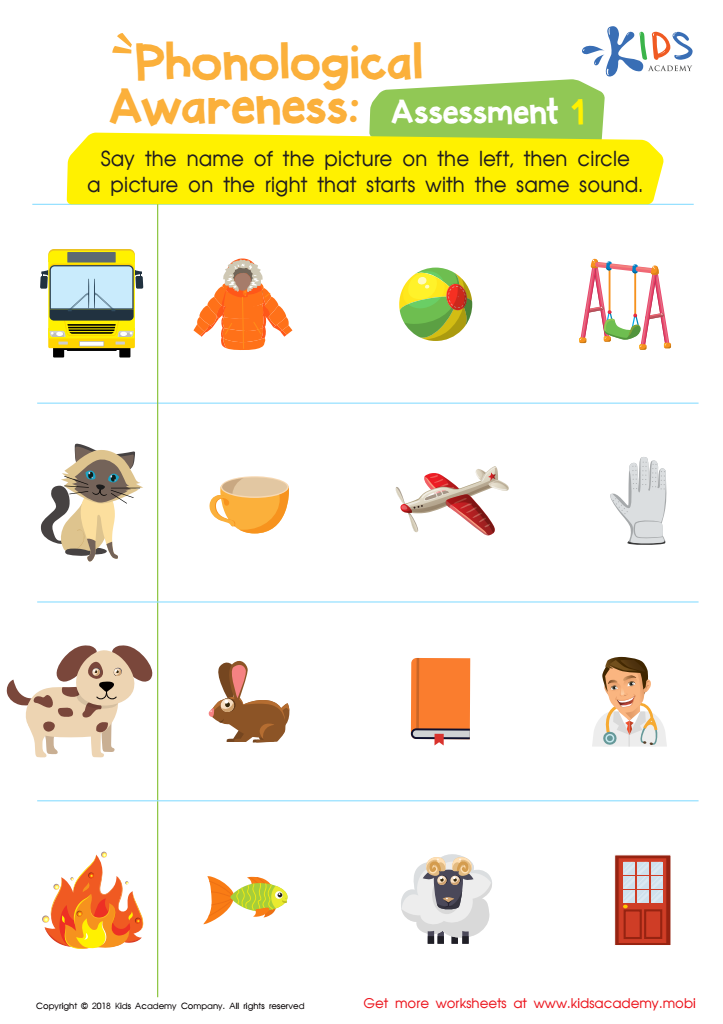
Phonological Awareness: Assessment 1 Worksheet








Sound association and letter sounds form the foundation of early literacy skills, which are crucial for the development of reading and writing abilities in 6-year-olds. During this critical stage of development, children's brains are highly receptive to learning patterns and making connections. Understanding the relationship between letters and their corresponding sounds enhances phonemic awareness—the ability to hear, identify, and manipulate individual sounds in words.
Phonemic awareness is a strong predictor of future reading success. When children can associate sounds with letters, they gain the tools to decode new words, an essential skill for fluent reading. This decoding ability builds their confidence and fosters a positive attitude towards learning. It also enriches their vocabulary and comprehension by enabling them to read independently and explore new concepts through texts.
Moreover, sound association and letter sounds underpin the development of spelling skills. When children understand why certain words are spelled a certain way, they are more likely to remember their spellings correctly. This skill translates into better writing proficiency, allowing them to communicate their ideas more effectively.
By creating a solid foundation in these early years, parents and teachers set children on a path of lifelong learning and academic success, ensuring they thrive in various aspects of their education.







