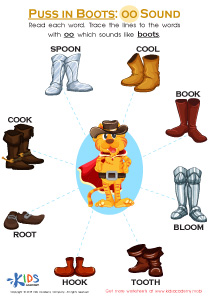
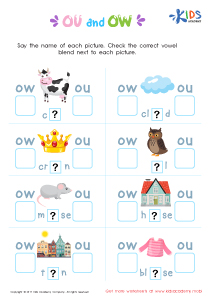
Vocabulary enhancement Long And Short Vowel Worksheets for 6-Year-Olds
4 filtered results
-
From - To
Enhance your 6-year-old's vocabulary with our engaging Long and Short Vowel Worksheets! Designed specifically for early learners, these interactive worksheets help children distinguish between long and short vowel sounds through fun activities and colorful illustrations. Each worksheet provides captivating exercises that promote phonics skills, building a strong foundation for reading and language development. Perfect for classroom use or at-home learning, our resources empower young learners to improve their vocabulary while having fun! Explore our collection of printable worksheets today and support your child's journey toward becoming a confident reader and communicator. Discover the joy of learning with long and short vowels!
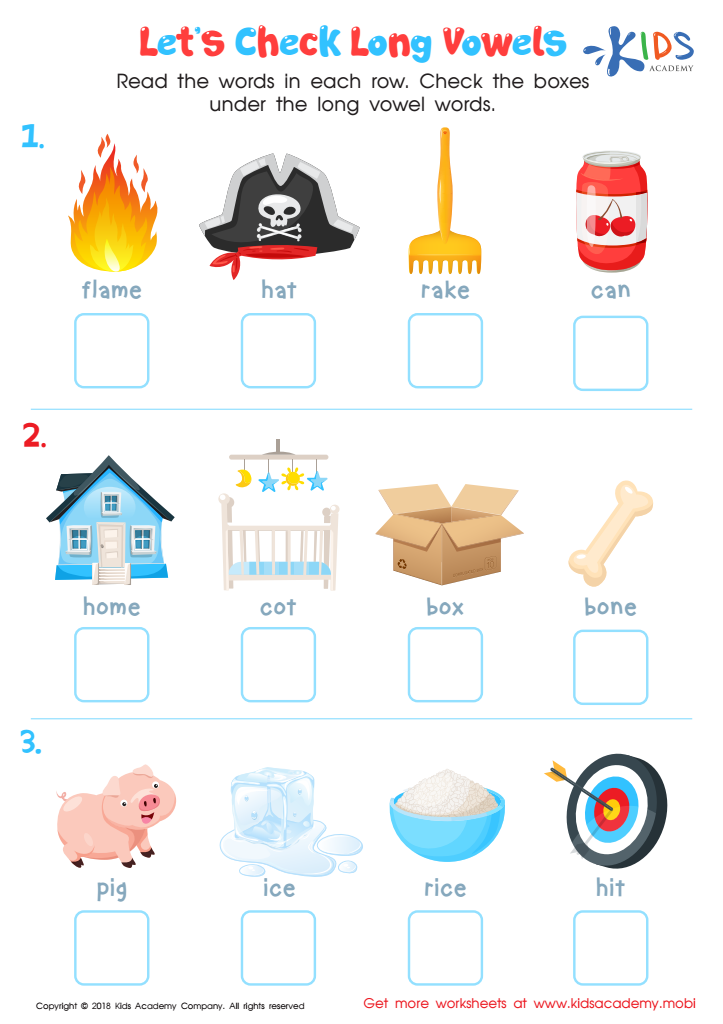
Let's Check Long Vowels: Assessment Worksheet
 Assign to My Students
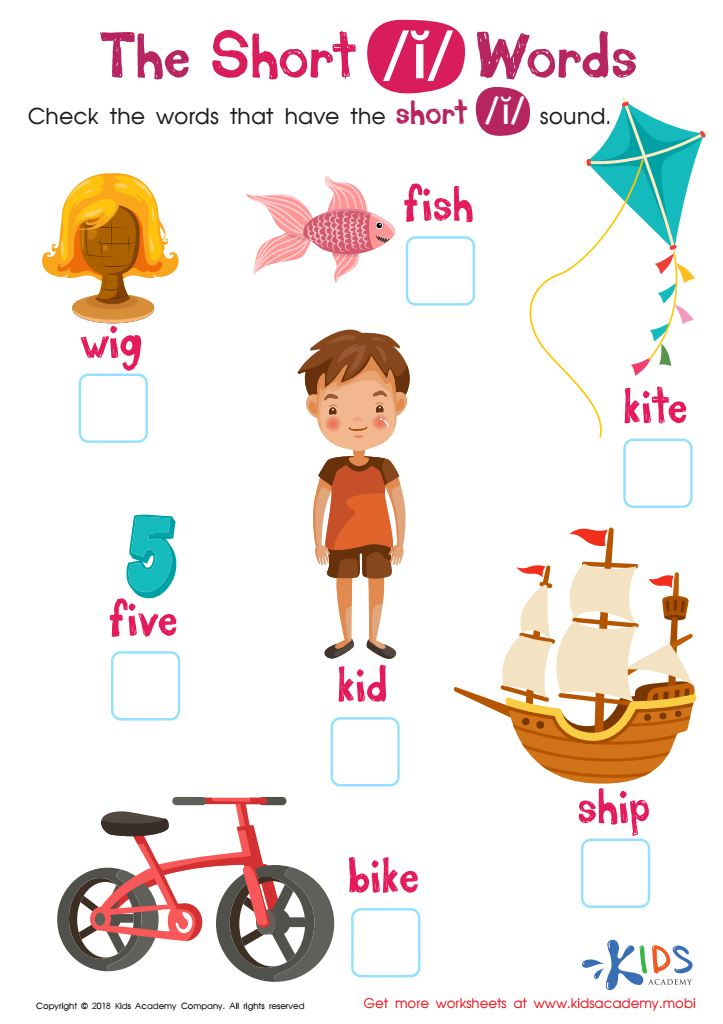
The Short I Words Reading Worksheet
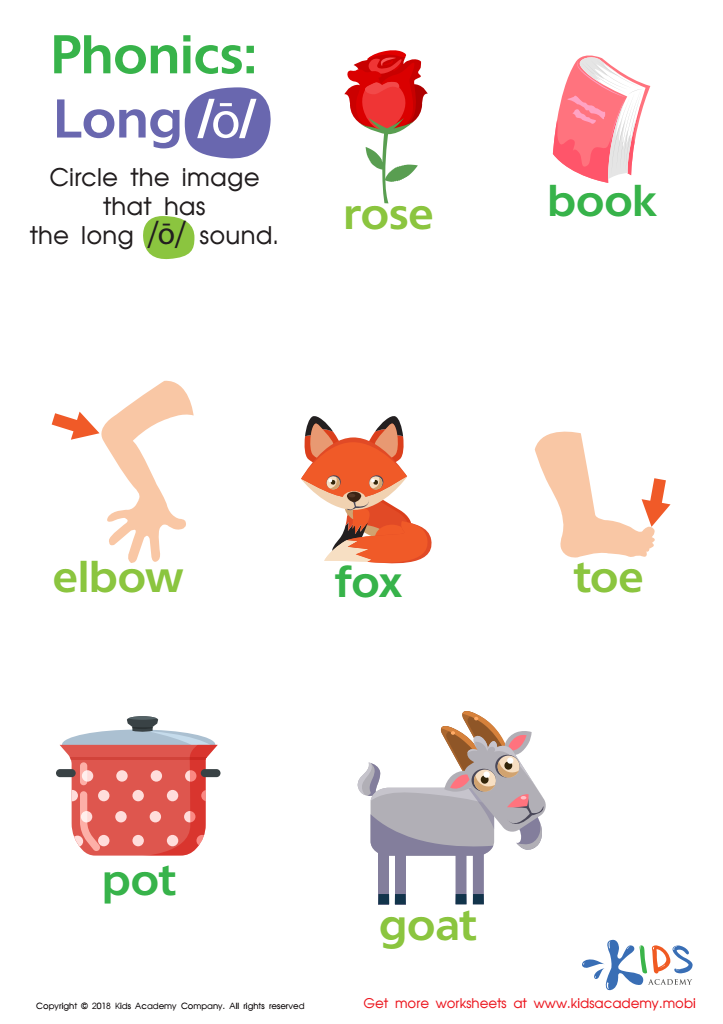
Phonics Long O Reading Worksheet
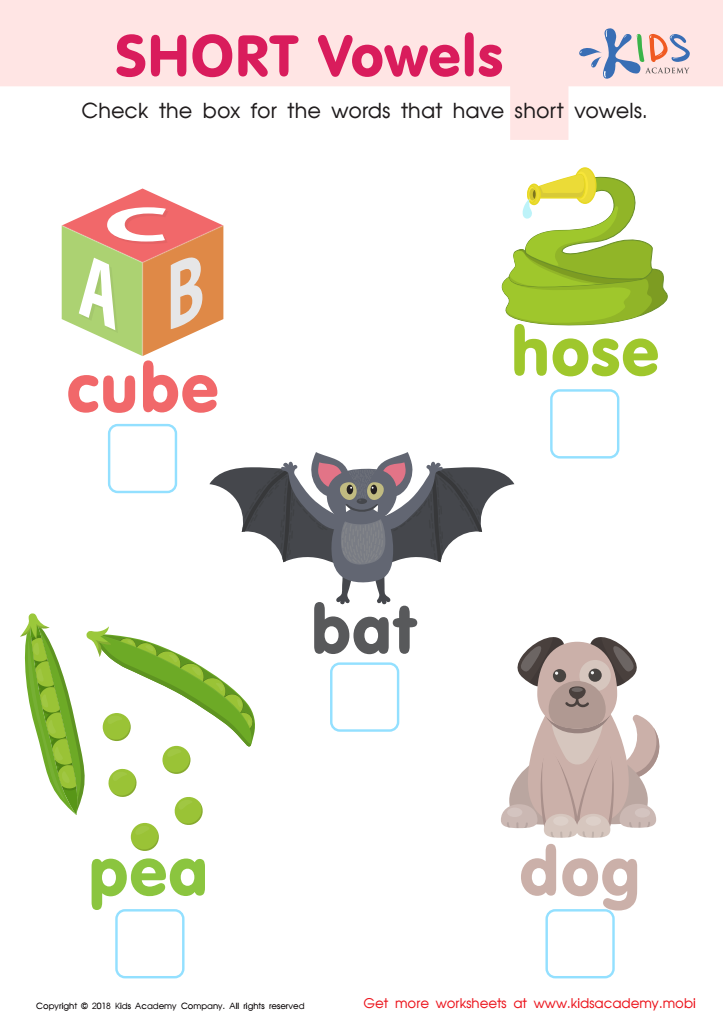
short vowels Worksheet




Vocabulary enhancement in 6-year-olds, particularly focusing on long and short vowel sounds, is crucial for several reasons. First, vocabulary is the foundation of reading and writing skills. Understanding and distinguishing between long and short vowels helps children recognize words and develop phonemic awareness, which is essential for decoding unfamiliar text. This early literacy skill can significantly impact their academic success and confidence.
Moreover, enhancing vocabulary also supports expressive language development. When children grasp the nuances of vowel sounds, they can articulate thoughts and feelings more clearly, enriching their communication skills. This not only fosters better relationships with peers and adults but also contributes to emotional and social growth.
Engaging in vocabulary enhancement activities, whether through games, songs, or stories, also provides an interactive and enjoyable learning experience. This holistic approach not only motivates children but also encourages a love for learning.
Furthermore, in a digital age where communication is increasingly text-driven, strong language skills position children for future success. Fostering an environment where vocabulary enhancement is prioritized ultimately prepares children for lifelong learning and effective communication. Thus, parents and teachers play a pivotal role in guiding this crucial aspect of language acquisition.