Alphabet understanding Tracing Letters Worksheets for 6-Year-Olds
4 filtered results
-
From - To
Explore our engaging Alphabet Understanding Tracing Letters Worksheets designed specifically for 6-year-olds! These worksheets provide an interactive and fun way for young learners to master letter recognition and enhance their handwriting skills. With vibrant illustrations and easy-to-follow tracing activities, children will build their understanding of both uppercase and lowercase letters. Perfect for at-home or classroom use, these worksheets encourage fine motor skills development and boost confidence in writing. As kids trace letters, they will engage not only with the alphabet but also enhance their reading readiness. Start your child's literacy journey with our tracing letter resources today!
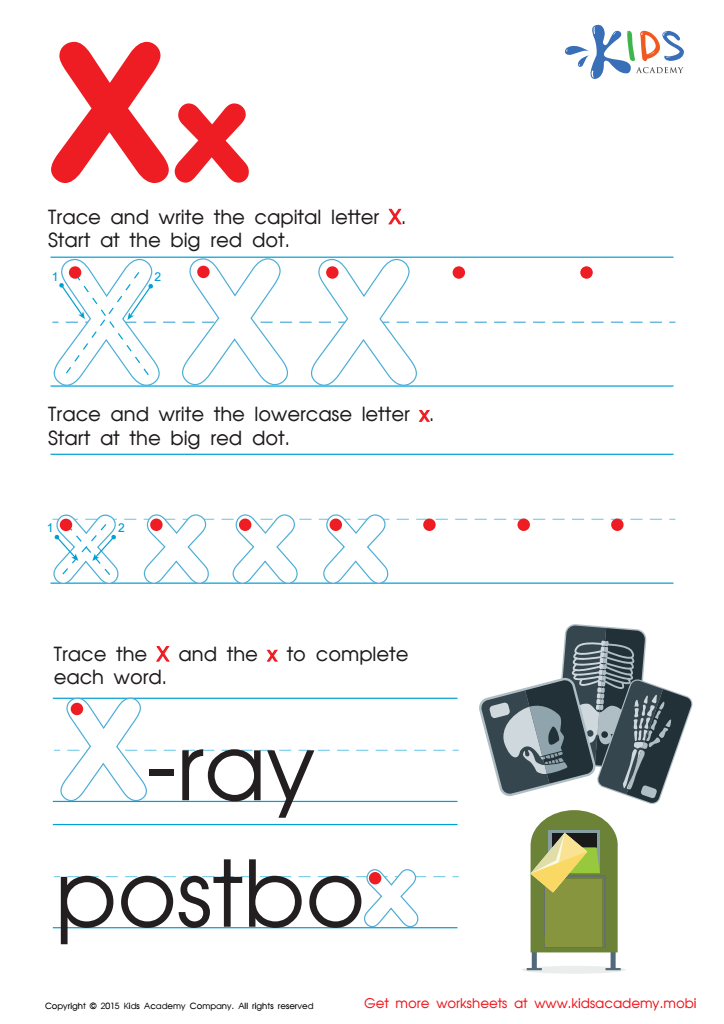
Letter X Tracing Page
 Assign to My Students
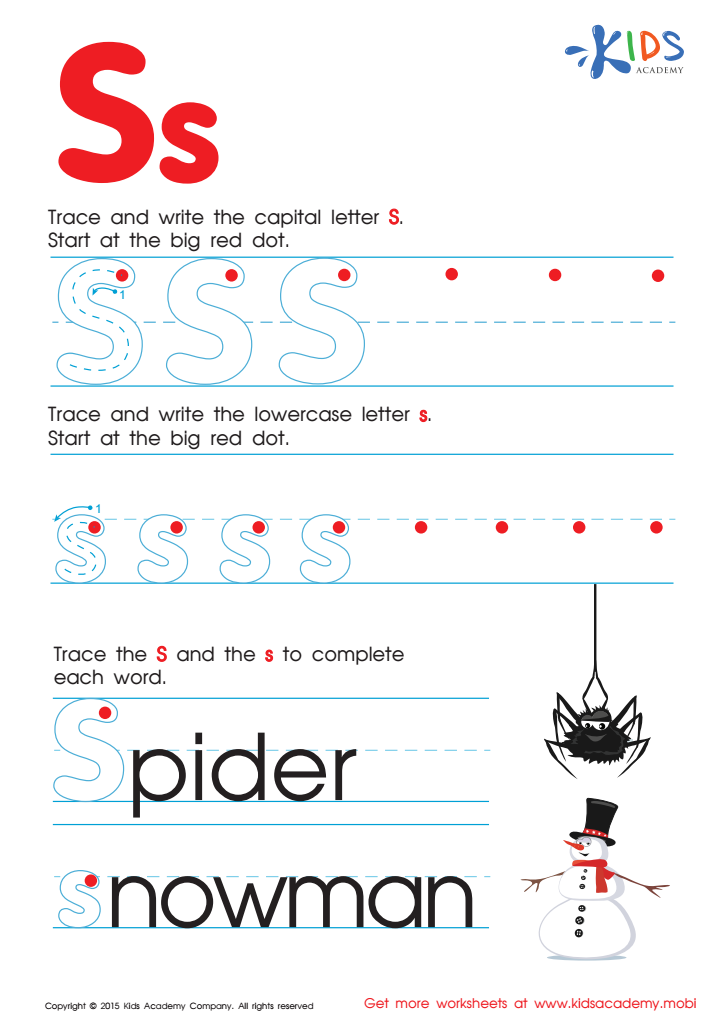
Letter S Tracing Page
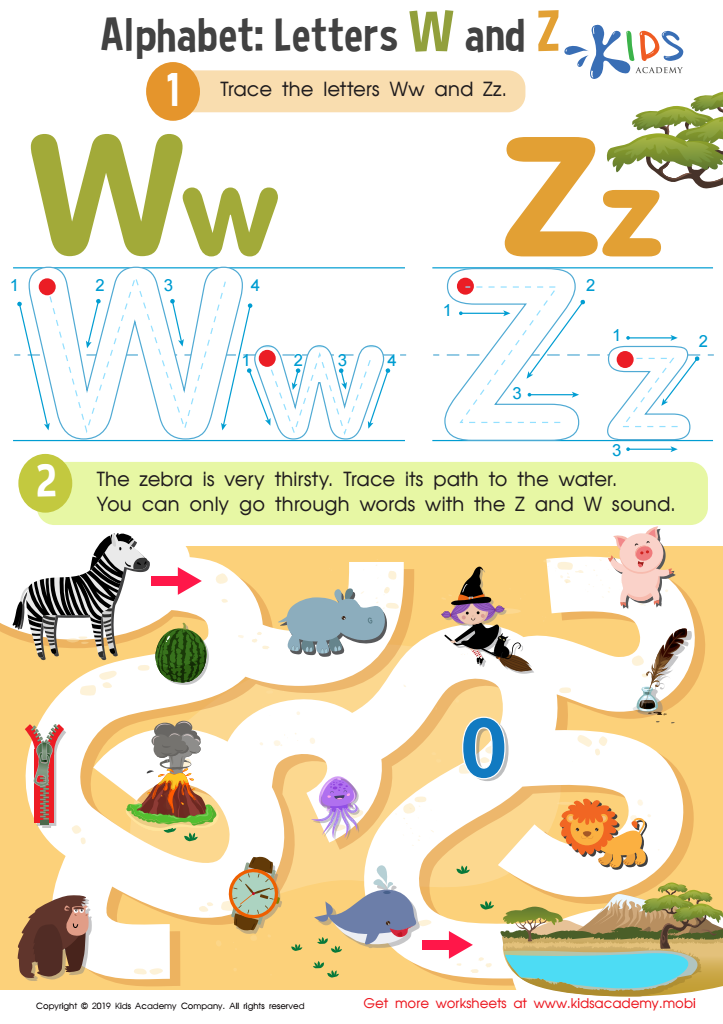
Letters W and Z Tracing Worksheet
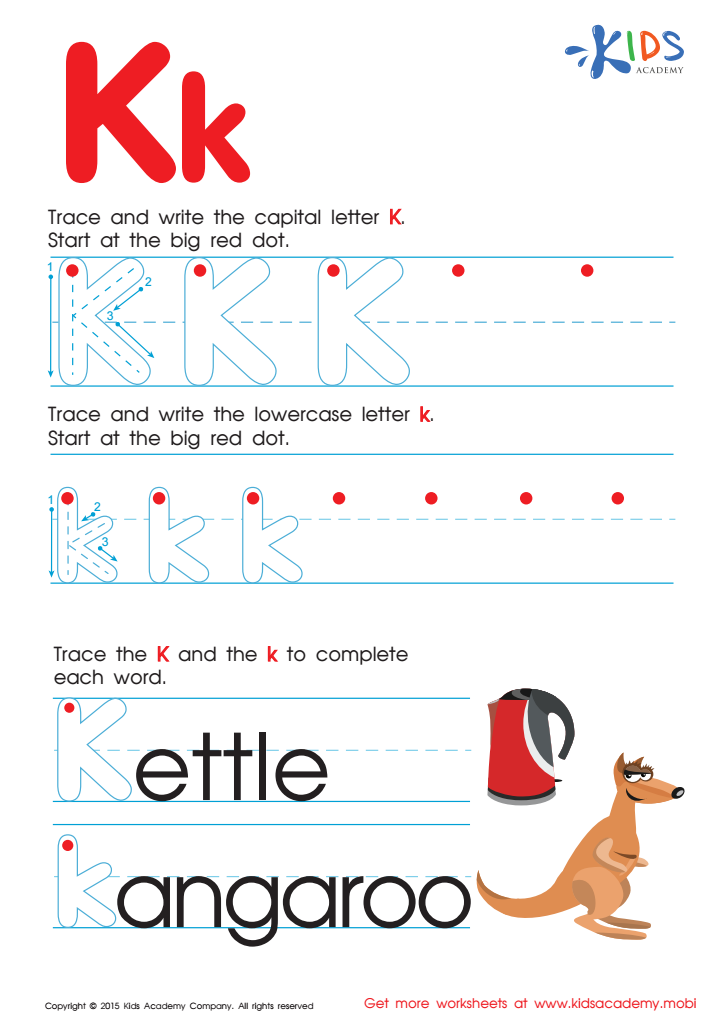
Letter K Tracing Page








Understanding and tracing letters is crucial for six-year-olds as it lays the foundation for early literacy skills. At this age, children are developing their fine motor skills, and tracing letters helps strengthen hand-eye coordination and dexterity. When parents and teachers prioritize letter tracing, they facilitate better handwriting, which can boost a child's confidence in their writing abilities.
Moreover, tracing letters aids in letter recognition, an essential component of reading readiness. As children trace, they become familiar with the shapes and sounds of letters, which enhances phonemic awareness—the ability to hear, identify, and manipulate sounds in spoken words. This skill is vital for early reading.
Additionally, the act of tracing can engage children creatively and reduce frustration associated with learning new concepts. It transforms a potentially daunting task into a fun and interactive activity, making learning more enjoyable. Parental involvement in tracing activities can foster a supportive learning environment, reinforcing literacy skills outside of school.
In summary, tracing letters is not just a simple task; it is an integral part of language development that underpins writing and reading success. Thus, understanding its importance can help parents and teachers nurture effective learning habits in their children.








