Fine motor skills development Tracing Letters Worksheets for 6-Year-Olds
3 filtered results
-
From - To
Enhance your child's fine motor skills with our engaging tracing letters worksheets designed specifically for 6-year-olds. These interactive resources help children practice letter formation while promoting hand-eye coordination and dexterity. Each worksheet features fun activities that capture young learners’ attention, ensuring they develop the essential skills needed for writing. Tracing letters not only aids in literacy but also encourages concentration and focus in early childhood education. With colorful visuals and age-appropriate tasks, our worksheets make learning enjoyable and effective. Support your child's academic journey and lay the foundation for successful handwriting with these essential tracing letter activities!
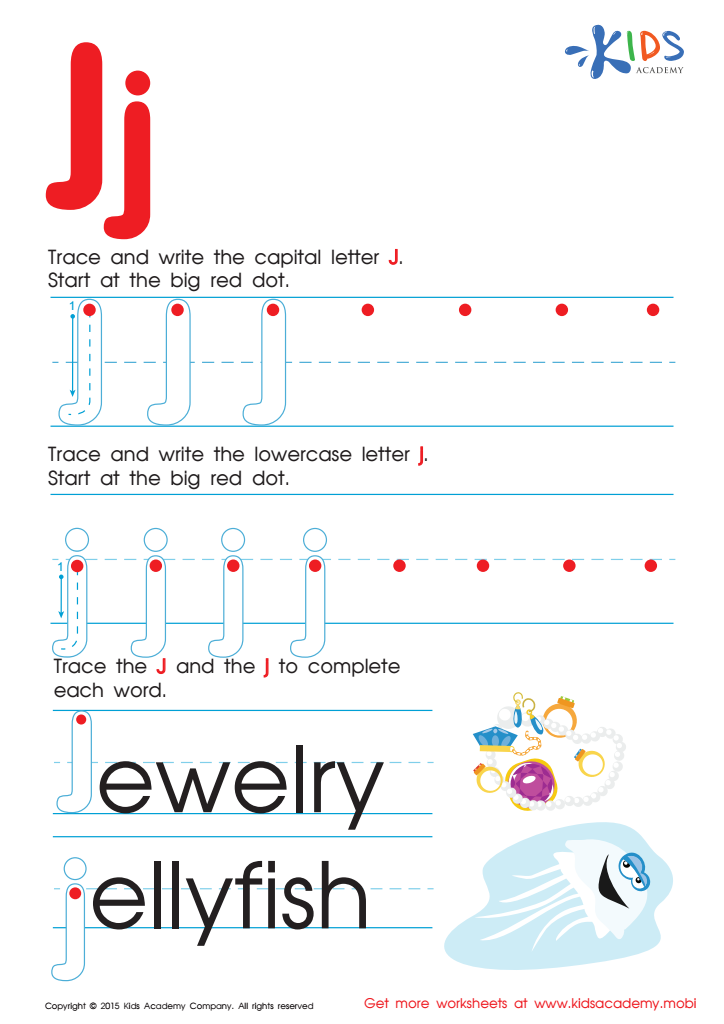
Letter J Tracing Page
 Assign to My Students
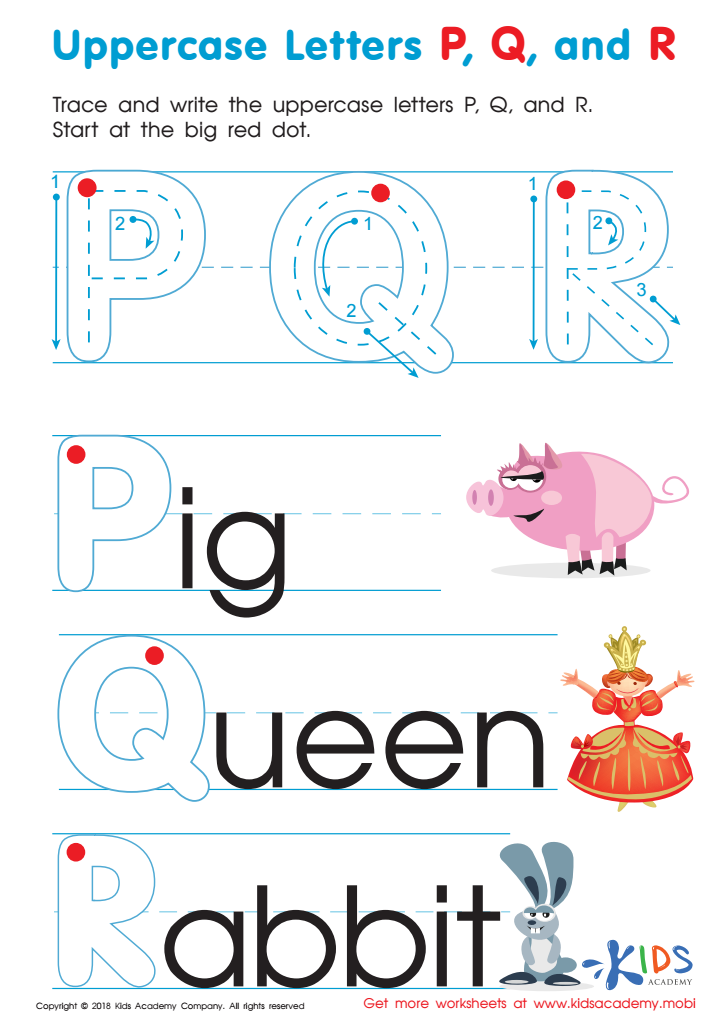
Uppercase Letters P, Q, and R Worksheet
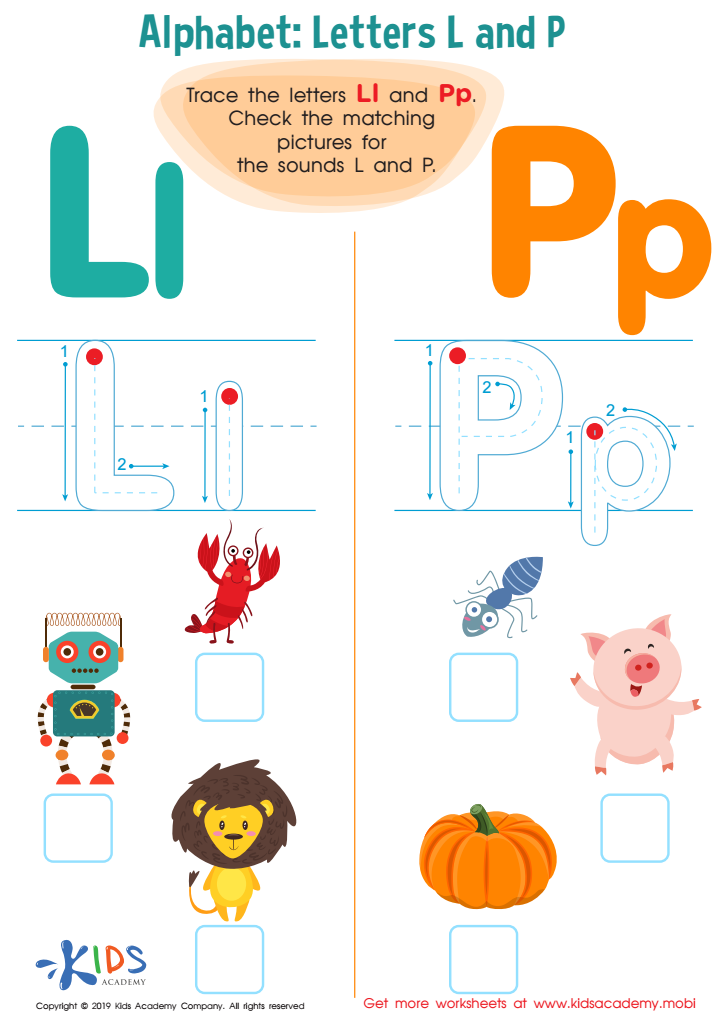
Letter L and P Tracing Worksheet








Fine motor skills are crucial for a child's development, particularly when it comes to writing and letter recognition. For 6-year-olds, tracing letters is an effective way to enhance these skills. When children trace letters, they strengthen the small muscles in their hands and fingers, improving their dexterity and coordination. This foundational skill is essential not only for writing but also for everyday tasks such as buttoning clothes, using scissors, and drawing.
Moreover, tracing letters engages children in visual-motor integration, where they learn to coordinate their hand movements with what they see. This contributes to better handwriting and promotes a sense of accomplishment and confidence in their abilities.
Beyond the physical aspects, tracing letters can also aid cognitive development. As children familiarize themselves with letter shapes and structures, they enhance their letter recognition and phonics skills, which are vital for reading. By engaging with letter tracing activities, parents and teachers can foster a child’s literacy, paving the way for successful academic experiences.
In sum, prioritizing fine motor skill development through tracing letters is a holistic approach that supports motorSkills, cognitive growth, and overall learning, laying the groundwork for a child's future success in school and beyond.








