Handwriting improvement Tracing Letters Worksheets for 6-Year-Olds
5 filtered results
-
From - To
Enhance your child's handwriting skills with our engaging Tracing Letters Worksheets designed specifically for 6-year-olds. These worksheets focus on fostering fine motor skills and letter formation through fun and interactive tracing activities. With vibrant illustrations and intuitive layouts, children will enjoy practicing both uppercase and lowercase letters, setting a solid foundation for confident writing. Tailored to meet age-appropriate learning goals, our worksheets help boost hand-eye coordination and promote proper letter posture. Ideal for home or classroom use, these tracing exercises make handwriting improvement enjoyable, ensuring that kids develop essential skills while having fun. Download our worksheets and watch their confidence soar!
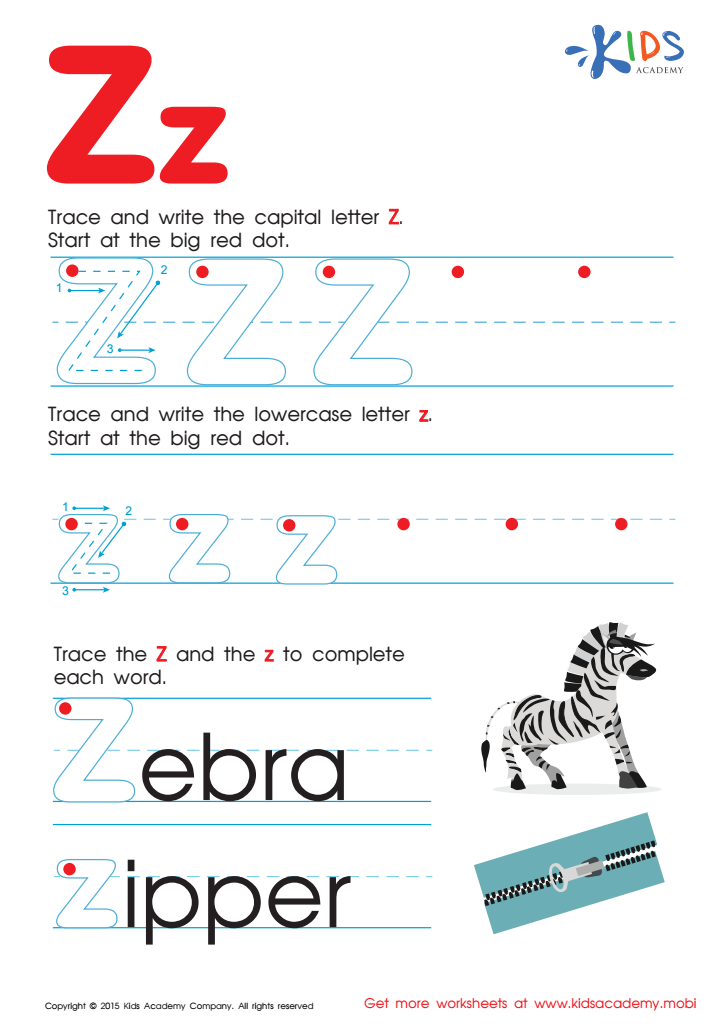
Letter Z Tracing Page
 Assign to My Students
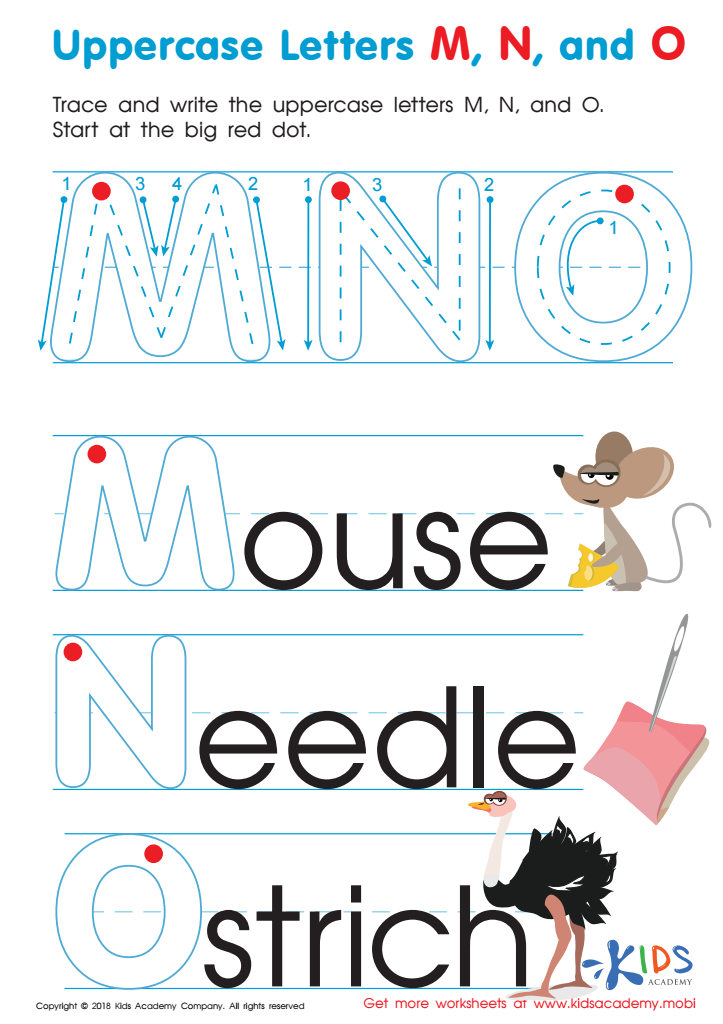
Uppercase Letters M, N, and O Worksheet
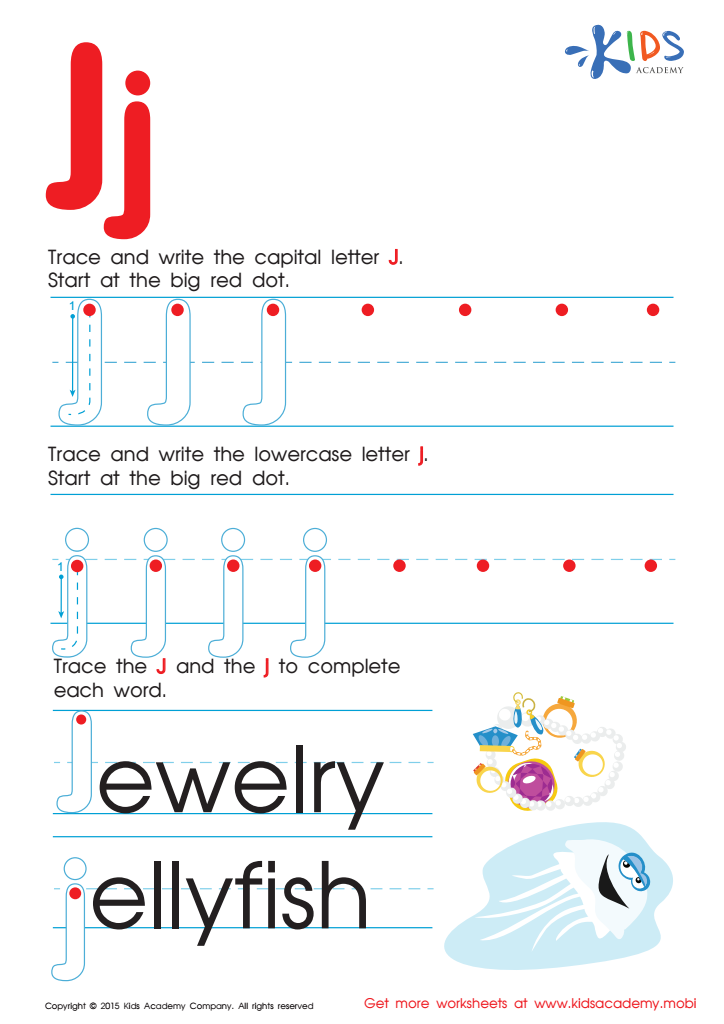
Letter J Tracing Page
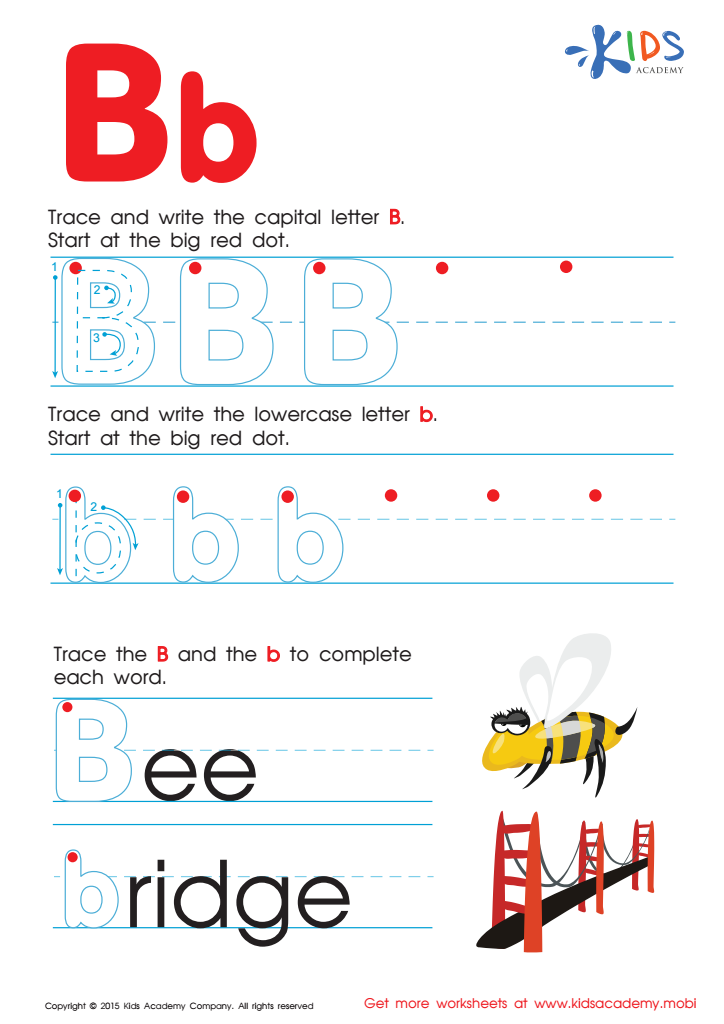
Letter B Tracing Page
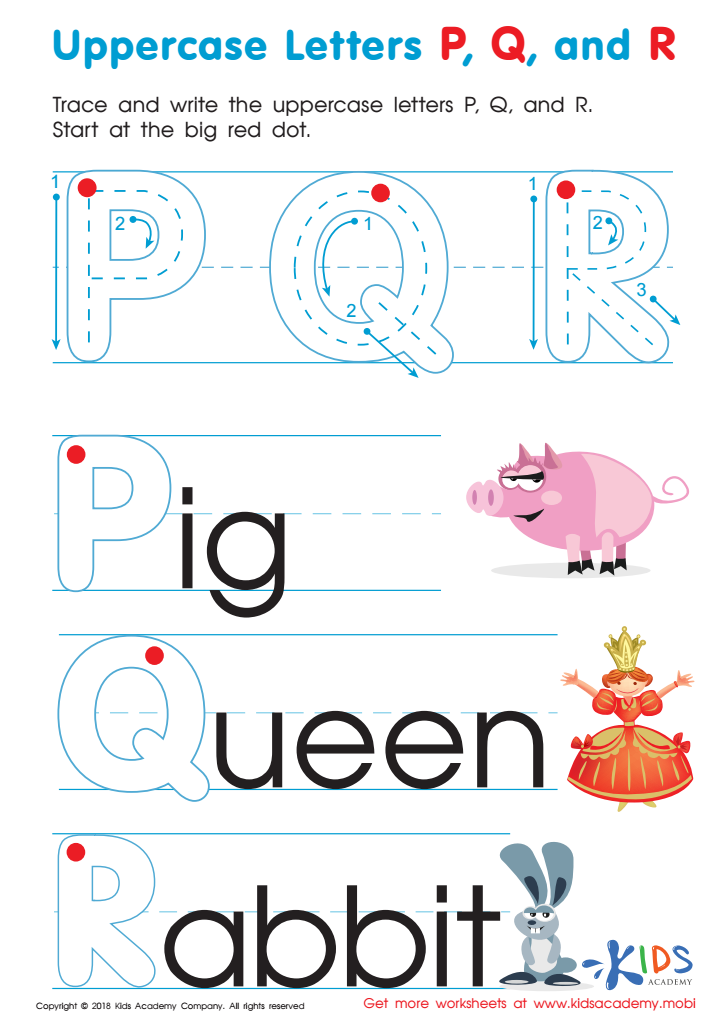
Uppercase Letters P, Q, and R Worksheet







Handwriting is a fundamental skill that significantly impacts a child's academic performance and self-esteem. For 6-year-olds, tracing letters is an effective way to develop fine motor skills, hand-eye coordination, and cognitive functioning. This early stage of writing sets the foundation for future written expression and comprehension.
Parents and teachers should prioritize handwriting improvement, as it enhances not only legibility but also fosters a sense of achievement. Good handwriting can boost a child's confidence in school, allowing them to participate more fully in classroom activities without the anxiety of struggling to write legibly.
Moreover, coordinating tracing with verbalizing letter sounds during practice reinforces phonetic awareness, deeply embedding literacy skills. As children practice, they begin to internalize the shapes of letters, which aids in spelling and reading—all essential skills in their early academic journey.
Handwriting skills have implications beyond the classroom; they are vital for general life skills such as note-taking and completing forms. By engaging in activities like tracing letters, parents and teachers can create a supportive environment that nurtures both the child's motor abilities and their overall academic development, paving the way for future success in learning.








