Letter recognition Tracing Letters Worksheets for 6-Year-Olds - Page 2
26 filtered results
-
From - To
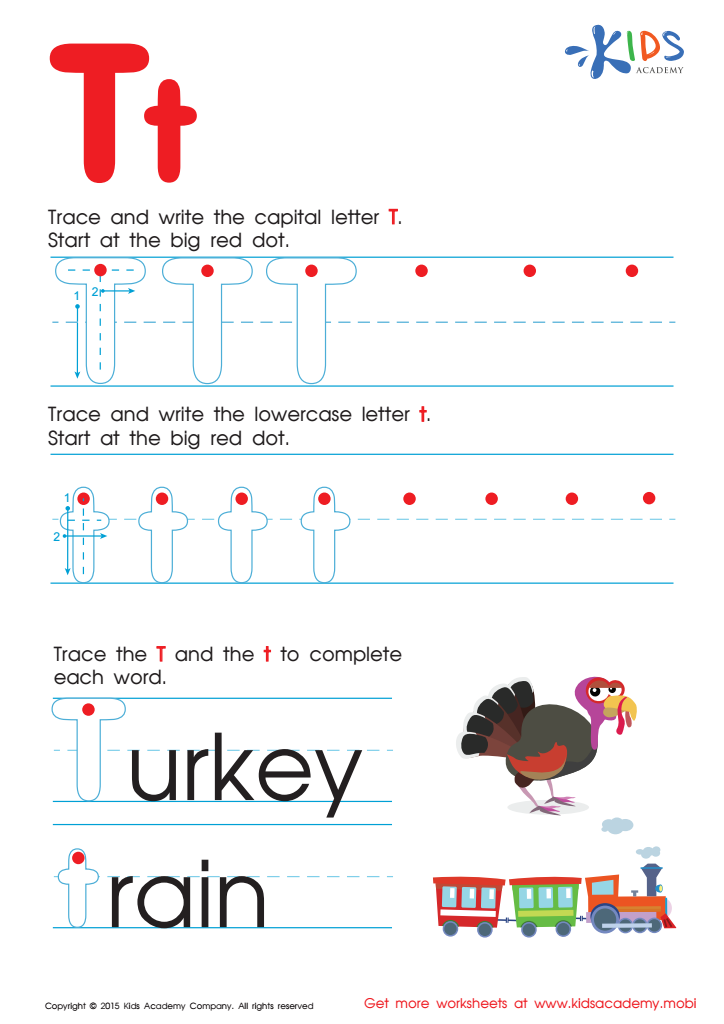
Letter T Tracing Page
 Assign to My Students
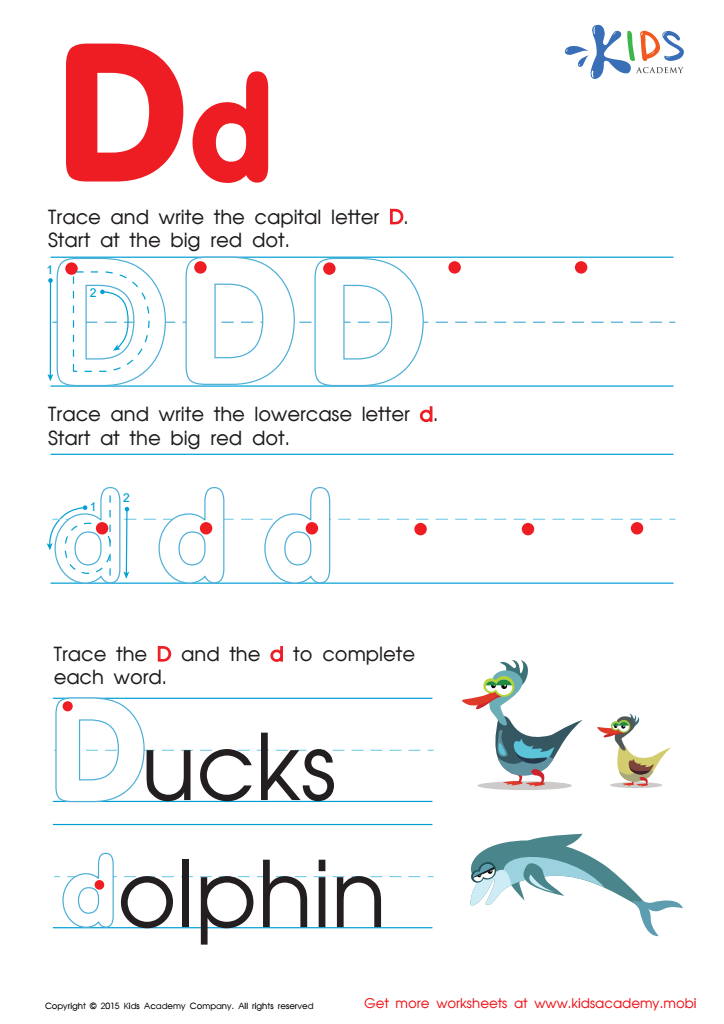
Letter D Tracing Page








Letter recognition and tracing letters are fundamental skills crucial for a 6-year-old's literacy development. As children transition from pre-reading to reading stages, recognizing and forming letters is essential in building their foundational knowledge of written language. This stage of learning supports their ability to identify letters visually, understand phonetics, and develop decoding skills that are needed for reading fluency.
Tracing letters helps children develop fine motor skills, improving their hand-eye coordination, which is vital for writing and everyday tasks. As they engage in tracing activities, they also start to understand letter formation and proper writing techniques, setting a positive precedent for future handwriting skills. Moreover, the act of tracing reinforces memory retention, allowing children to internalize the shapes and sounds associated with each letter.
Parents and teachers play pivotal roles by providing consistent support and encouragement. Engaging in letter recognition activities creates a positive learning environment that enhances a child's confidence and motivation. By prioritizing these skills, caregivers can significantly influence a child's reading readiness, laying a strong foundation for lifelong literacy and academic success. In summary, focusing on letter recognition and tracing helps create well-rounded, literate individuals prepared for future educational challenges.








