Word Recognition Two Letter Phonics Worksheets for 6-Year-Olds
4 filtered results
-
From - To
Boost your child's reading skills with our engaging Word Recognition Two Letter Phonics Worksheets designed specifically for 6-year-olds! These fun and interactive activities introduce young learners to essential phonics concepts, helping them recognize and sound out two-letter words confidently. Each worksheet features playful illustrations and engaging prompts that encourage children to practice blending sounds and identifying words. Ideal for home or classroom use, these worksheets foster critical literacy skills, setting a solid foundation for future reading success. Explore our collection today and watch your child flourish as they embark on an exciting phonics adventure! Perfect for early grade education and skill reinforcement.
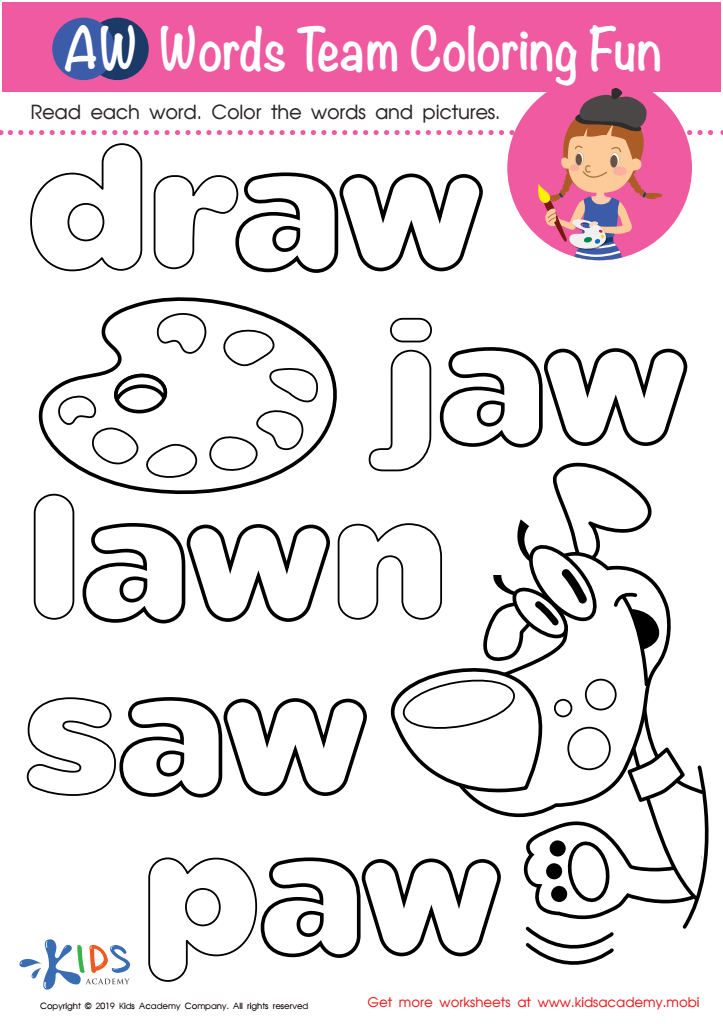
AW Words Team Coloring Fun Worksheet
 Assign to My Students
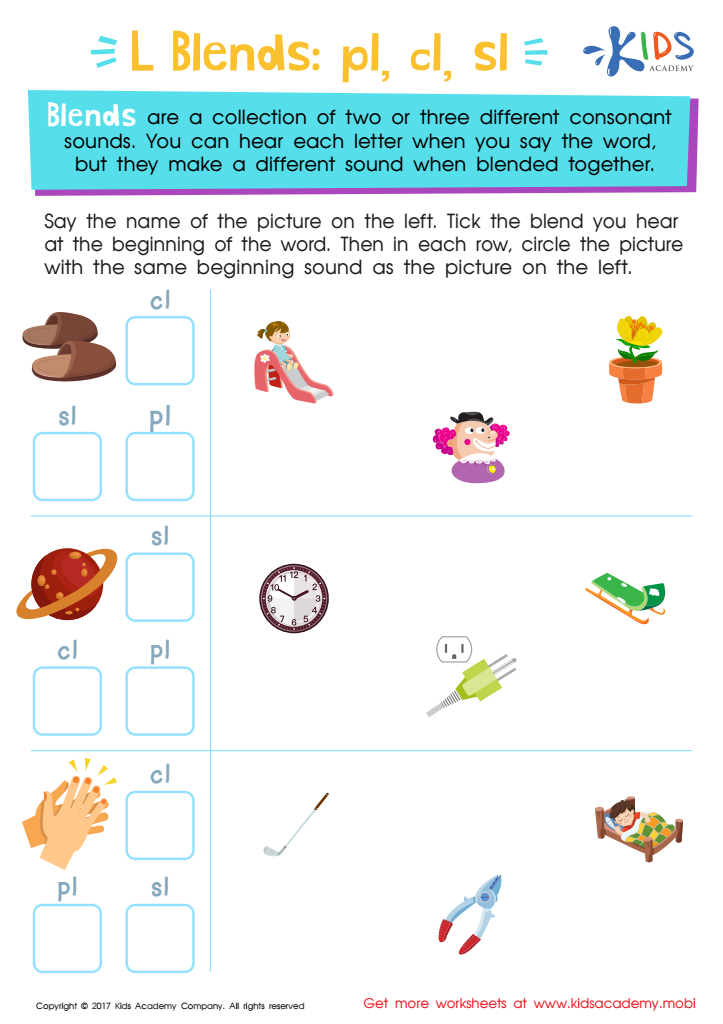
L Blends: "Pl", "Cl" and "Sl" Printable
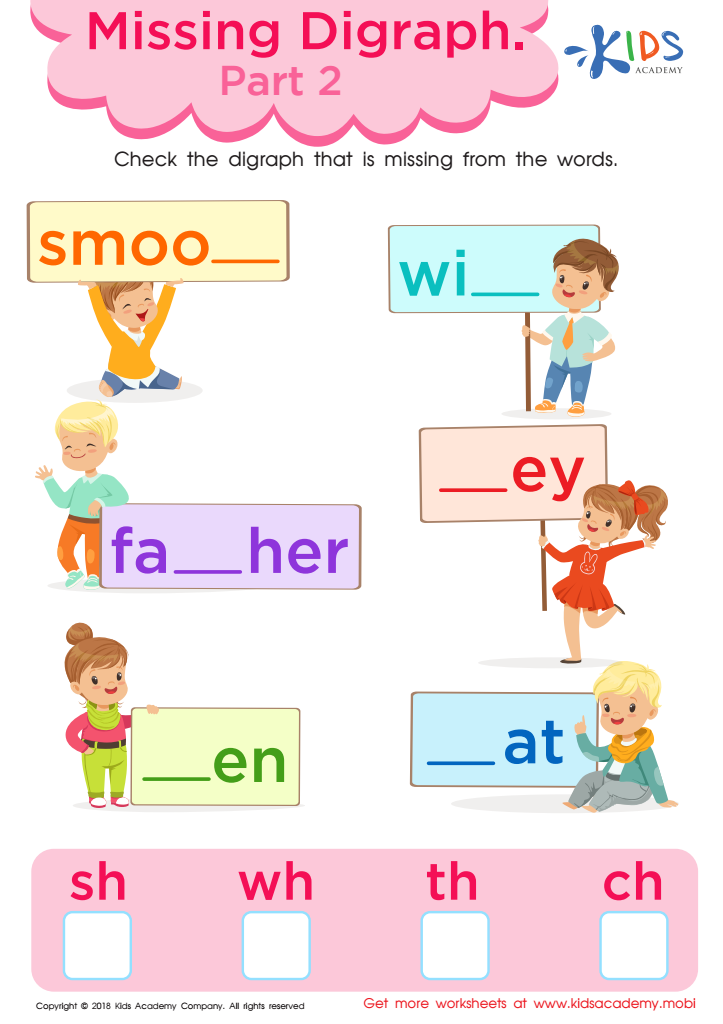
Missing Digraph: Part 2 Worksheet
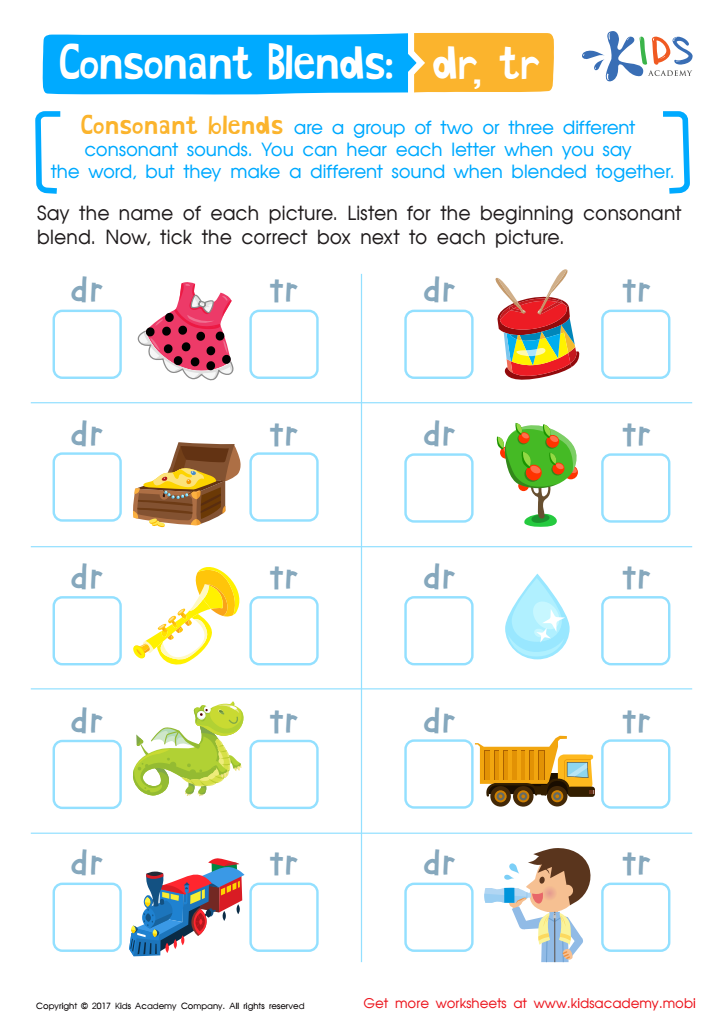
Consonant Blends: "Dr" and "Tr" Printable



Word recognition and two-letter phonics are essential components of early literacy development for 6-year-olds. At this age, children are mastering their reading skills, and understanding phonics lays the groundwork for their future education. Two-letter phonics, such as 'at,' 'up,' and 'in,' introduces young readers to the vital idea that letters combine to create sounds and meanings.
When parents and teachers prioritize word recognition of these two-letter combinations, they help enhance children's ability to decode words independently. This skill is crucial for building confidence in reading, minimizing frustration, and promoting a love for literature. Early proficiency in recognizing these simple words allows children to tackle more complex texts as they progress.
Additionally, ensuring that children can recognize these foundational words can improve their comprehension skills. When children automatically identify words, they can focus more on understanding the meaning of the text rather than getting bogged down by decoding unfamiliar terms.
Ultimately, fostering strong word recognition through two-letter phonics significantly impacts a child’s academic journey, setting them up for success in reading fluency, writing skills, and overall language development. Parents and teachers working together to support this learning can dramatically influence children's literacy outcomes.







