Alphabet understanding Upper & Lowercase Letters Worksheets for 6-Year-Olds
3 filtered results
-
From - To
Explore our engaging Upper and Lowercase Letters Worksheets, designed specifically for 6-year-olds to enhance their alphabet understanding! These fun and interactive resources help children differentiate between uppercase and lowercase letters, a crucial skill as they begin their literacy journey. With a variety of activities ranging from tracing and matching to letter recognition exercises, our worksheets cater to diverse learning styles. Perfect for homeschooling or classroom settings, these activities make learning enjoyable and effective. Foster a love for reading and writing in your child by incorporating these worksheets into their daily routine and watch their confidence soar!
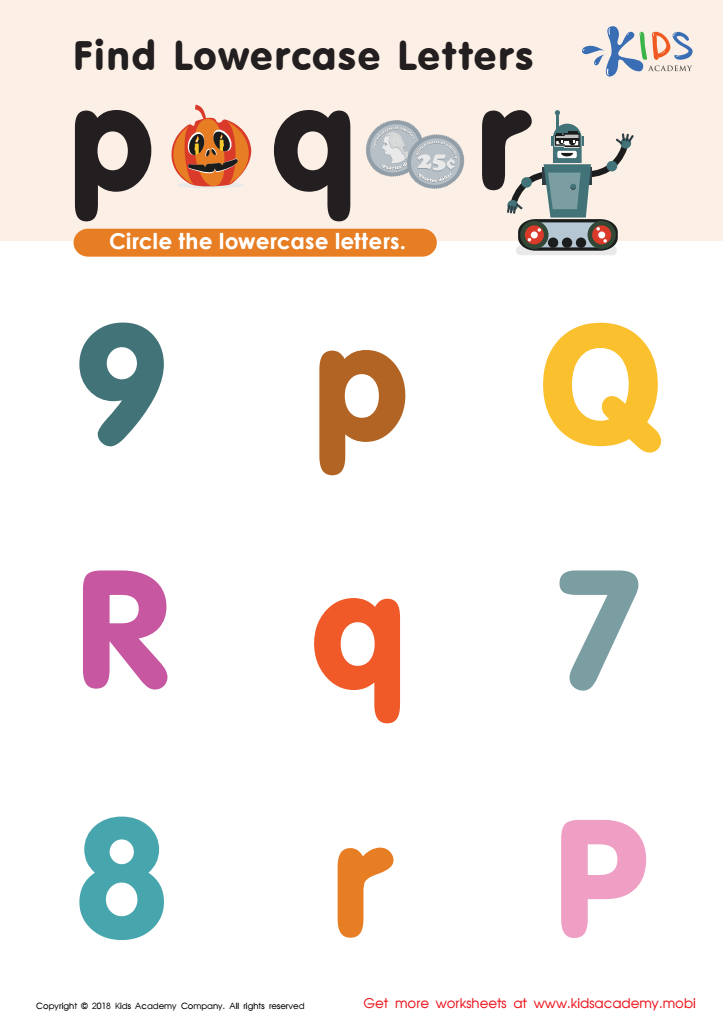
Find lowercase Letters p q r Worksheet
 Assign to My Students

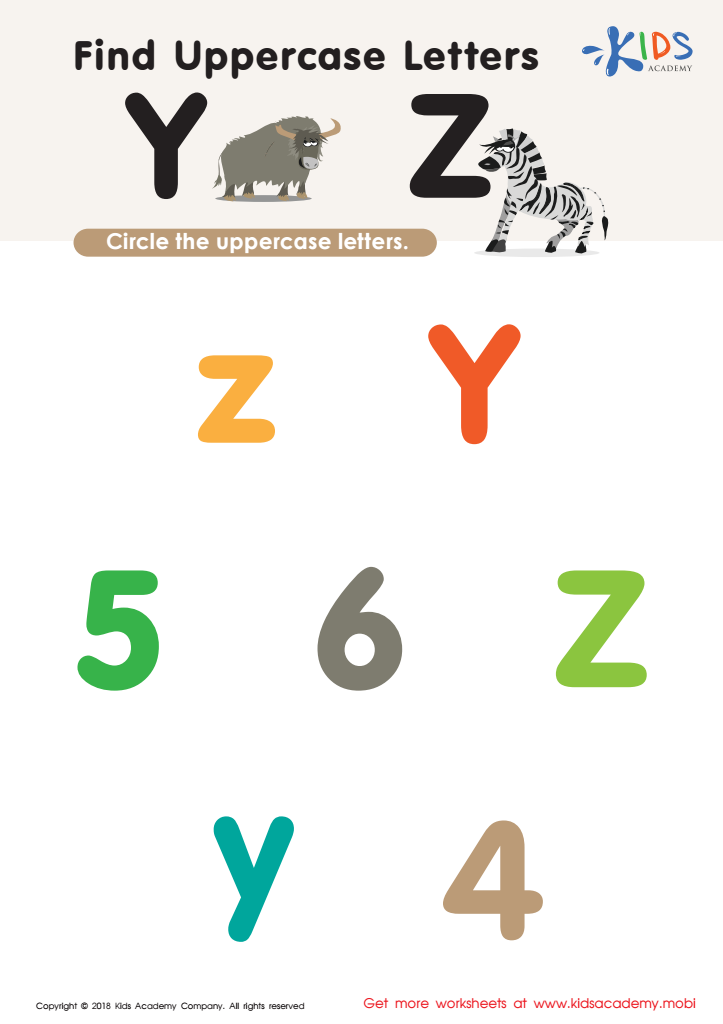
Find Uppercase Letters Y Z Worksheet

Find lowercase letters a b c Worksheet






Understanding both uppercase and lowercase letters is crucial for 6-year-olds as they lay the foundation for literacy development. Mastery of the alphabet forms the cornerstone of reading and writing, pivotal skills for academic success. Recognizing uppercase letters helps children understand sentence structure; these letters typically signal the beginning of sentences or important names. This awareness aids in reading comprehension and bolsters their ability to decode text effectively.
Conversely, lowercase letters are more frequently used in writing and reading, making their recognition equally vital. If children struggle with identifying or distinguishing between case types, it can hinder their ability to read fluently and compositionally express themselves.
Moreover, engaging with the alphabet supports cognitive development, enhances memory, and promotes fine motor skills through writing practice. Parents and teachers who actively foster an understanding of the alphabet encourage enthusiasm for learning, nurturing a love for books and storytelling.
By prioritizing alphabet recognition, parents and teachers provide young learners with essential tools for communication and literacy, setting them on a path for lifelong learning and success.







