Letter Tracing Practice Upper & Lowercase Letters Worksheets for 6-Year-Olds
3 filtered results
-
From - To
Discover our engaging "Letter Tracing Practice Worksheets" designed for 6-year-olds to master upper and lowercase letters! These printable worksheets are perfect for young learners to enhance their handwriting skills while building a strong foundation in literacy. Through fun and interactive exercises, children will practice tracing each letter, improving their fine motor skills and letter recognition. Ideal for both home and classroom use, our worksheets are tailored to foster confidence and promote an early love for writing. Explore our collection today and watch your child's writing abilities flourish with every stroke! Make learning fun and effective with our letter tracing resources!
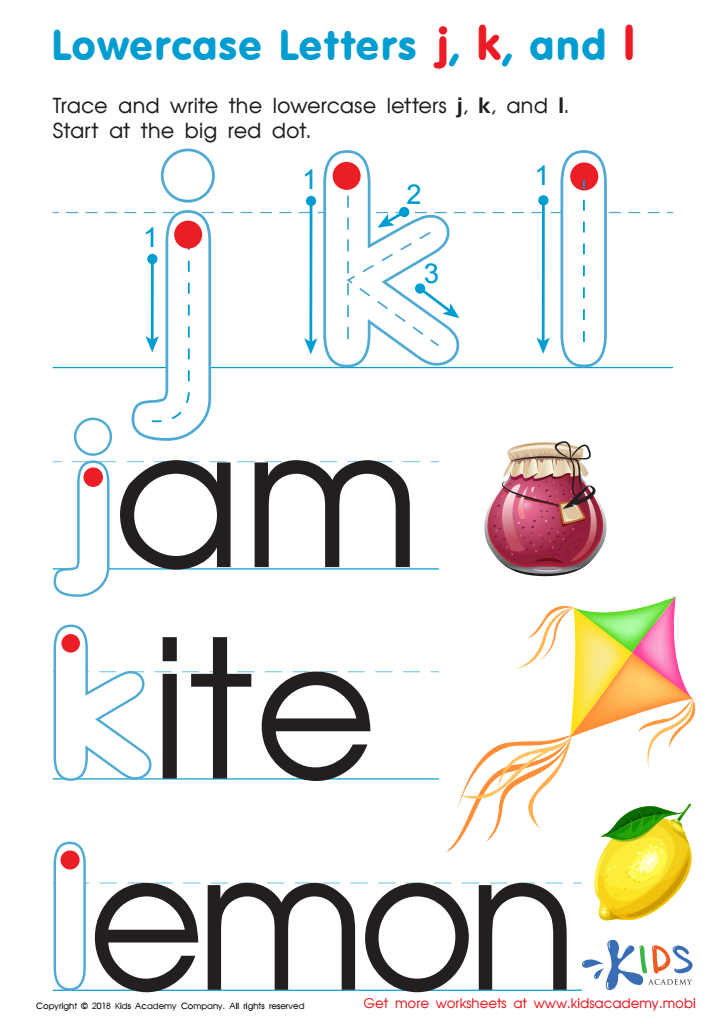
Lowercase Letters j k l Worksheet
 Assign to My Students




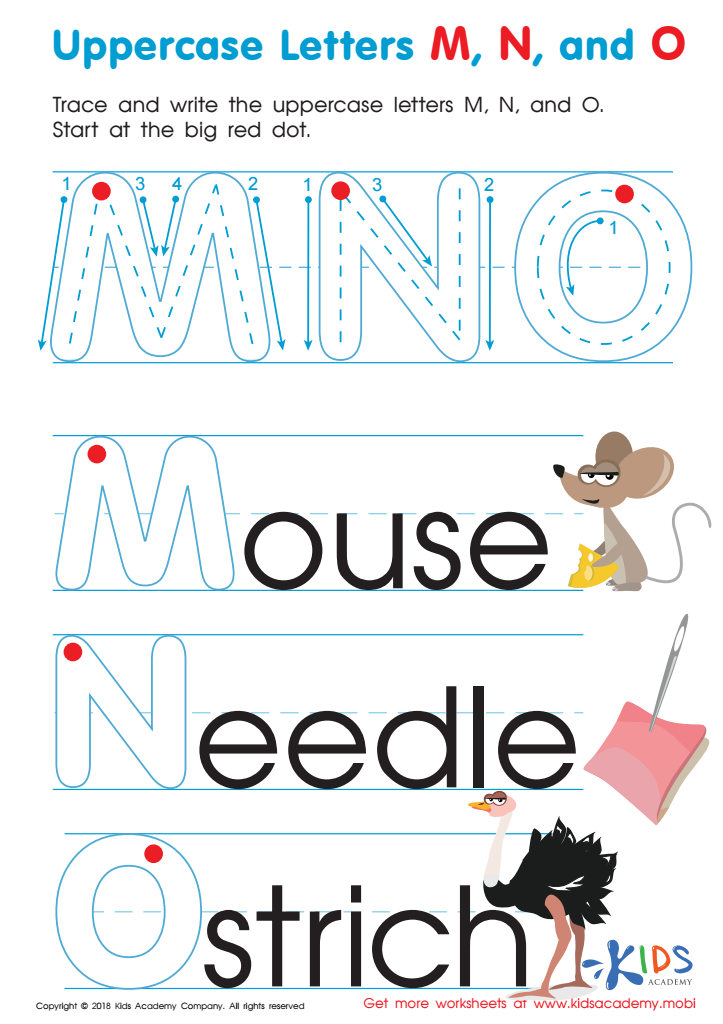
Uppercase Letters M, N, and O Worksheet
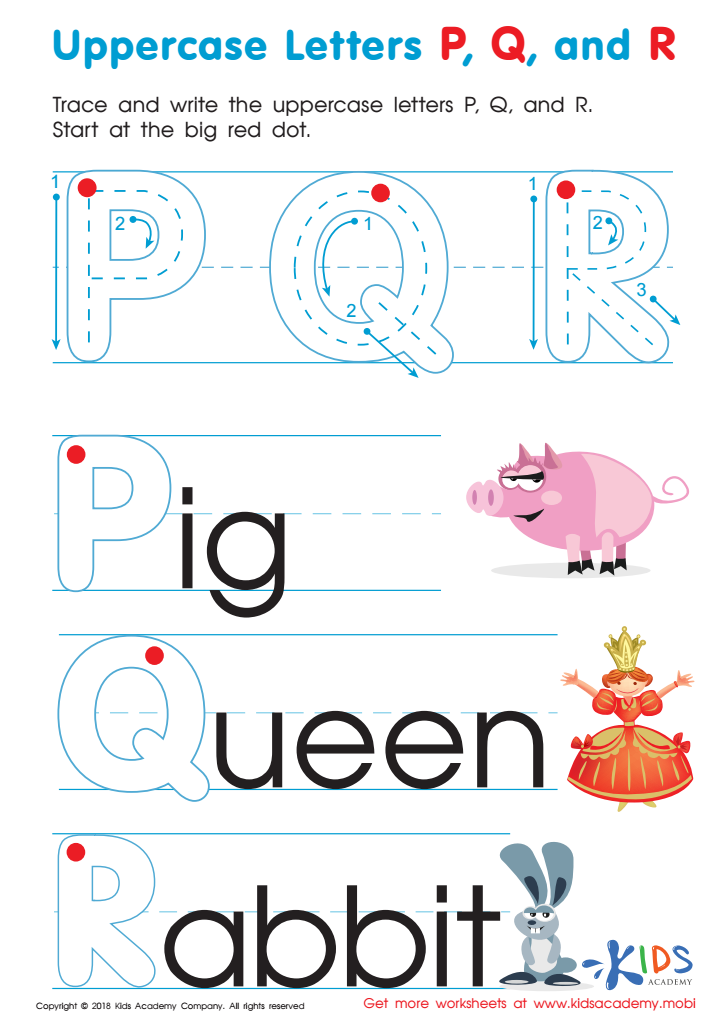
Uppercase Letters P, Q, and R Worksheet






Letter tracing practice is crucial for six-year-olds as it lays the foundation for developing fine motor skills, literacy, and handwriting. At this age, children are at a critical stage in their learning journey, and engaging them in activities like tracing upper and lowercase letters helps enhance their hand-eye coordination and dexterity. These skills are not just important for writing; they also play a vital role in other academic areas and daily tasks.
Additionally, tracing promotes letter recognition, which is essential for reading and phonemic awareness. As children trace, they become familiar with the shapes and sounds of letters, making connections between written and spoken language. This early exposure to letter forms aids in reducing confusion between similar-looking letters, such as 'b' and 'd.'
Furthermore, incorporating tracing into learning routines can create a sense of accomplishment for children, boosting their confidence in writing. Parents and teachers should care about this practice, as it not only enhances technical skills but also fosters a love for writing and literacy. Cultivating these abilities at an early age prepares children for future learning challenges, setting them on a path toward academic success.







