Lowercase letter writing Upper & Lowercase Letters Worksheets for 6-Year-Olds
3 filtered results
-
From - To
Help your 6-year-old master lowercase letter writing with our printable worksheets! Designed to enhance fine motor skills and phonemic awareness, our engaging activities make learning fun and effective. Each worksheet offers a variety of exercises, from tracing to independent writing, that support your child in recognizing and writing lowercase letters with ease. Perfect for homeschooling or supplementary classroom practice, these resources ensure children develop a solid foundation in alphabet knowledge. Give your young learner a head start in reading and writing with our expertly crafted Lowercase Letter Writing Upper & Lowercase Letters Worksheets today!
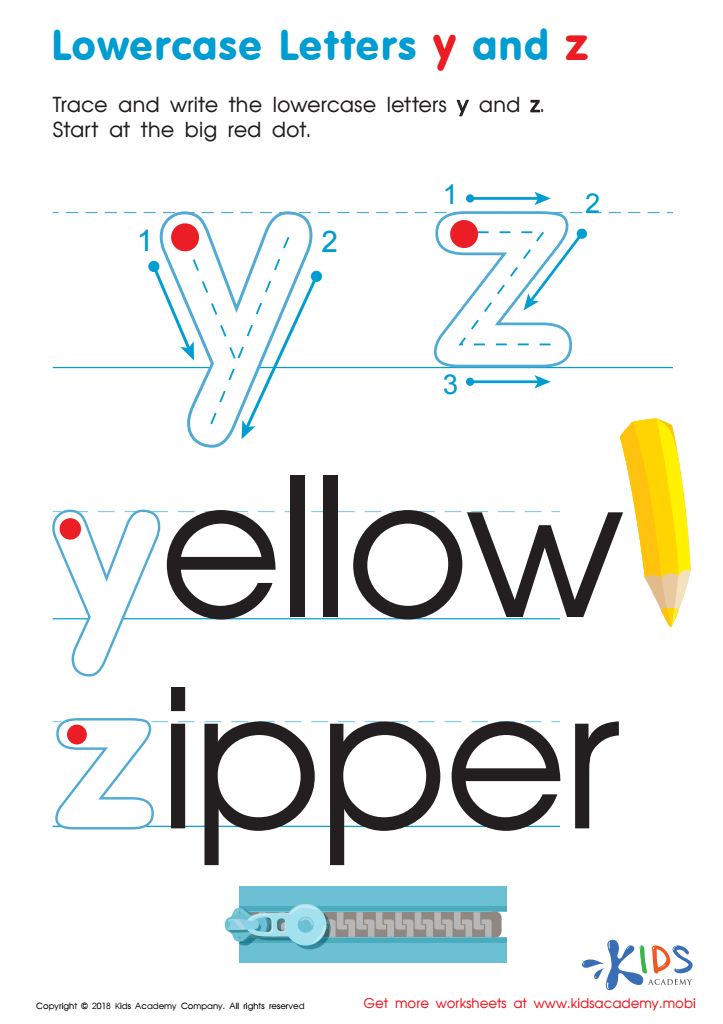
Lowercase Letters y z Worksheet
 Assign to My Students


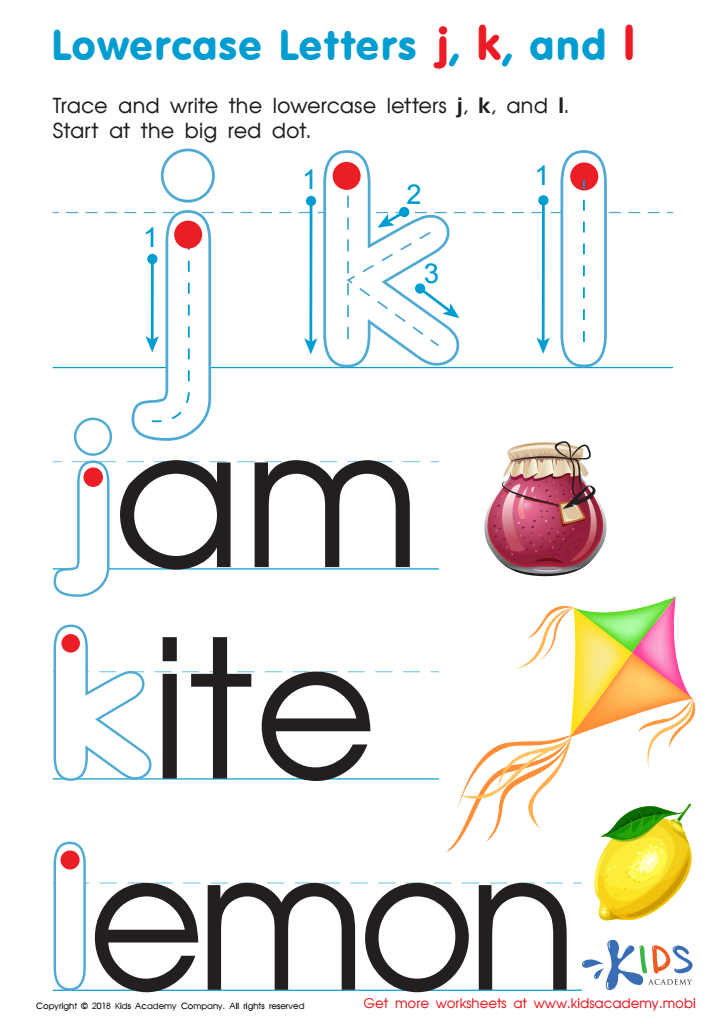
Lowercase Letters j k l Worksheet
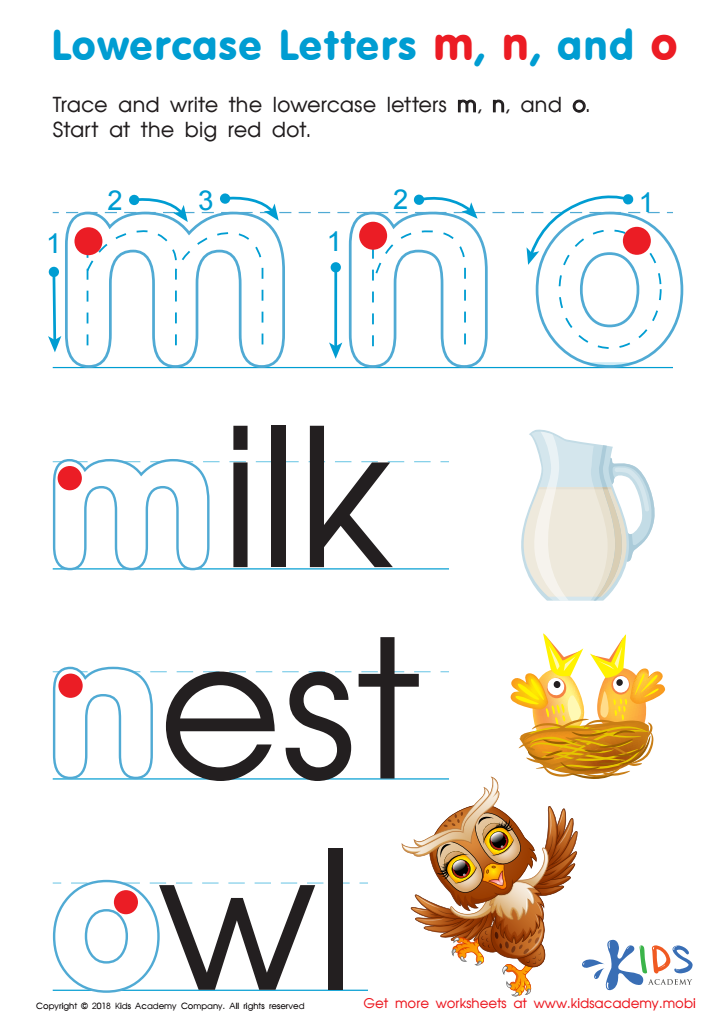
Lowercase Letters m n o Worksheet






At the age of six, children are establishing foundational literacy skills crucial for their academic and personal development. Focusing on both uppercase and lowercase letter writing is essential because each letter case plays a unique role in reading and writing. Recognizing and writing lowercase letters proficiently typically poses more difficulty for children due to their varied shapes and sizes compared to the more uniform uppercase letters.
For teachers and parents, emphasizing the importance of lowercase letters facilitates stronger reading fluency, as lowercase letters dominate written text. Mastery of both upper and lowercase letters enhances a child’s ability to decode words efficiently, leading to better reading comprehension and an increased love for reading. Successfully distinguishing between the two also aids in recognizing and understanding proper nouns, which always begin with capital letters, and improves grammatical awareness.
From a developmental perspective, practicing letter writing refines fine motor skills, hand-eye coordination, and reinforces memory through repeated formation of letters. It builds a strong foundation on which further language and cognitive skills are built, creating pathways for improved spelling, writing, and communication skills. Engaging children in such activities encourages perseverance, attention to detail, and sets them on a path toward literacy proficiency, ultimately supporting overall academic success.







