Hand-eye Coordination Vowels Worksheets for 6-Year-Olds
4 filtered results
-
From - To
Boost your 6-year-old's learning with our Hand-eye Coordination Vowels Worksheets! Designed to strengthen fine motor skills while teaching essential vowel sounds, these engaging activities offer an interactive way to practice letter tracing, matching, and identifying vowels within words. Perfectly tailored for young learners, our worksheets not only enhance hand-eye coordination but also build foundational reading and writing skills, setting the stage for academic success. With vibrant illustrations and clear instructions, kids remain motivated and excited to learn. Make education enjoyable and effective with our expertly crafted resources, ensuring fun and fruitful development for your child.
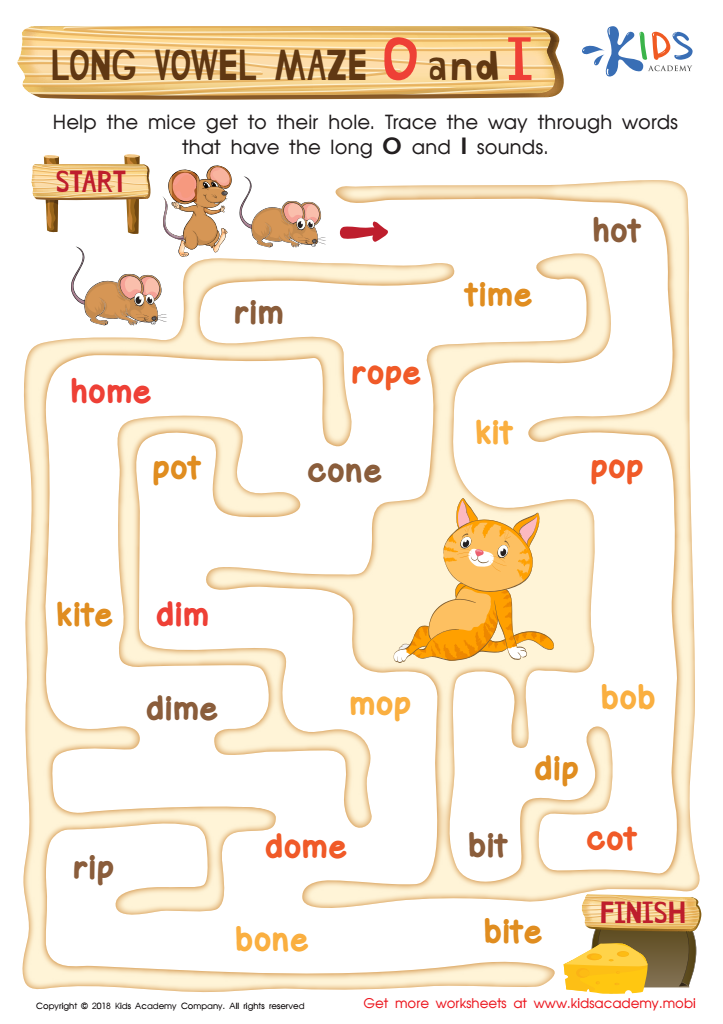
Long Vowel Maze /o/ and /i/ Worksheet
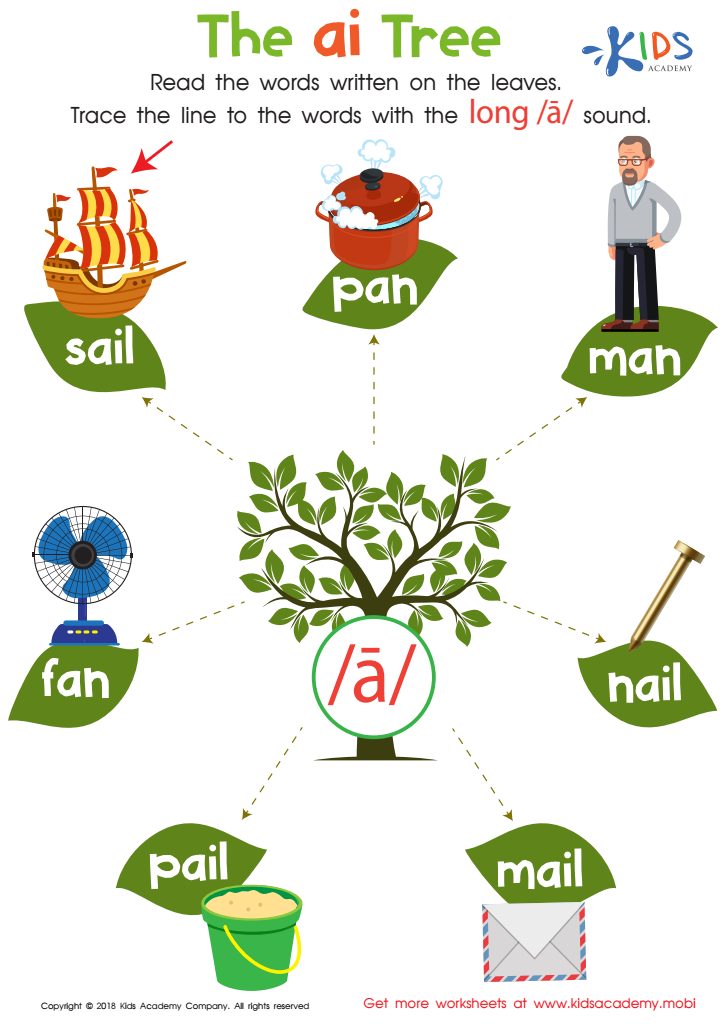
The AI Tree Worksheet

Long and Short U Worksheet
 Assign to My Students
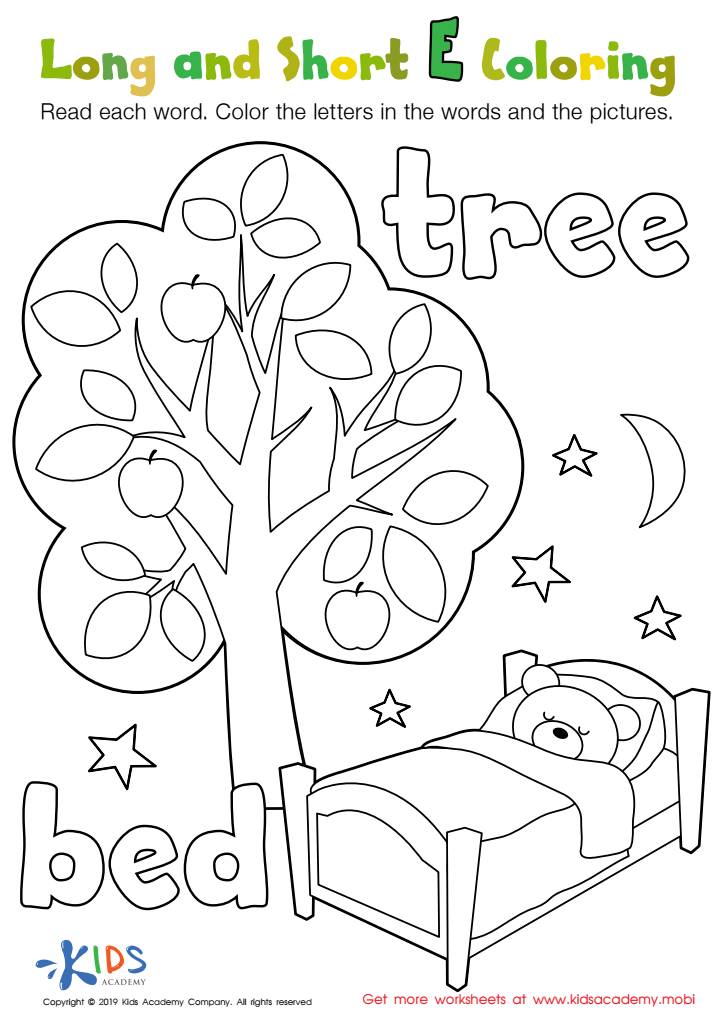
Long and Short E Worksheet
Assign to My Students





Hand-eye coordination is an essential skill for 6-year-olds as it plays a pivotal role in their overall development, particularly in academic and physical activities. Developing hand-eye coordination involves the ability to perform tasks that require the simultaneous use of hands and eyes, which is critical for learning to write, draw, and even tie shoes. Specifically for vowels, practicing hand-eye coordination can aid in the fundamental understanding of language and literacy.
Focusing on vowels helps children improve their pronunciation, phonemic awareness, and reading skills. By incorporating vowel exercises that require visual tracking and precise hand movements, such as tracing letters or matching vowel sounds to corresponding images, we can make learning interactive and fun for young children. These activities solidify letter recognition and sound associations while enhancing fine motor skills.
Teachers and parents should care about hand-eye coordination for vowels because strong early literacy skills form the foundation for future academic success. Children who can confidently recognize and reproduce vowel sounds are better prepared for more complex reading and writing tasks. Improved hand-eye coordination also translates to smoother, more legible handwriting, leading to greater confidence and reducing frustration in learning activities. Prioritizing this aspect of development ensures a well-rounded, supportive educational environment.







