
Vocabulary enhancement Vowels Worksheets for 6-Year-Olds
9 filtered results
Difficulty Level
Grade
Age
-
From - To
Subject
Activity
Standards
Unlock the power of words with our Vocabulary Enhancement Vowels Worksheets specially crafted for 6-year-olds! These engaging activities help young learners explore and master vowels, strengthening their reading and language skills. Through fun and interactive exercises, kids will enhance their vocabulary, boost phonemic awareness, and develop a strong foundation for reading fluency. Our worksheets make learning enjoyable, combining colorful graphics and age-appropriate challenges. Ideal for both classroom and home practice, these resources support academic success by making vowel education an exciting adventure. Equip your child with essential language skills today with our expertly designed worksheets!
Favorites
With answer key
Interactive
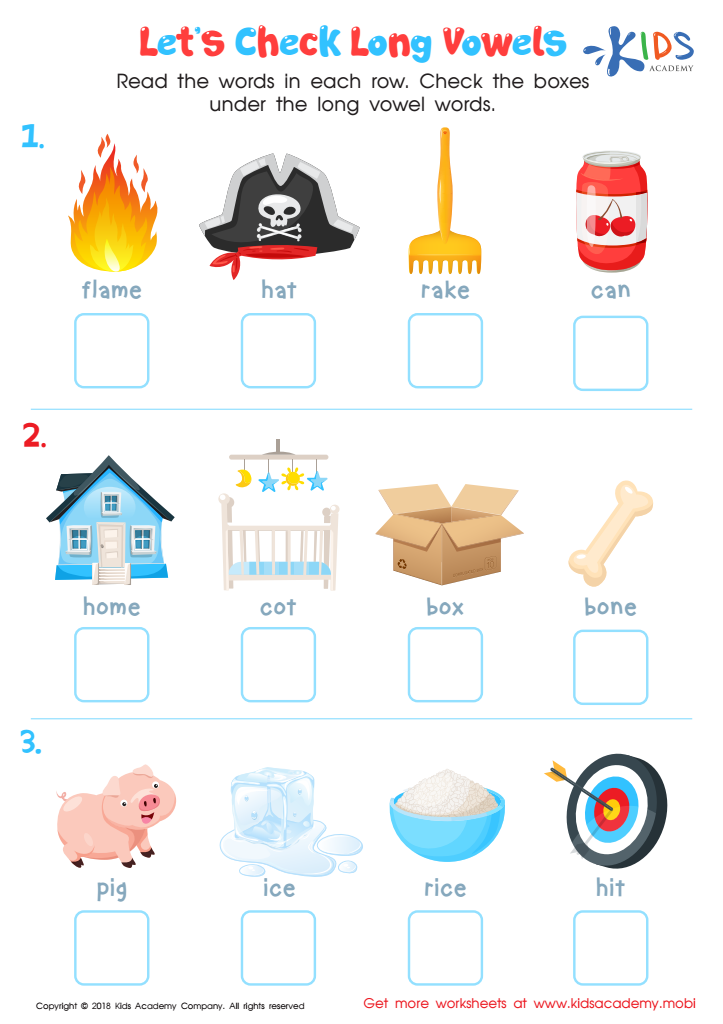
Let's Check Long Vowels: Assessment Worksheet
This worksheet helps your child identify objects and learn long vowel sounds. Ask them to say the names of the four objects in each row. Then, help them check the boxes to confirm they know the long vowel sounds. This will help them develop their reading skills.
 Assign to My Students
Let's Check Long Vowels: Assessment Worksheet
Worksheet
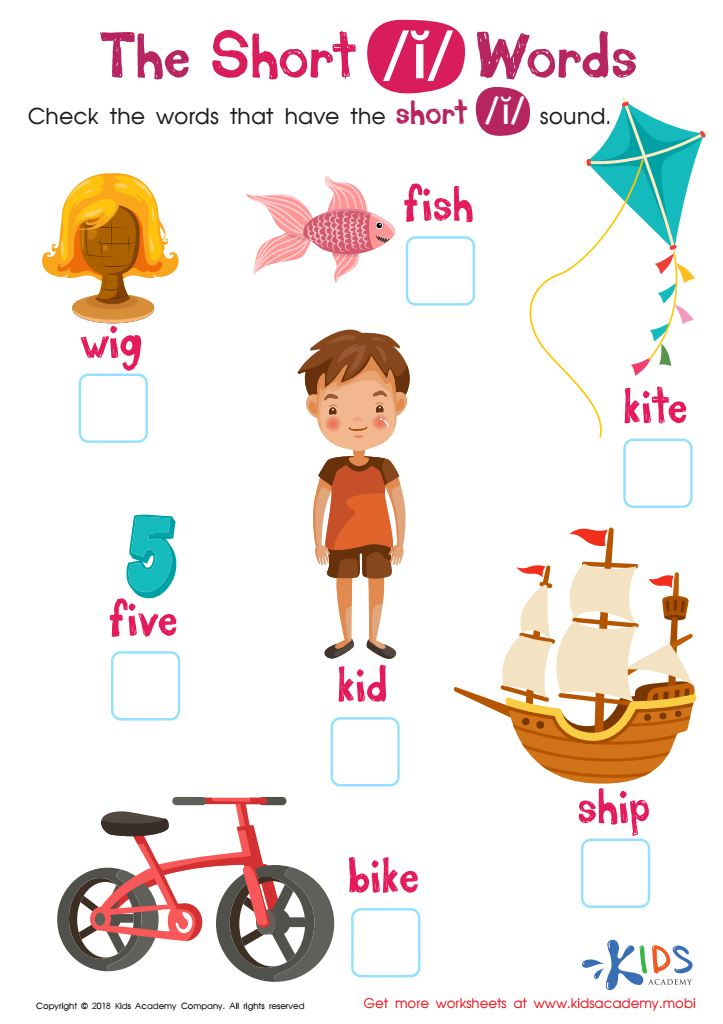
The Short I Words Reading Worksheet
Teach your kindergartner phonics with this printout worksheet! It introduces the short «i» sound and helps them differentiate and articulate sounds and letters of the alphabet. With practice, your child will soon find it easy to classify sounds into long and short vowels.
The Short I Words Reading Worksheet
Worksheet
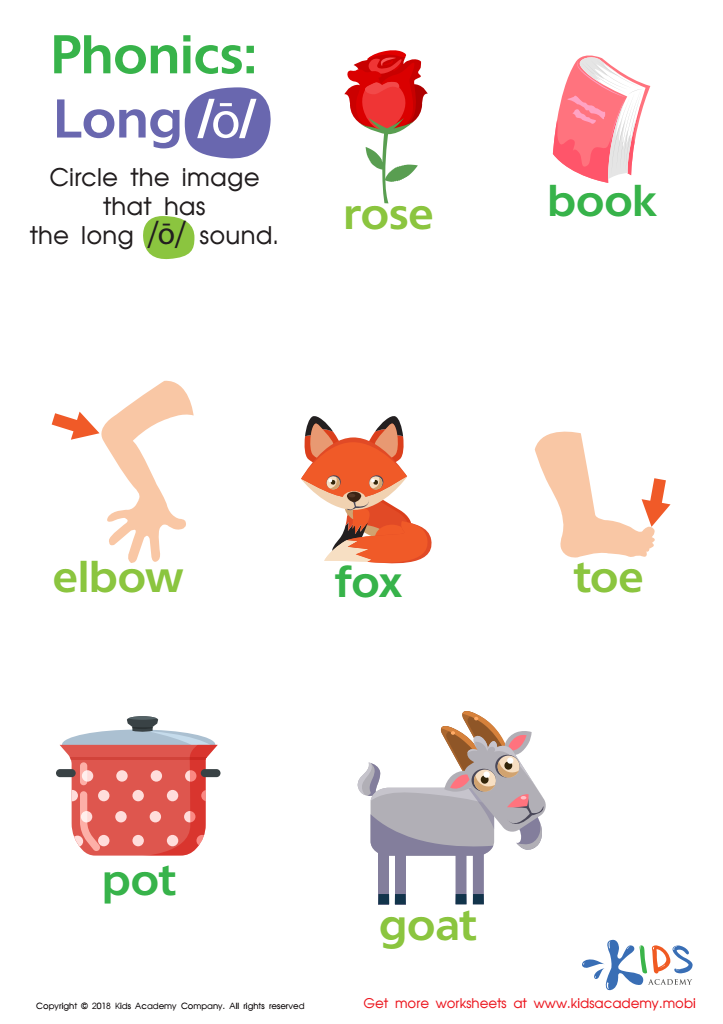
Phonics Long O Reading Worksheet
Are you ready to help your child learn the phonics long «o» sound? This worksheet is designed to aid them in getting familiar with the sound. After completing the exercise, your child should be able to differentiate letters, and recognize words with the long «o» sound. Encourage them to circle the images that have the sound.
Phonics Long O Reading Worksheet
Worksheet
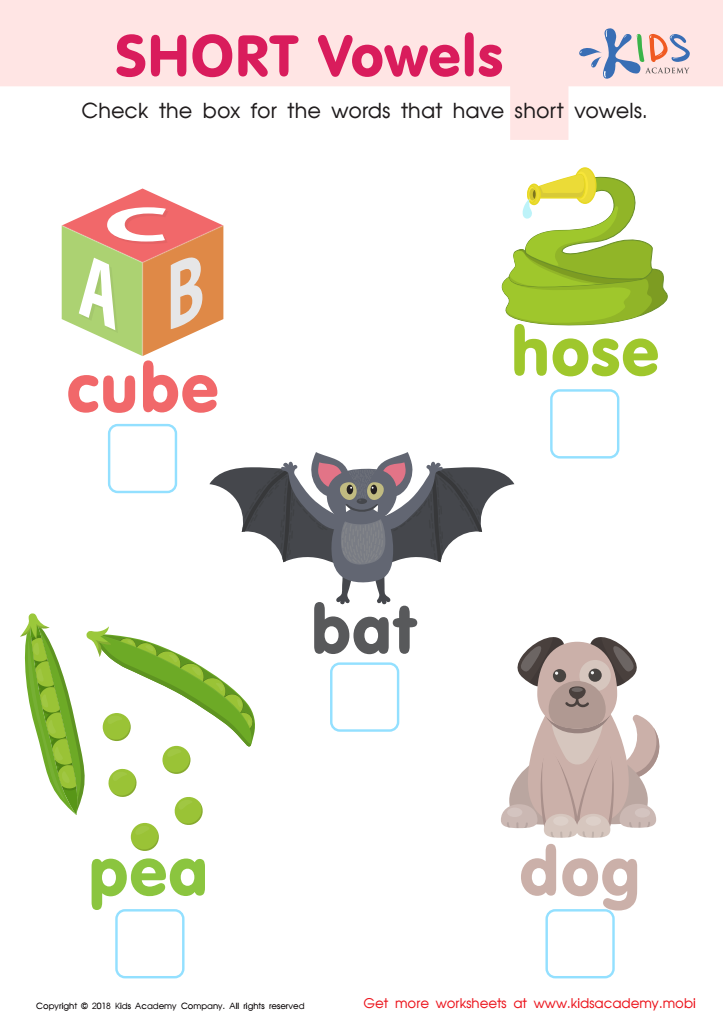
short vowels Worksheet
Say "dog" and notice how long it takes to pronounce the vowel. Is it short or long? Compare it to "pea" and use this worksheet to quickly assess your child's mastery. Have them name each picture and listen for the vowel sounds. Only check the boxes for words with short vowel sounds.
short vowels Worksheet
Worksheet
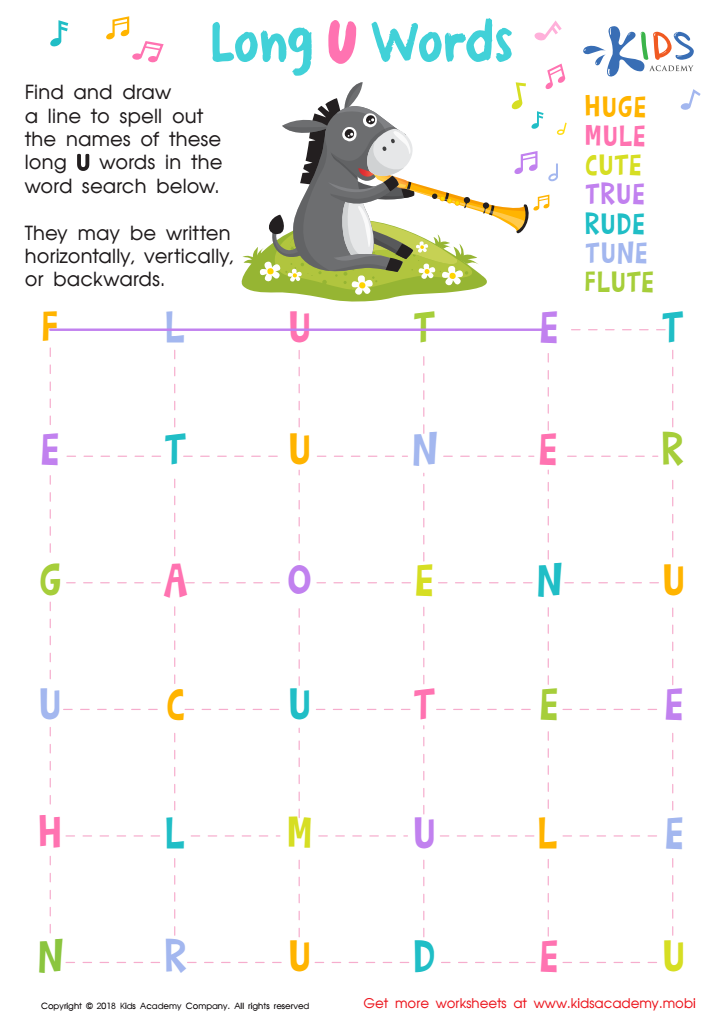
Long /u/ Words Worksheet
Your child needs to learn phonetics to enunciate and differentiate words. This fun worksheet encourages them to find and draw lines connecting the long 'U' words in the word search. Help them read the words on the right side of the picture, then look for them in the word search (horizontally, backwards or vertically).
Long /u/ Words Worksheet
Worksheet
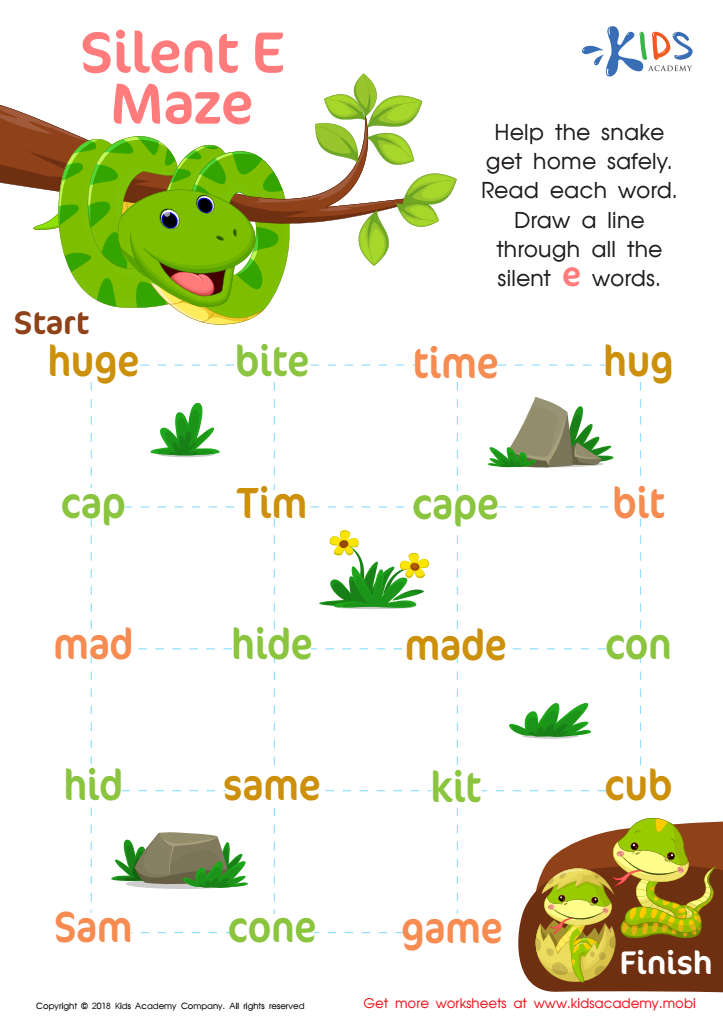
Silent E Maze Worksheet
Kids love mazes! This fun printable worksheet lets them help a mama snake get home to her babies, using Silent E words. They'll practice fine motor skills, while they draw lines through words that have Silent E and words with closed syllables that don't. It's a great way to help them recognize Silent E words!
Silent E Maze Worksheet
Worksheet
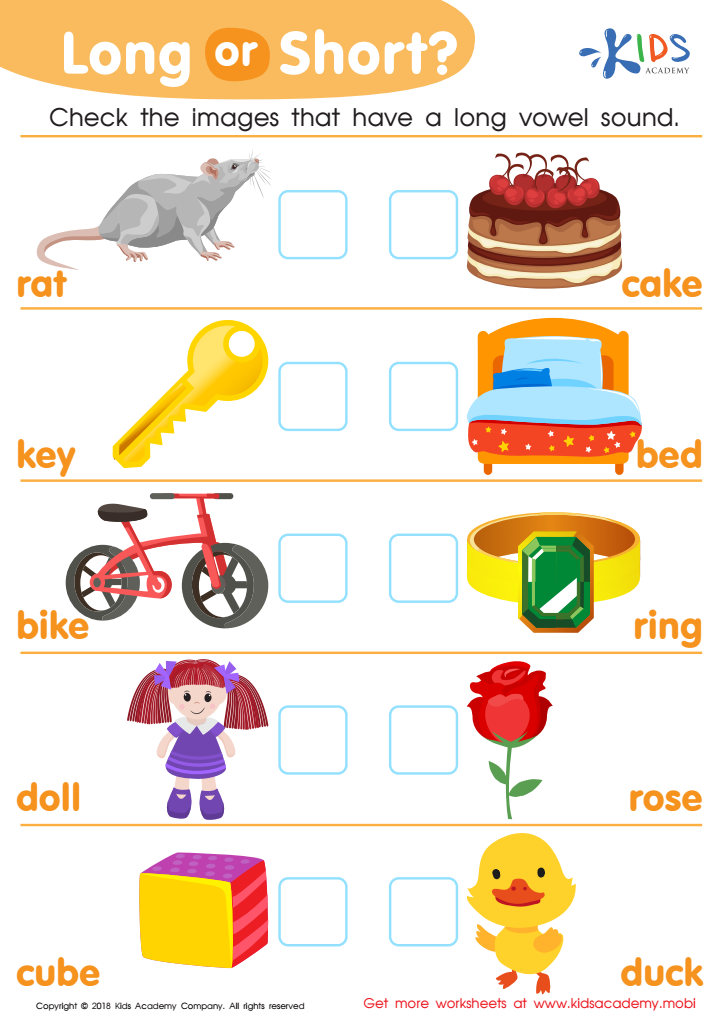
Long or Short Reading Worksheet
Every new reader needs to learn to recognize long and short vowel sounds. This phonics worksheet uses pictures of high-frequency words to help. Kids read the words and then check off images with long vowel sounds. It helps them learn to decode words and improves fine motor skills.
Long or Short Reading Worksheet
Worksheet
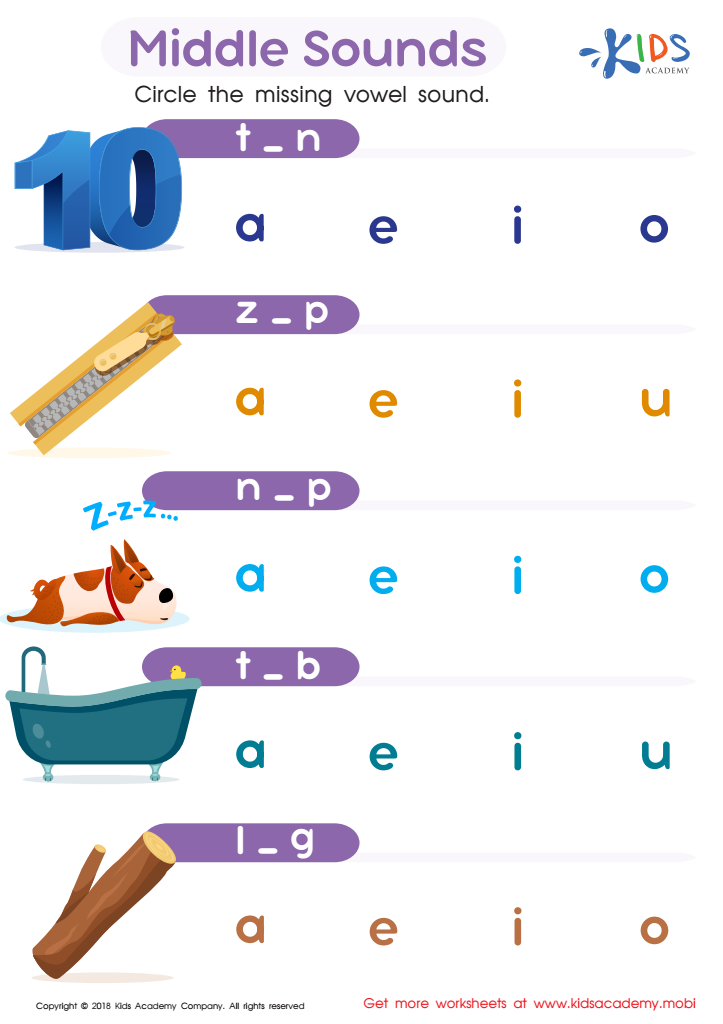
Middle Sounds Worksheet
Download this free worksheet and help your reader identify middle sounds in words. Pictures provide clues to the word, while tracing circles around the middle vowel sound strengthens fine motor and visual discrimination skills. It's a great way to teach sound discrimination between similar-sounding short vowels - a key component for proficient reading.
Middle Sounds Worksheet
Worksheet
Join Kids Academy for Free
Who is primarily going to use this learning content?





Parents and teachers should prioritize vocabulary enhancement and an understanding of vowels for 6-year-old children because these foundational skills are crucial for their overall language development and academic success. Vocabulary is a key component of communication, enabling children to express themselves clearly and understand others. By expanding a child's vocabulary, parents and teachers improve their ability to learn new concepts, follow instructions, and engage in meaningful conversations.
Understanding vowels specifically is vital because they are the building blocks of English phonics. Vowels are present in nearly every word, and their proper usage is essential for reading and spelling. When children understand how vowels work, they can better decode new words they encounter, facilitating smoother and more confident reading experiences. Mastery of vowel sounds helps in accurate pronunciation and leads to improved reading fluency and comprehension.
Moreover, early mastery of these skills can boost a child's confidence and foster a love for learning. Enhancing vocabulary and vowel knowledge in young learners sets a strong literacy foundation, which is crucial for academic progress in all subjects. Parents and teachers investing time and effort into these areas can stimulate cognitive development, encourage intellectual curiosity, and pave the way for a child’s long-term educational success.







