Chess knowledge Chess Worksheets for 6-Year-Olds
3 filtered results
-
From - To
Discover the exciting world of chess with our engaging "Chess Knowledge Worksheets for 6-Year-Olds"! Designed to ignite young minds, these worksheets introduce foundational chess concepts in a fun and interactive way. Young learners will explore essential pieces, their movements, and basic strategies through colorful illustrations and hands-on activities. Each worksheet aims to build confidence and critical thinking skills while fostering a love for chess. Perfect for home or classroom use, these resources ensure that kids can enjoy learning, enhancing both their cognitive abilities and social skills. Equip your child with the knowledge they need to embark on their chess journey today!
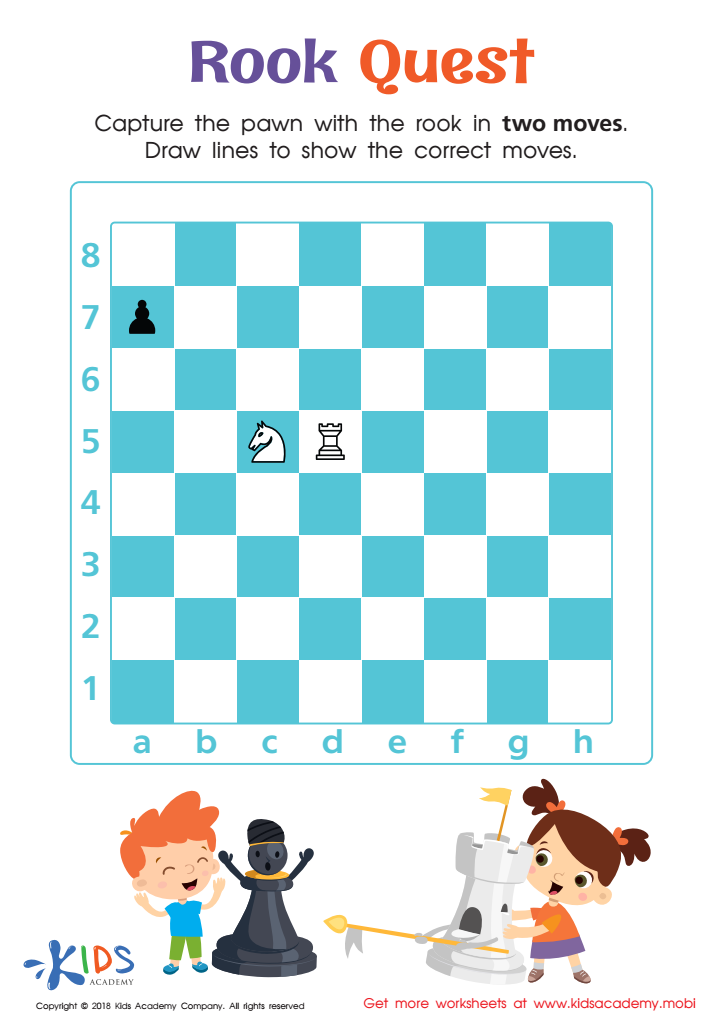
Rook Quest Worksheet
 Assign to My Students
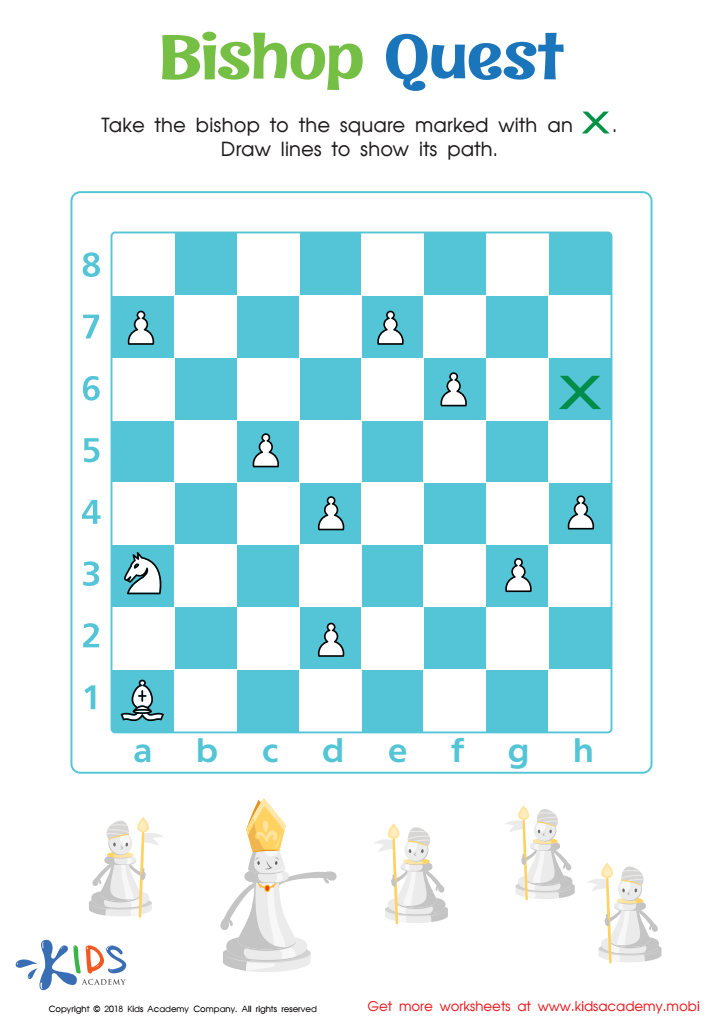
Bishop Quest Worksheet
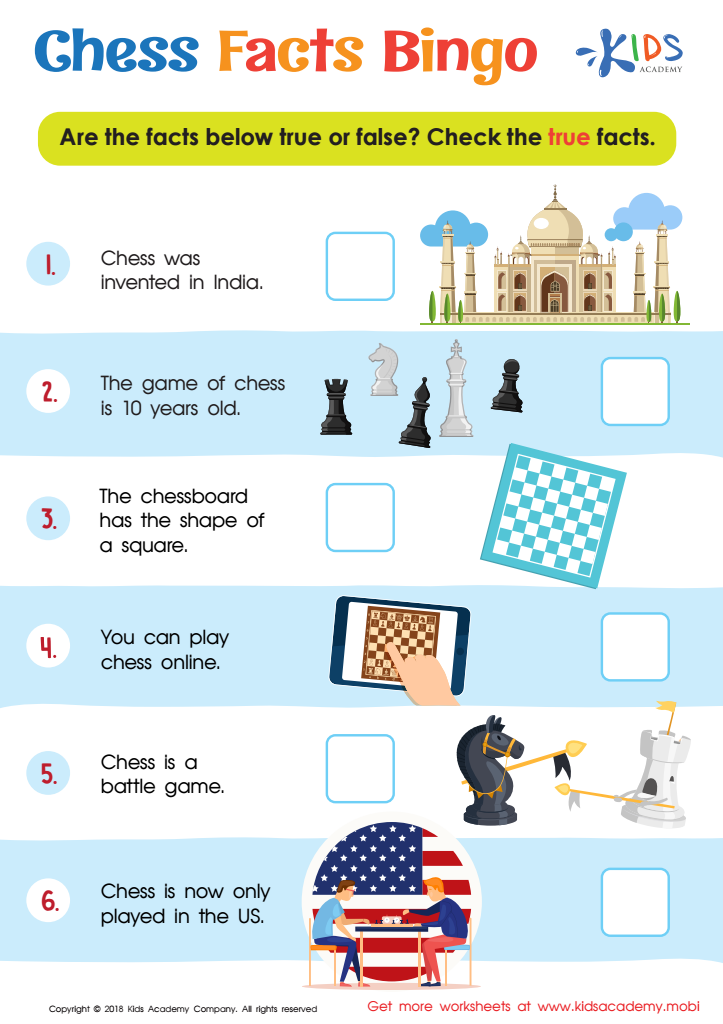
Chess Facts Bingo Worksheet







Chess is a valuable educational tool for children, and teaching it to 6-year-olds can have a profound impact on their development. Firstly, chess enhances critical thinking and problem-solving skills. As children learn to anticipate their opponent's moves and strategize their plays, they develop valuable analytical skills that will benefit them in academics and everyday decision-making.
Additionally, chess fosters patience and discipline. Learners must wait for their turn, think before they move, and cope with losses—qualities that cultivate resilience and emotional regulation. Moreover, chess improves memory and concentration. Kids practicing chess must remember the rules, piece movements, and strategies, reinforcing cognitive capabilities that can aid learning in other subjects, particularly math and reading.
Furthermore, engaging in chess encourages social interaction, as it can be played with peers, thereby enhancing communication skills and building friendships. It also provides a sense of accomplishment; mastering chess concepts boosts self-esteem.
Lastly, introducing chess at an early age nurtures a love for learning and intellectual curiosity. By encouraging children's participation in chess, parents and teachers are investing in essential life skills that extend well beyond the chessboard, offering both academic and personal growth.