Memory enhancement Chess Worksheets for 6-Year-Olds
3 filtered results
Difficulty Level
Grade
Age
-
From - To
Subject
Activity
Standards
Unlock your child's full potential with our Memory Enhancement Chess Worksheets designed specifically for 6-year-olds! By combining the timeless game of chess with strategically crafted exercises, our worksheets aim to boost memory, concentration, and problem-solving skills. Perfect for young minds, these engaging activities make learning chess fun and accessible. Developed by experts, they introduce children to key concepts and strategies in a playful and interactive manner. Whether your child is a chess novice or a budding Grandmaster, these worksheets provide a solid foundation to foster a love for the game and improve cognitive skills. Start your child's journey to chess mastery today!
Favorites
With answer key
Interactive
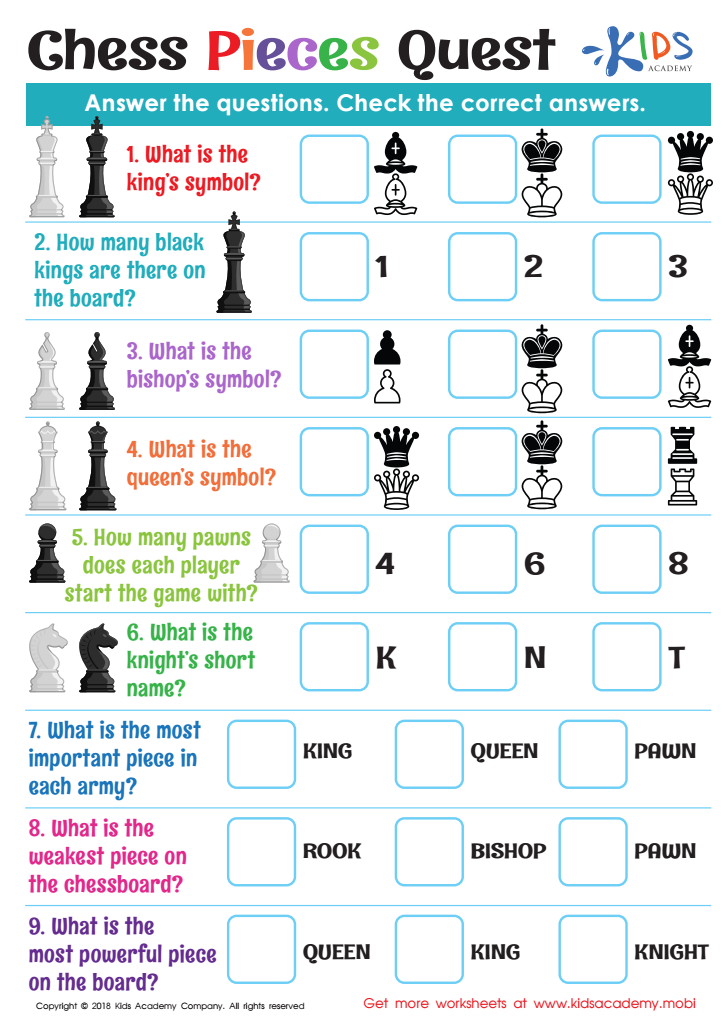
Chess Pieces Quest Worksheet
Help your child prepare for the chess quest by refreshing their knowledge of the symbols and characteristics of each chess piece. Then, have them try the 9 questions on this worksheet. These questions will assess their understanding of the symbols and how many pieces each player starts with.
 Assign to My Students
Chess Pieces Quest Worksheet
Worksheet
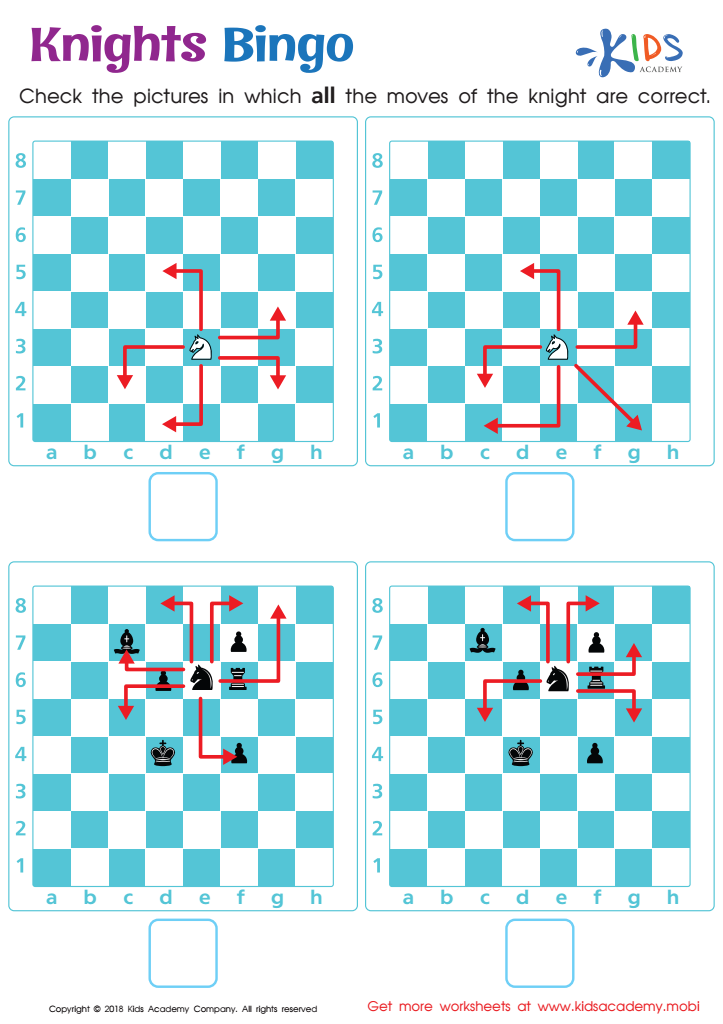
Knights Bingo Worksheet
Help your child identify legal knight moves in this easy worksheet. Review each picture with them, questioning if the knight moves are correct. Then have them verify pictures with correct moves.
Knights Bingo Worksheet
Worksheet
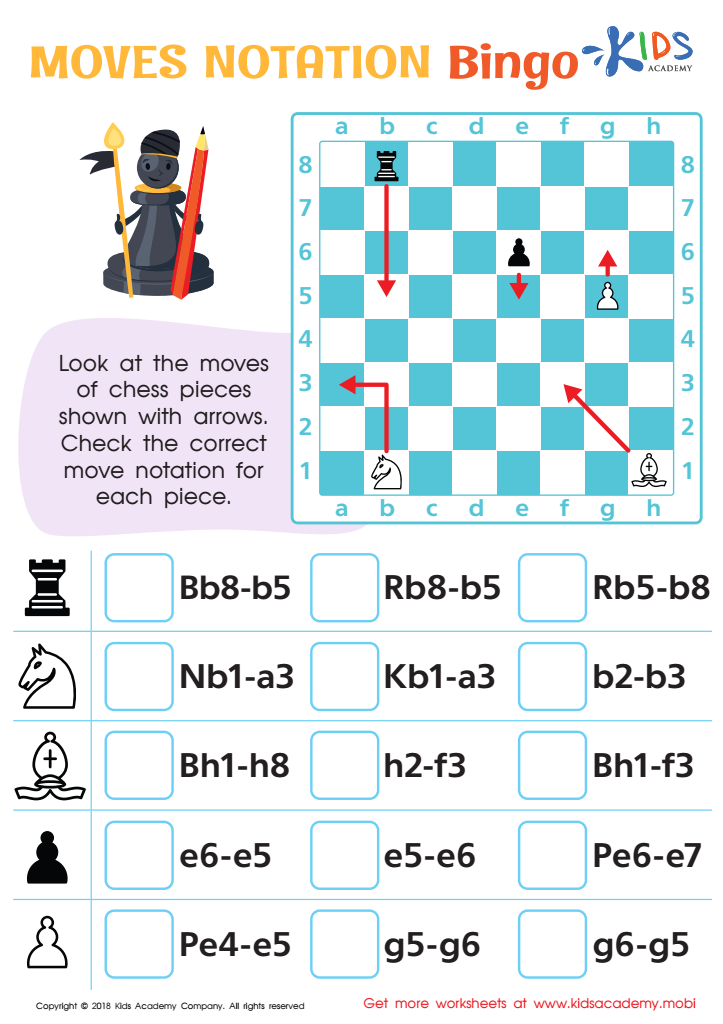
Moves Notation Bingo Worksheet
Test your child's chess notation skills with this simple worksheet. Download the PDF which shows a chess board and arrows pointing to pieces. Ask your child to identify the moves and note them down correctly. The notations needed are for bishop, pawn, rook and knight. Up to 80 words.
Moves Notation Bingo Worksheet
Worksheet
Join Kids Academy for Free
Who is primarily going to use this learning content?



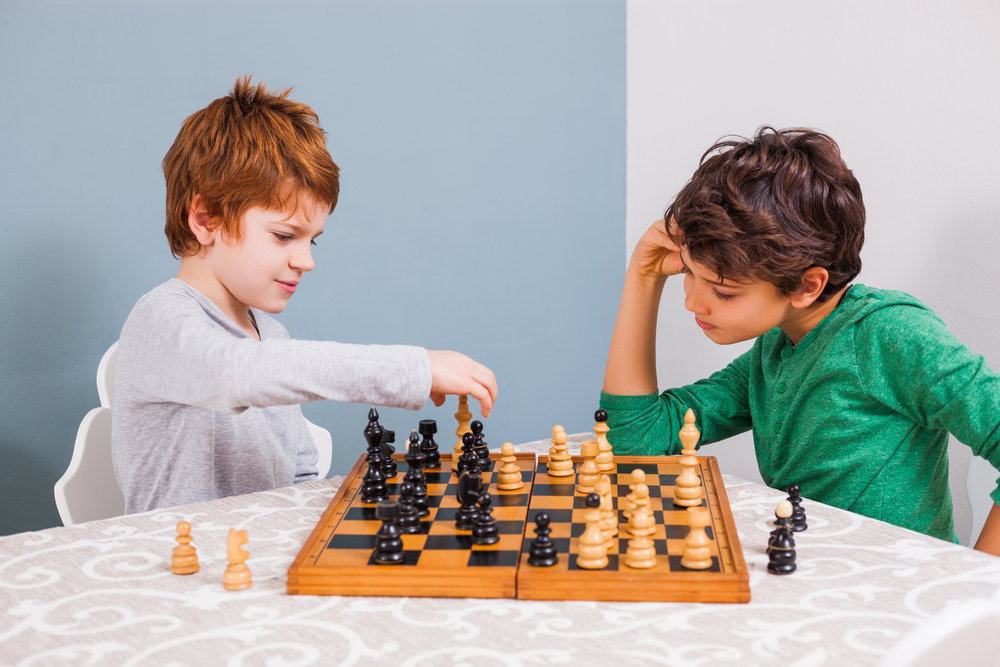




Memory enhancement through chess is immensely beneficial for 6-year-olds, playing a crucial role in their cognitive development. Parents and teachers should care about incorporating this game into a child's routine because it offers numerous educational and developmental advantages. First and foremost, chess sharpens memory skills. The game requires players to recall various moves and strategies, bolstering their ability to remember patterns and sequences. This enhanced memory can positively impact academic performance, aiding in spelling, math, and following step-by-step instructions.
Beyond memory, chess improves critical thinking and problem-solving abilities. Young players learn to anticipate their opponent’s moves and devise strategies to overcome challenges, fostering strategic thinking and forward planning. These skills translate to better decision-making in real-life situations.
Chess also promotes concentration and patience. Children must focus intently, anticipate moves, and wait their turn, promoting self-discipline and attentive listening — crucial skills both in classroom settings and everyday life. The nature of the game also enhances emotional intelligence. Experiencing both victory and defeat helps children learn to handle success gracefully and build resilience in the face of setbacks.
Incorporating chess into a child’s routine holistically nurtures their intellectual and emotional growth, making it vital for those involved in their education and upbringing to embrace and support chess activities.