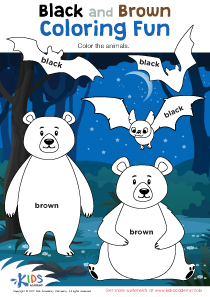
Letter tracing skills English for Beginners Worksheets for 6-Year-Olds
3 filtered results
-
From - To
Discover our "Letter Tracing Skills English for Beginners Worksheets for 6-Year-Olds" designed for young learners mastering the alphabet. These fun, engaging printables support children in developing fine motor skills and letter recognition. Tailored for beginners, the worksheets provide ample practice for both uppercase and lowercase letters, enhancing handwriting proficiency in an interactive manner. Ideal for children learning English as a second language, our worksheets blend education and enjoyment, fostering confidence in early writing skills. Start your child's language journey with our expertly crafted resources and watch them thrive in their initial stages of literacy.
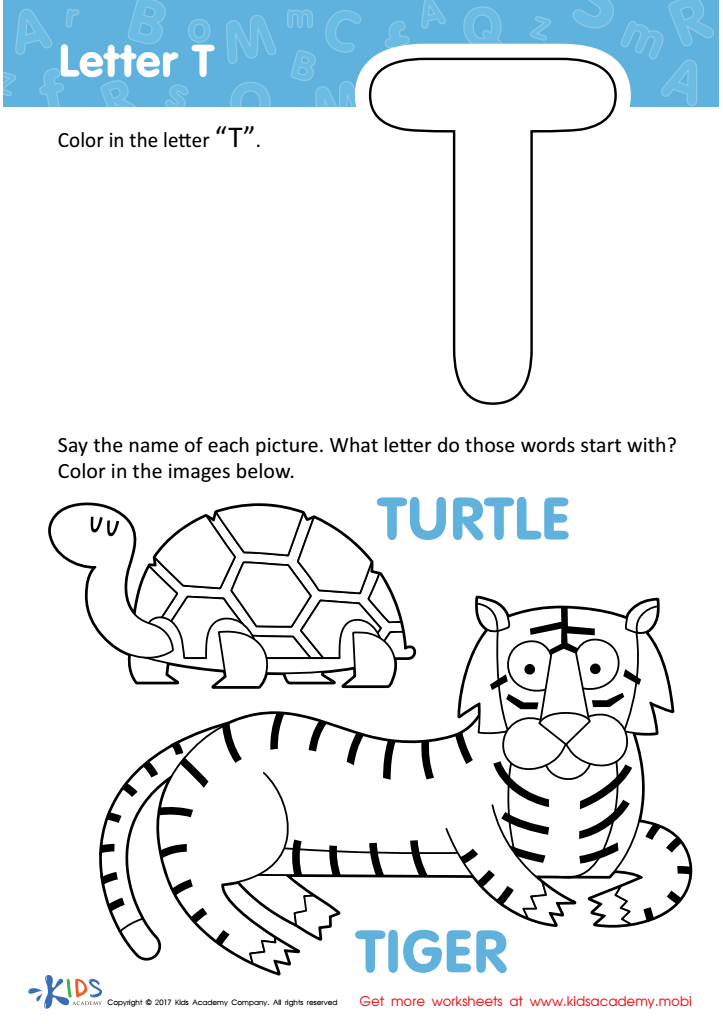
Letter T Coloring Sheet
 Assign to My Students
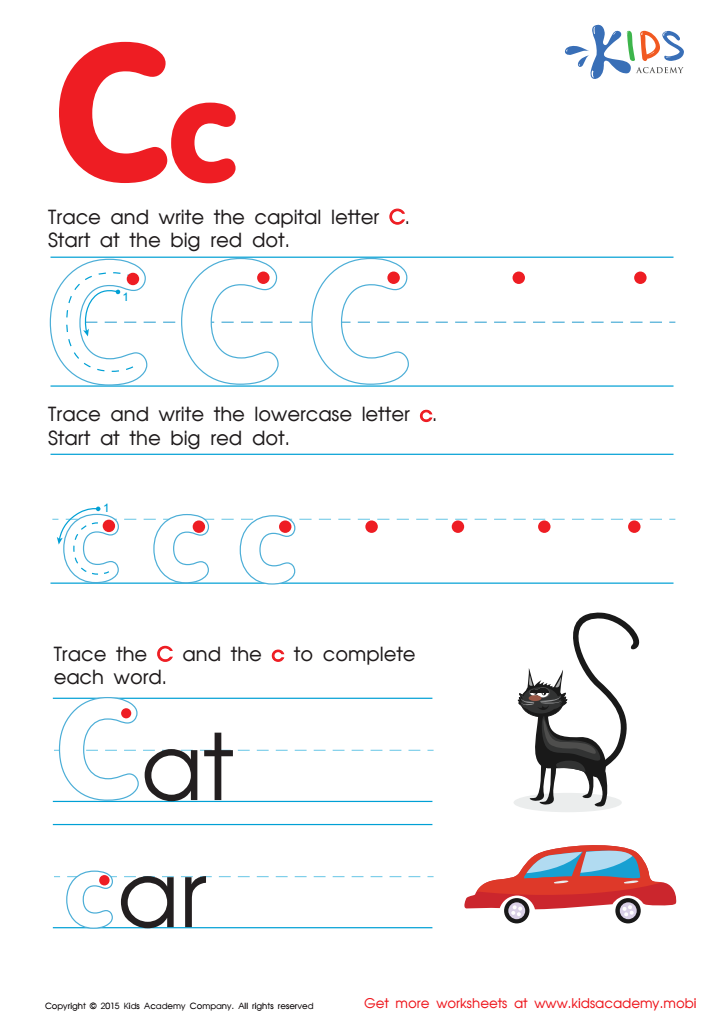
Letter C Tracing Page
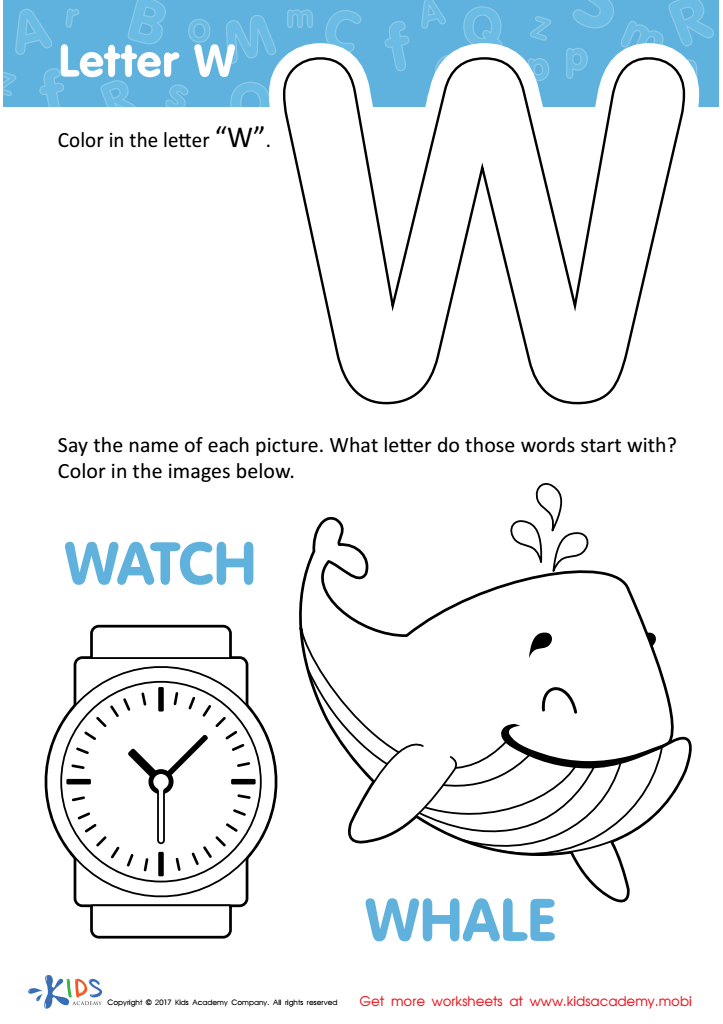
Letter W Coloring Sheet
Assign to My Students





Letter tracing skills are foundational for 6-year-olds as they embark on their journey to literate proficiency. At this age, children are developing fine motor skills, and practicing how to trace letters provides an effective way to refine these abilities. By forming letters accurately through tracing, children solidify their understanding of the basic shapes and strokes that comprise the English alphabet. This systematic practice is valuable for promoting muscle memory, which is crucial for achieving fluid and legible handwriting.
Additionally, letter tracing supports cognitive development by reinforcing the connection between visual symbols (letters) and their corresponding phonetic sounds. This dual engagement enhances reading readiness, enabling children to better recognize and sound out words, a critical step towards reading fluency. Teachers and parents play pivotal roles in facilitating this skill, as their support and encouragement can create a more positive and productive learning environment. By actively participating in their child's letter tracing activities, adults demonstrate the importance of literacy, fostering a child's enthusiasm and confidence in their writing abilities.
Ultimately, strong foundations in letter tracing contribute not only to handwriting skills but also lay the groundwork for broader academic success. Early proficiency in writing boosts children's self-expression, cognitive engagement, and overall academic performance, making it an essential focus for both teachers and parents.