Sentence construction English for Beginners Worksheets for 6-Year-Olds
3 filtered results
-
From - To
Welcome to our "Sentence Construction English for Beginners Worksheets" designed specifically for 6-year-olds! These engaging worksheets provide young learners with the essential skills to create simple and effective sentences. Through fun activities and interactive exercises, children will explore sentence structure, learn about subjects and predicates, and practice using punctuation correctly. Tailored for early-stage English learners, our resources make language learning enjoyable and accessible. Empower your child’s communication skills and boost their confidence in writing as they complete each colorful and enjoyable worksheet. Start their journey toward mastering sentence construction today! Perfect for home or classroom use—let the learning begin!
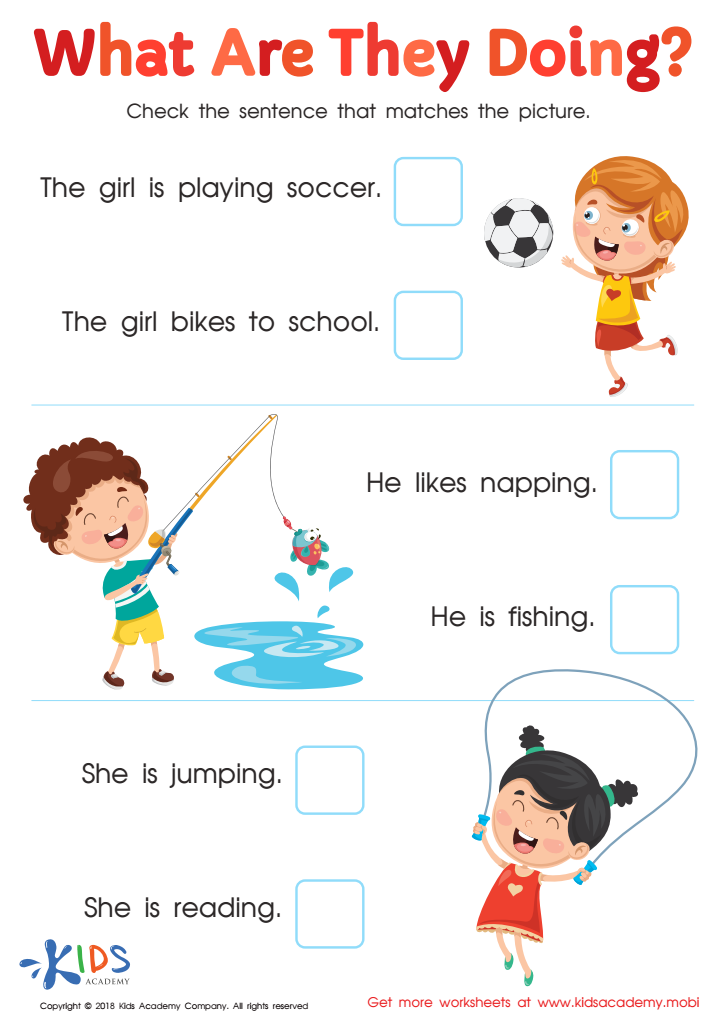
What Are They Doing? Worksheet
 Assign to My Students
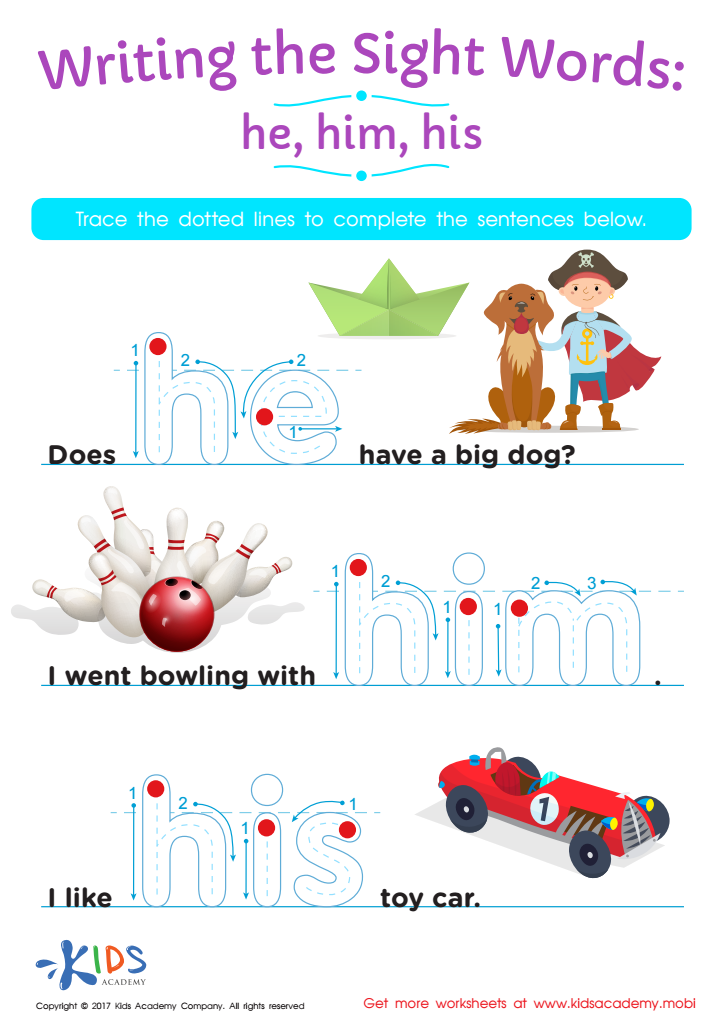
He, Him, His Printable Sight Words Worksheet
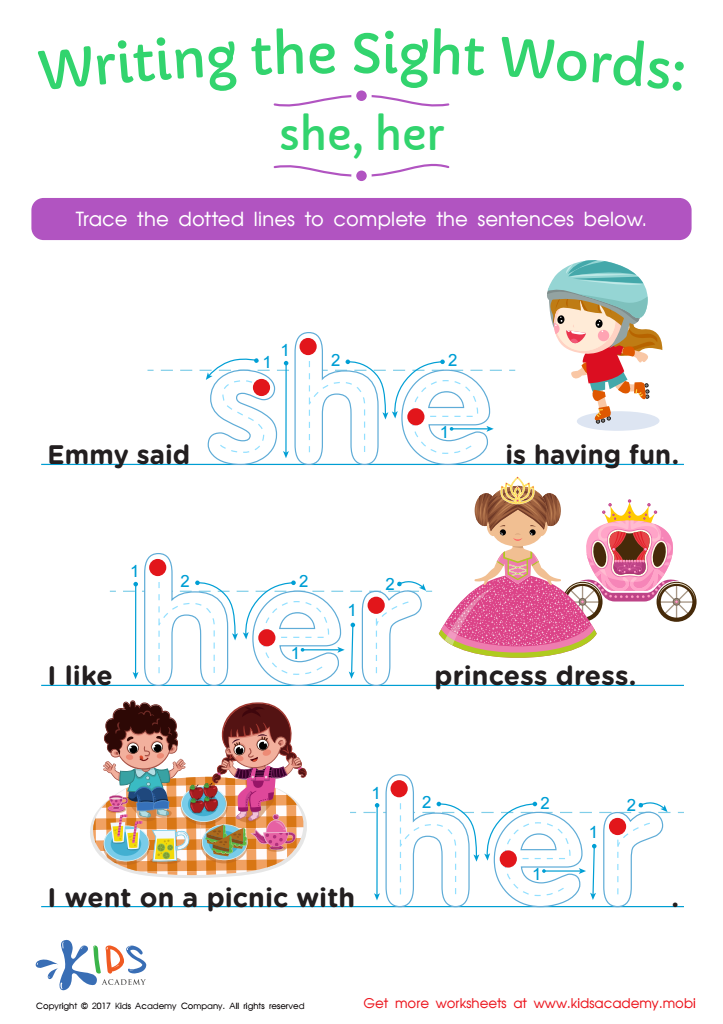
She, Her Printable Sight Words Worksheet





Sentence construction is a fundamental skill that lays the groundwork for effective communication and literacy in children. For 6-year-olds, developing strong sentence construction skills is crucial as it directly influences their ability to express thoughts, understand complex ideas, and engage in conversations. Parents and teachers should prioritize this skill for several reasons.
Firstly, sentence construction enhances children's literacy development. Understanding how to form sentences allows children to read and write more effectively, aiding in both academic success and personal expression. Secondly, these skills promote critical thinking. When children learn to structure their sentences, they also begin to organize their thoughts, helping them articulate their ideas clearly.
Moreover, effective communication skills foster self-confidence and social interaction. Children who can construct sentences effectively are more likely to engage successfully with peers and adults, enhancing their social skills and emotional well-being.
Finally, laying a strong foundation in sentence construction at this age sets the stage for future writing proficiency. This early investment in language skills can transform how they approach learning in later years, making it essential for both educators and parents to encourage and support their children’s progress in this area.