Alphabetical order Worksheets for 6-Year-Olds
3 filtered results
-
From - To
Discover our engaging Alphabetical Order Worksheets designed specifically for 6-year-olds! These fun and educational activities help young learners master the concept of arranging words alphabetically, enhancing their reading and writing skills. Through colorful, interactive exercises, children will Sort letters, fill in missing letters, and complete puzzles that make learning enjoyable. These worksheets align with foundational literacy goals, ensuring kids develop strong organizational skills that benefit their overall language development. Perfect for classroom use, homeschooling, or extra practice at home, our resources make learning the alphabet both fun and effective. Start your child’s journey to literacy today with our printable worksheets!
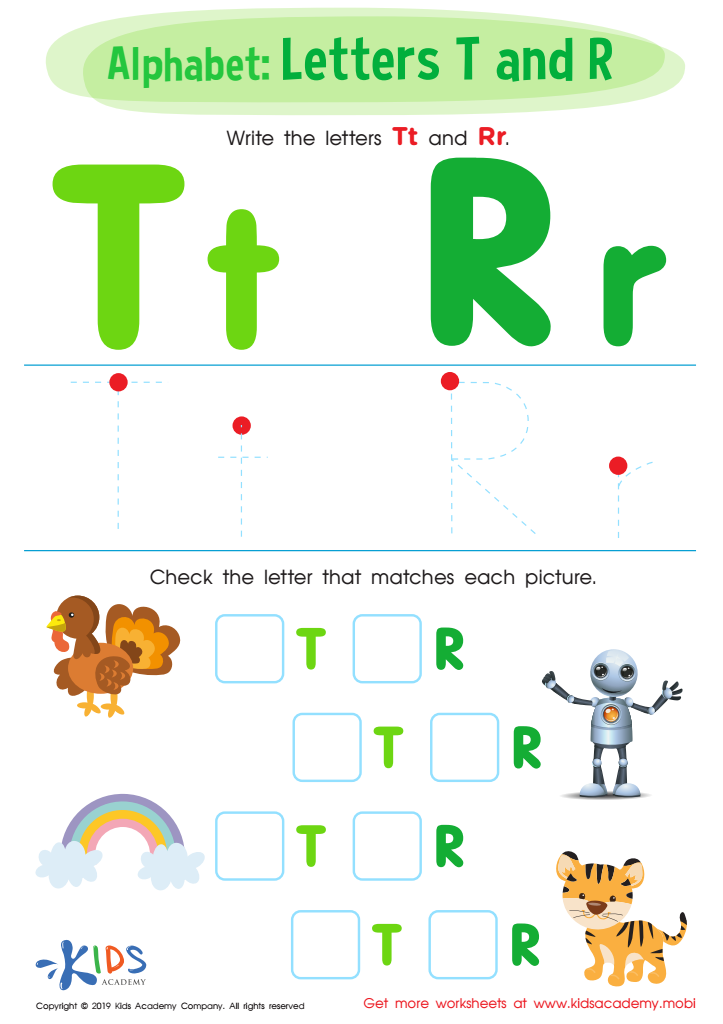
Letters T and R Worksheet
 Assign to My Students
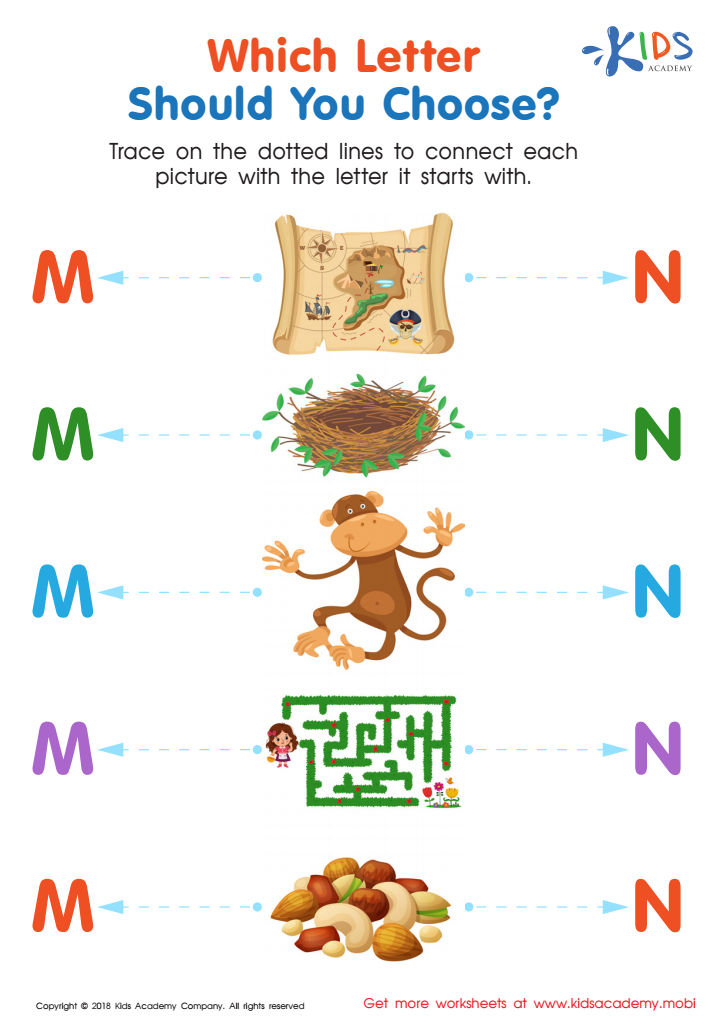
Which Letter Should you Choose? Worksheet
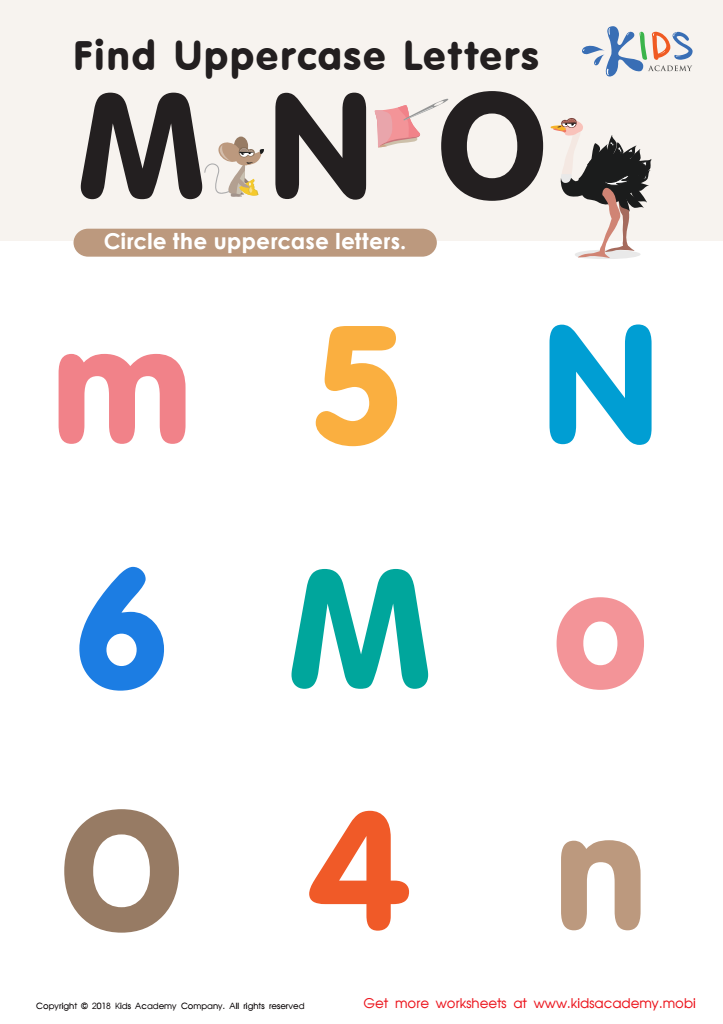
Find Uppercase Letters M, N, and O Worksheet








Understanding alphabetical order is crucial for six-year-olds, as it lays the foundation for many essential literacy skills. First, recognizing the order of the alphabet aids in improving reading and writing abilities. When children learn how words are organized alphabetically, they can locate words easily in books, dictionaries, and encyclopedias, fostering independence in their learning journey.
Moreover, mastering alphabetical order enhances vocabulary development. As children engage in sorting words or objects, they are prompted to interact with new terminology, reinforcing their understanding and retention. This organized approach also builds strong cognitive skills, such as categorization and sequencing, which are vital when they progress into more complex literacy tasks.
Additionally, alphabetical order encourages collaboration and communication during classroom activities, as children often work in pairs or groups to sort and organize information. This promotes social skills, teamwork, and language development.
Ultimately, instilling an appreciation for alphabetical order empowers children with organizational skills that extend beyond language arts. This fundamental skill not only prepares them for academic success but also instills a sense of accomplishment, boosting their confidence as learners. Therefore, it is vital for parents and teachers to prioritize learning alphabetical order in early education.








