Basic measurement concepts Worksheets for 6-Year-Olds
6 filtered results
-
From - To
Help your 6-year-old master essential math skills with our Basic Measurement Concepts Worksheets! These engaging, age-appropriate activities are designed to introduce young learners to key measurement principles such as length, weight, and volume. Through interactive, hands-on exercises, children will practice comparing sizes, using measurement tools, and understanding units of measure. Perfect for both classroom and home use, these worksheets will boost your child's confidence and proficiency in math, setting a solid foundation for future learning. Explore our printable resources and watch your child's enthusiasm for measurement concepts grow. Join us at Kids Academy to make learning fun and effective!
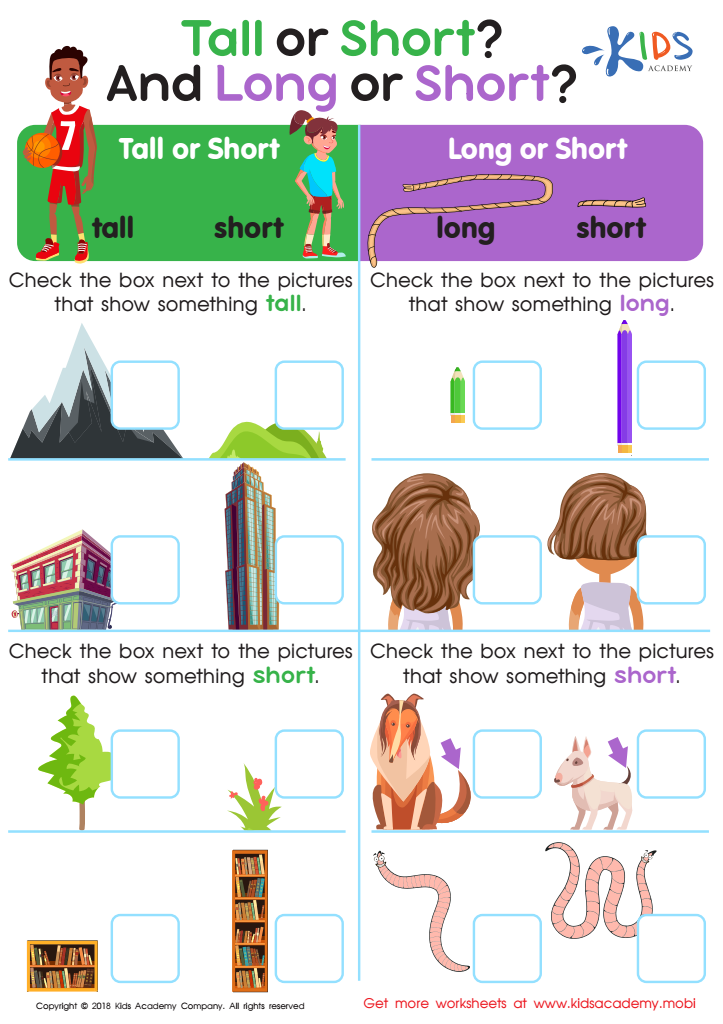
Tall or Short and Long or Short? Worksheet
 Assign to My Students
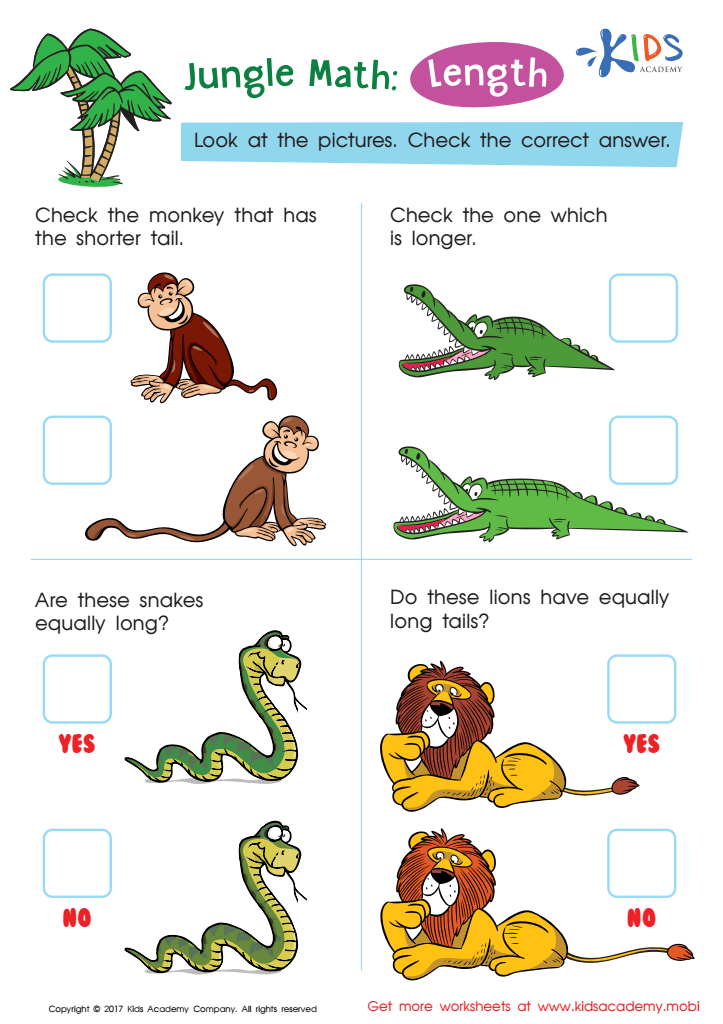
Which One Is Longer - Length Worksheet
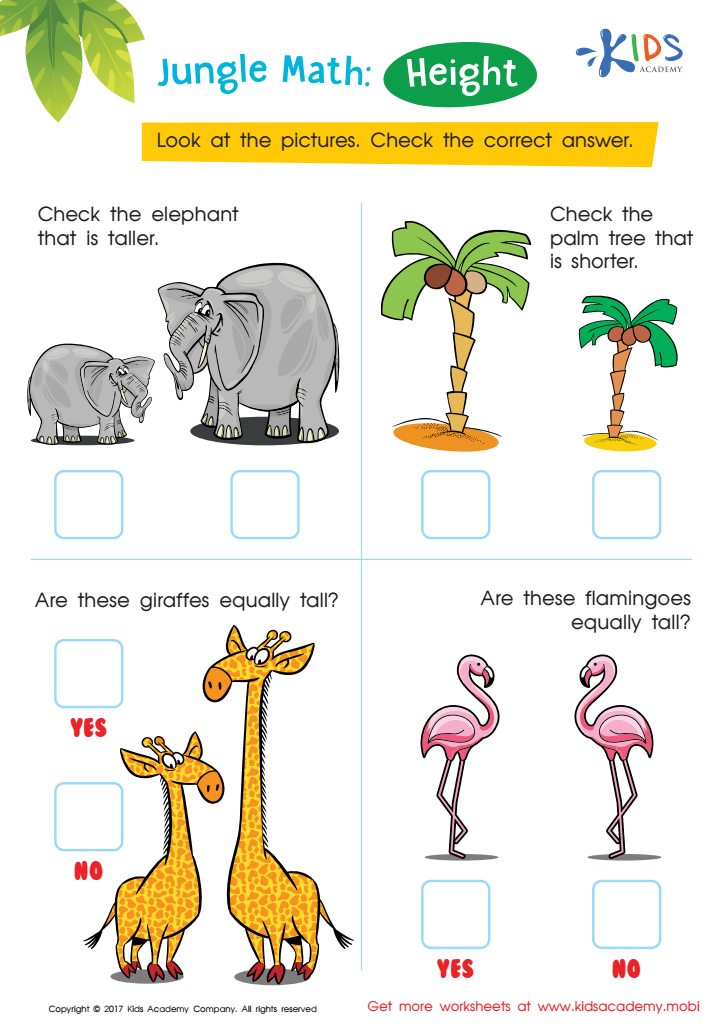
Which Is Taller Worksheet
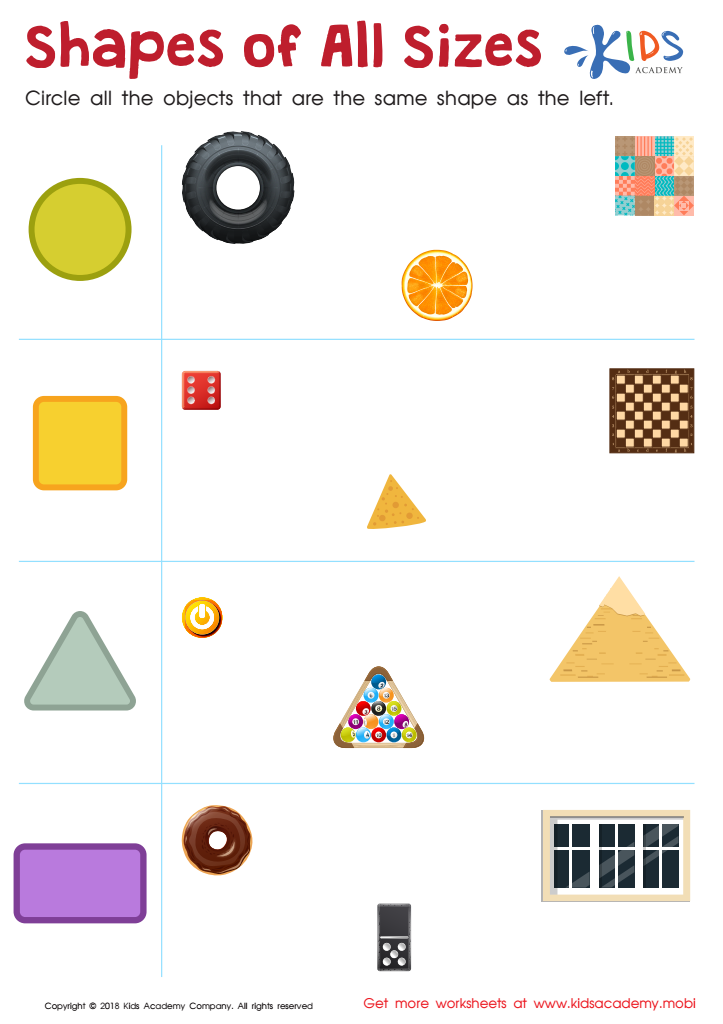
Shapes of All Sizes Worksheet
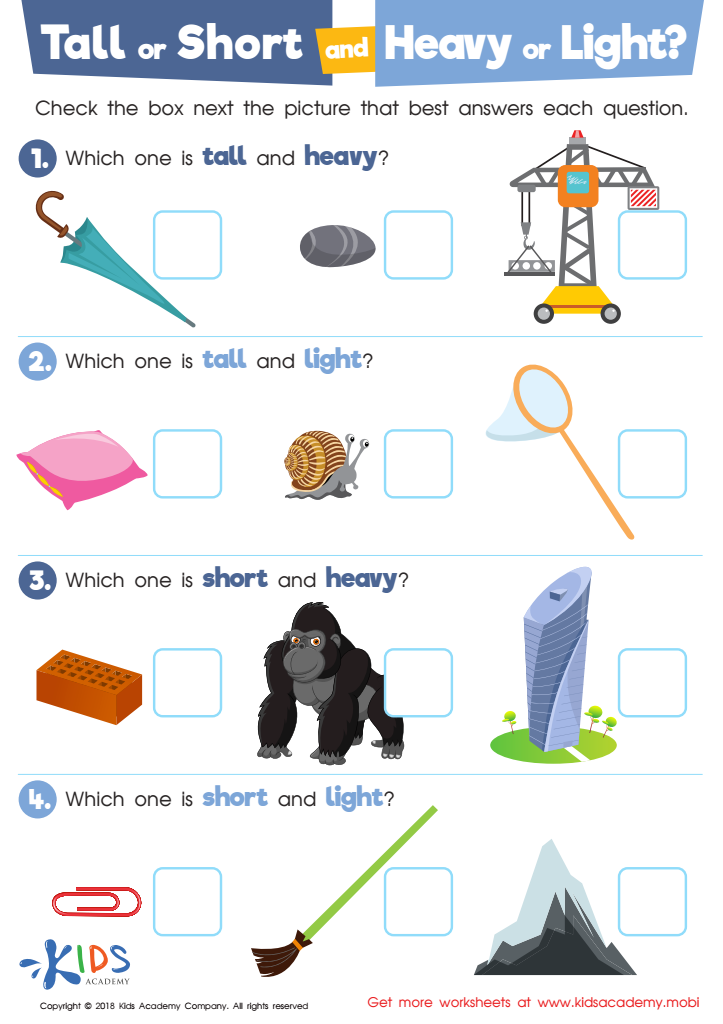
Tall or Short and Heavy or Light? Worksheet
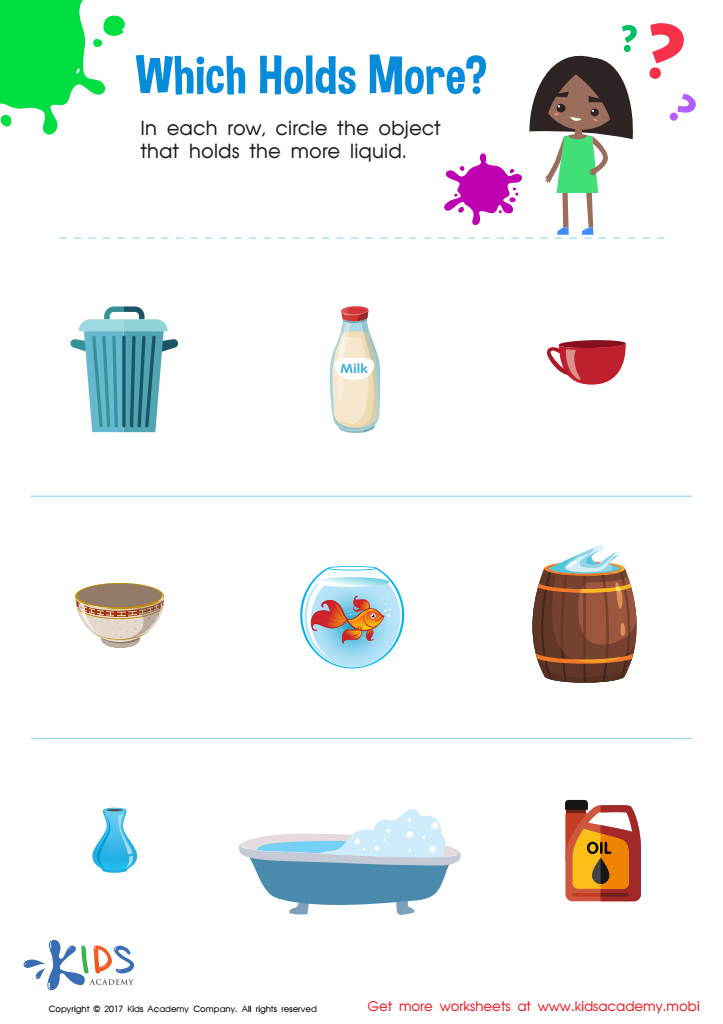
Which Holds More: Capacity Worksheet








Basic measurement concepts are foundational skills that 6-year-olds need to develop for several key reasons:
-
Everyday Relevance: Measurement is crucial in daily life. Children engage with measurements when they compare heights, calculate distances, or use cooking ingredients. Understanding concepts like length, weight, and volume helps kids make sense of the world around them.
-
Mathematical Foundation: Mastery of basic measurement concepts is a stepping stone to more complex mathematical topics such as geometry, algebra, and data interpretation. It enhances their numerical skills and prepares them for academic challenges ahead.
-
Problem Solving: Measurement tasks often involve problem-solving skills. Helping children understand how to measure fosters critical thinking as they learn to apply concepts in real-life scenarios, analyze results, and figure out solutions.
-
Educational Standards: Many educational curriculums require proficiency in basic measurement by certain grade levels. Focusing on these concepts ensures that children meet academic benchmarks and receive a well-rounded education.
-
Cognitive Development: Measurement activities stimulate children's cognitive development. Tasks like comparing object sizes or understanding weight not only teach them about numbers but also improve their memory, attention, and fine motor skills.
By caring about basic measurement concepts, parents and teachers provide children with essential tools to navigate both their immediate environment and future academic endeavors successfully.








