Chess piece identification Worksheets for 6-Year-Olds
3 filtered results
-
From - To
Discover our engaging "Chess Piece Identification Worksheets" designed specifically for 6-year-olds! These fun and interactive worksheets help young learners familiarize themselves with the various chess pieces, enhancing their understanding of the game while developing critical thinking and problem-solving skills. Each worksheet features colorful illustrations, simple explanations, and enjoyable activities tailored to capture the interest of young chess enthusiasts. Whether at home or in the classroom, these printable resources provide an excellent way to introduce the fundamentals of chess in a playful manner. Help your child build a solid foundation in chess while having fun—download our worksheets today!
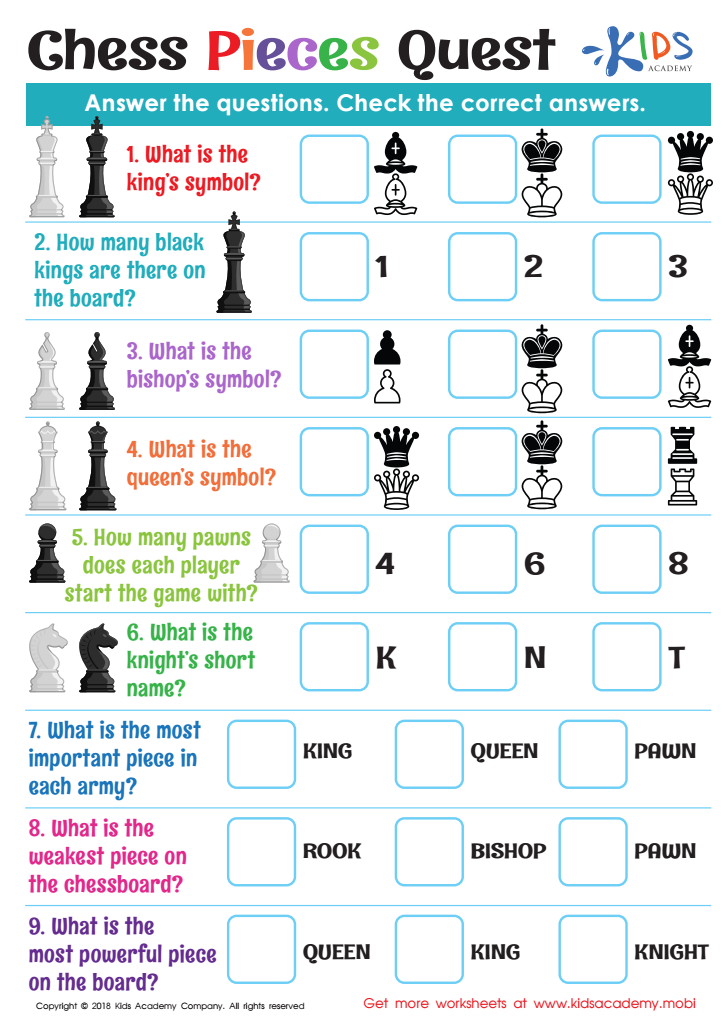
Chess Pieces Quest Worksheet
 Assign to My Students
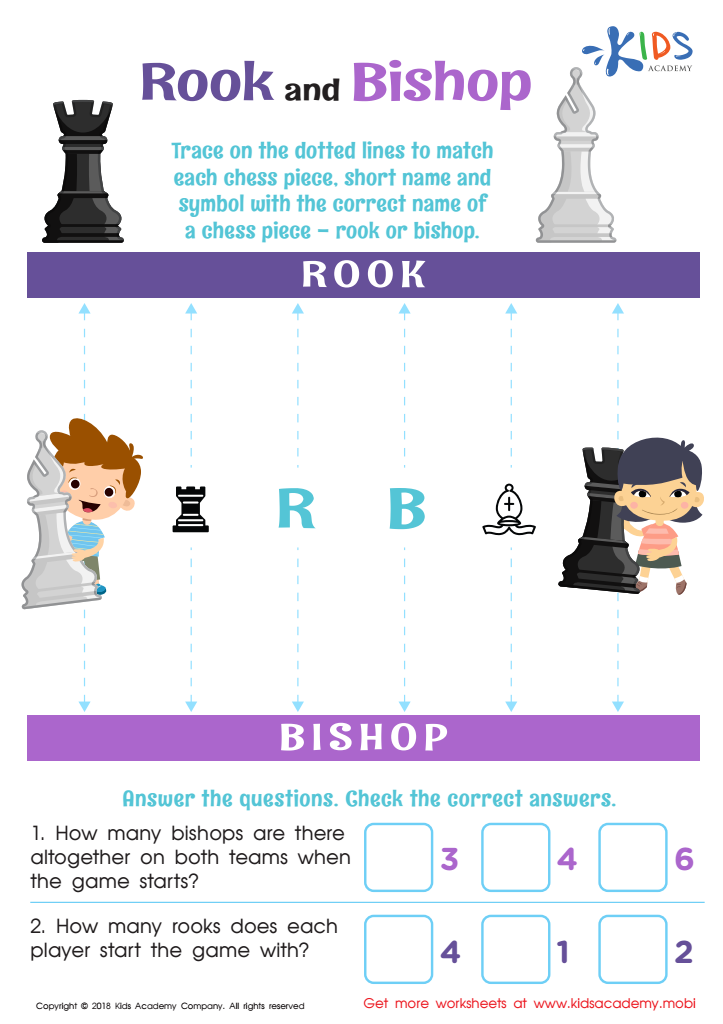
Rook and Bishop Worksheet
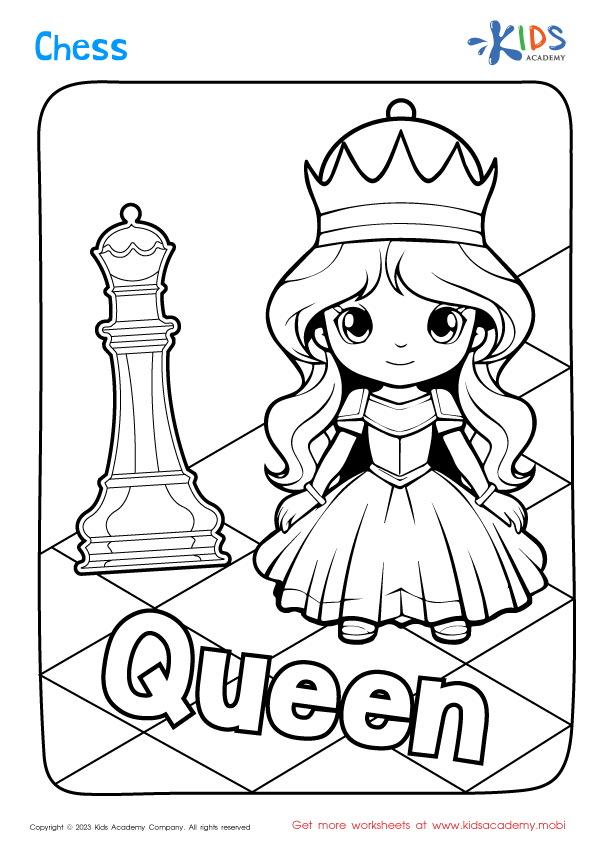







Teaching chess piece identification to 6-year-olds is critical for several reasons. Firstly, it promotes cognitive development. Chess requires children to recognize various pieces and understand their movements, enhancing their memory, attention span, and problem-solving skills. These foundational cognitive abilities are essential not just in chess but across all areas of learning.
Secondly, chess fosters social skills. Learning to identify pieces and their roles teaches children about teamwork, as they often play in pairs or groups. They learn to respect opponents, take turns, and develop patience—key traits for successful social interactions.
Moreover, familiarizing children with chess pieces encourages strategic thinking. By learning notation and recognizing how each piece operates, young learners can begin to plan their moves and anticipate their opponent's strategies, thereby fostering critical thinking skills essential in real-life situations.
Finally, incorporating chess into educational activities can ignite a lifelong love for the game. This instills discipline and perseverance, empowering them to face challenges. Overall, parents and teachers should value chess piece identification as a gateway not only to a fascinating game but also as a catalyst for a broad spectrum of developmental benefits crucial for young learners.








