Developing critical thinking Worksheets for 6-Year-Olds
5 filtered results
-
From - To
Unlock the potential of young minds with our "Developing Critical Thinking Worksheets for 6-Year-Olds." Designed to engage and challenge, these worksheets offer a variety of activities that promote problem-solving and decision-making skills in a fun and interactive way. From puzzles and logic games to open-ended questions, our resources encourage children to think creatively, reason logically, and express their thoughts clearly. Perfect for home or classroom use, these worksheets align with early education standards, helping to build a strong foundation for critical thinking as children learn to navigate their world. Discover the joy of learning through exploration and inquiry today!
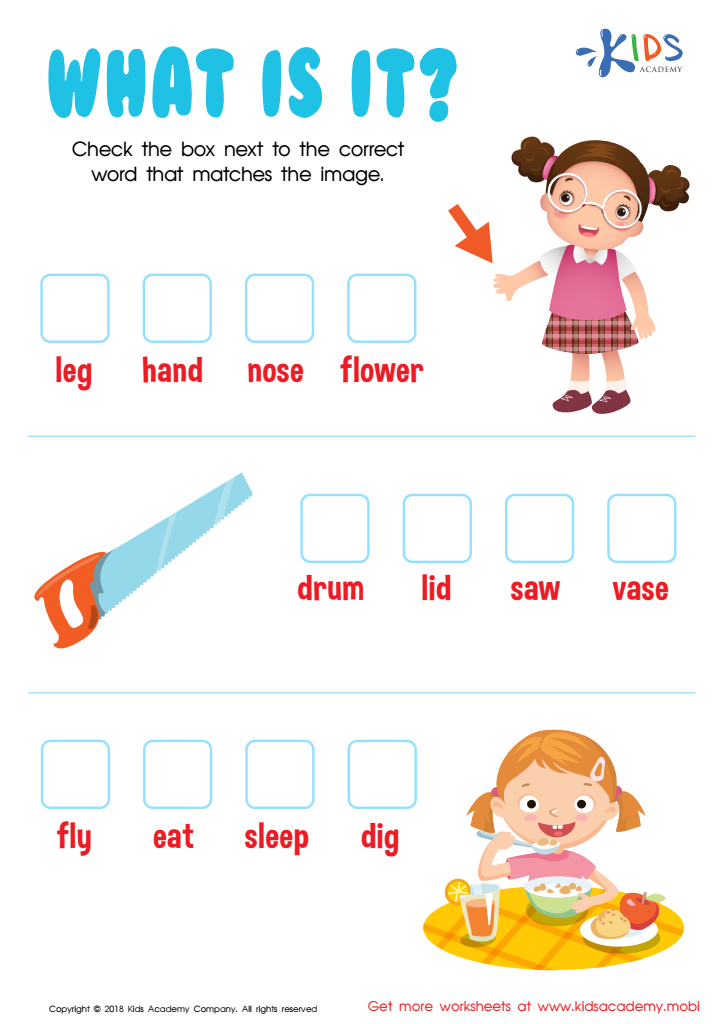
What Is It? Worksheet
 Assign to My Students
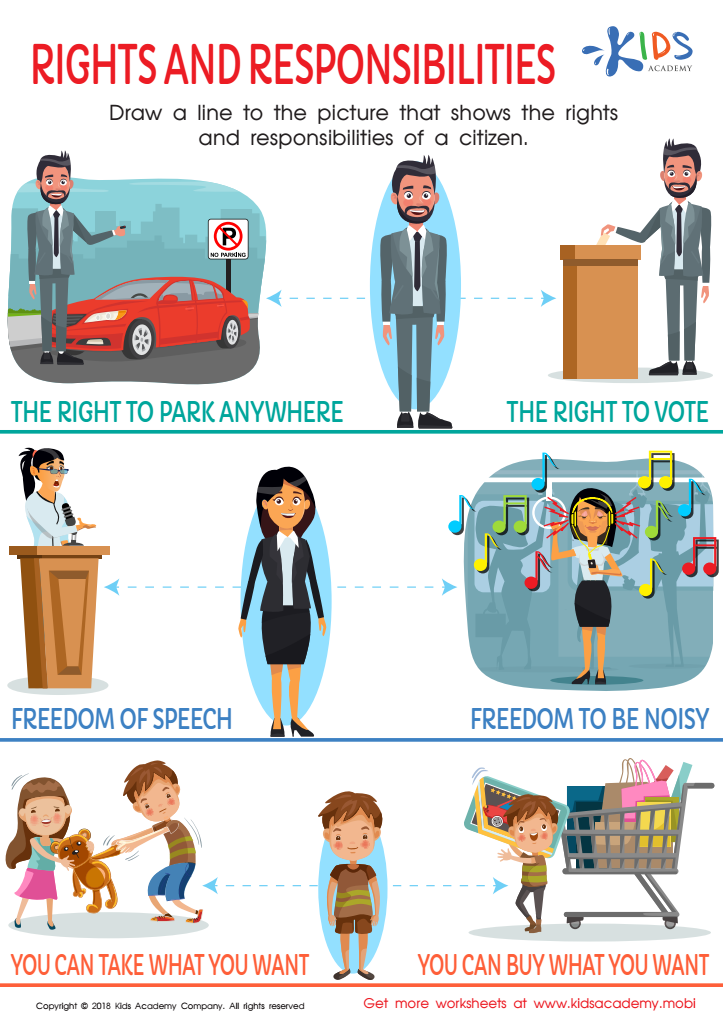
Rights and Responsibilities Worksheet
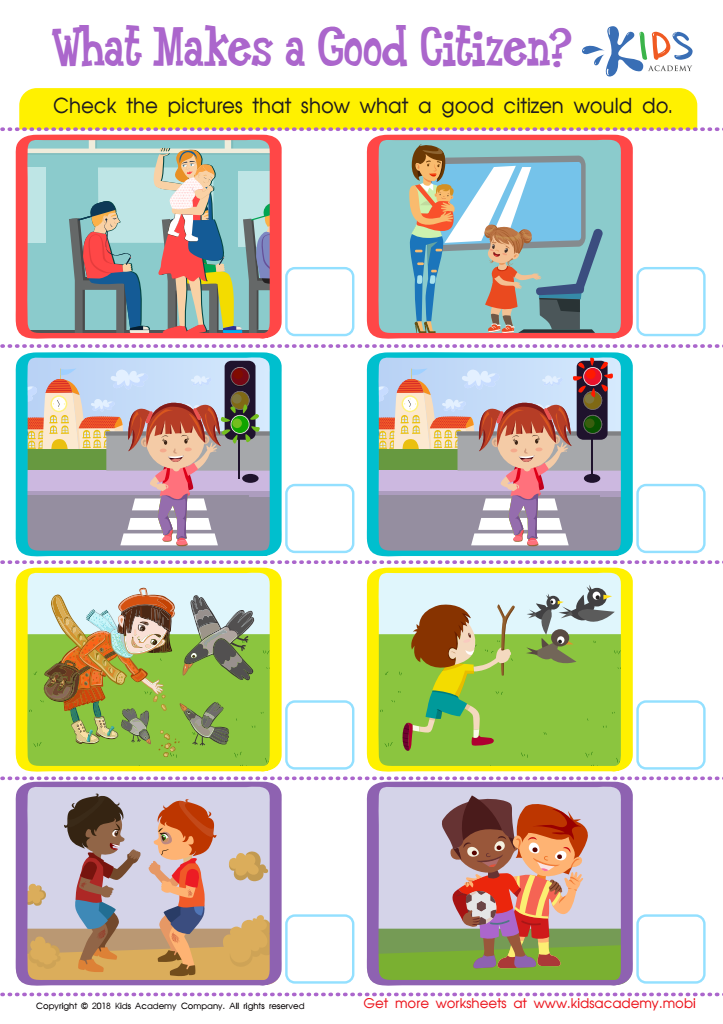
What Makes a Good Citizen? Worksheet
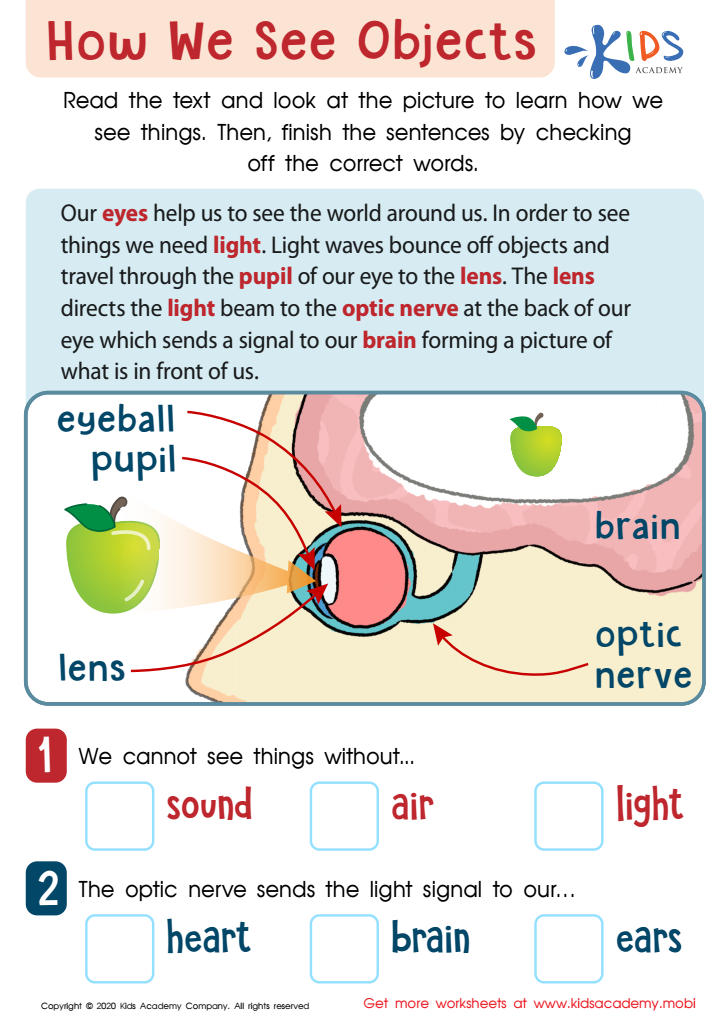
How We See Objects Worksheet
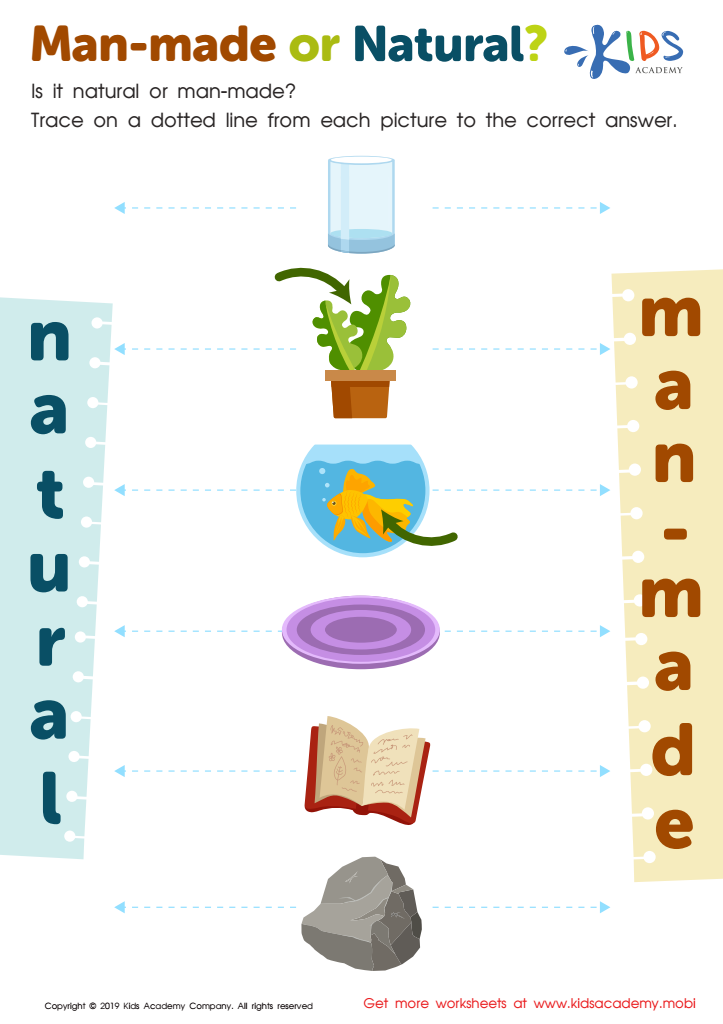
Man-Made or Natural? Worksheet







Developing critical thinking skills in 6-year-olds is essential for fostering a strong foundation for lifelong learning and problem-solving. At this age, children are naturally curious and open to exploring ideas, making it the perfect time to hone their ability to analyze information, ask questions, and evaluate outcomes. When parents and teachers prioritize critical thinking, they empower children to think independently, boosting their confidence and encouraging them to express their ideas and opinions.
Critical thinking equips young learners with the ability to assess situations critically, rather than blindly accepting information. This skill greatly benefits decision-making, as children learn to weigh options and foresee potential consequences. Such cognitive abilities help engage them in more meaningful conversations, enhancing their communication skills. Furthermore, developing critical thinking fosters creativity, allowing children to approach problems with innovative solutions.
In today's rapidly changing world, the ability to think critically is crucial; it enables children to adapt and thrive in complex environments. By investing in developing these skills early on, parents and teachers contribute to nurturing thoughtful, inquisitive, and resilient individuals, preparing them not just for academic challenges but for future uncertainties as well.








