Developing observation skills Worksheets for 6-Year-Olds
5 filtered results
-
From - To
Welcome to our "Developing Observation Skills Worksheets" for 6-year-olds! Designed to enhance young learners' ability to notice details and improve focus, these engaging worksheets provide a fun and interactive way to build observation skills. Featuring colorful illustrations and various activities, children will identify differences, match objects, and complete puzzles that captivate their curiosity. Our thoughtfully crafted materials align with early education standards and are perfect for classroom or at-home practice. Help your child develop essential cognitive skills while fostering a love for learning! Explore our collection and watch their observational prowess flourish! Perfect for both parents and educators.
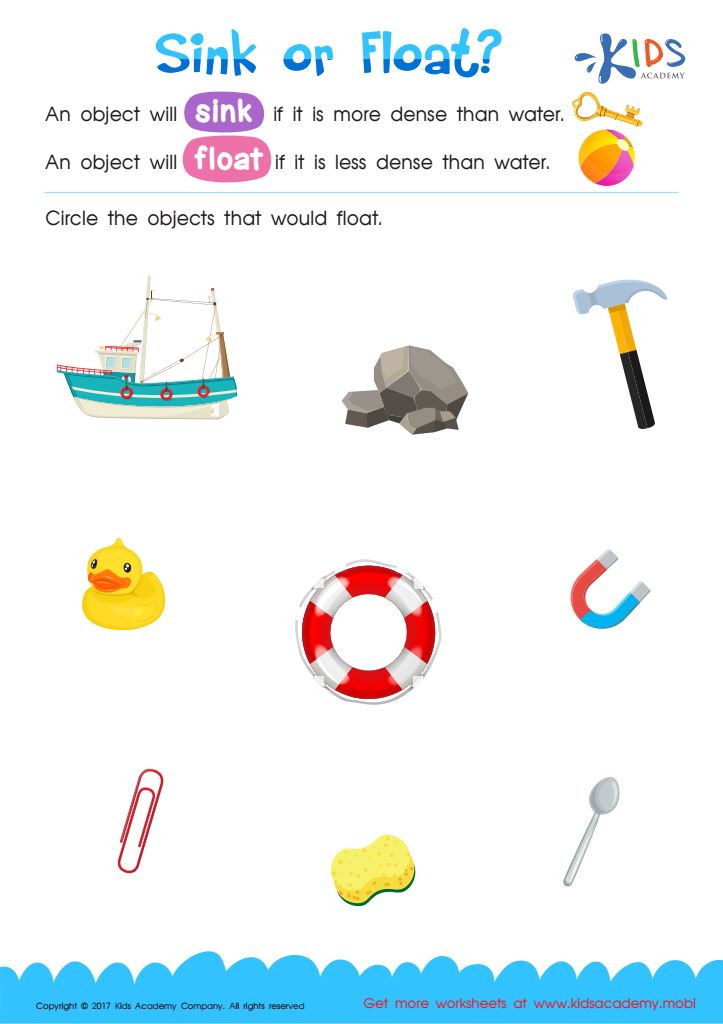
Sink or Float Printable
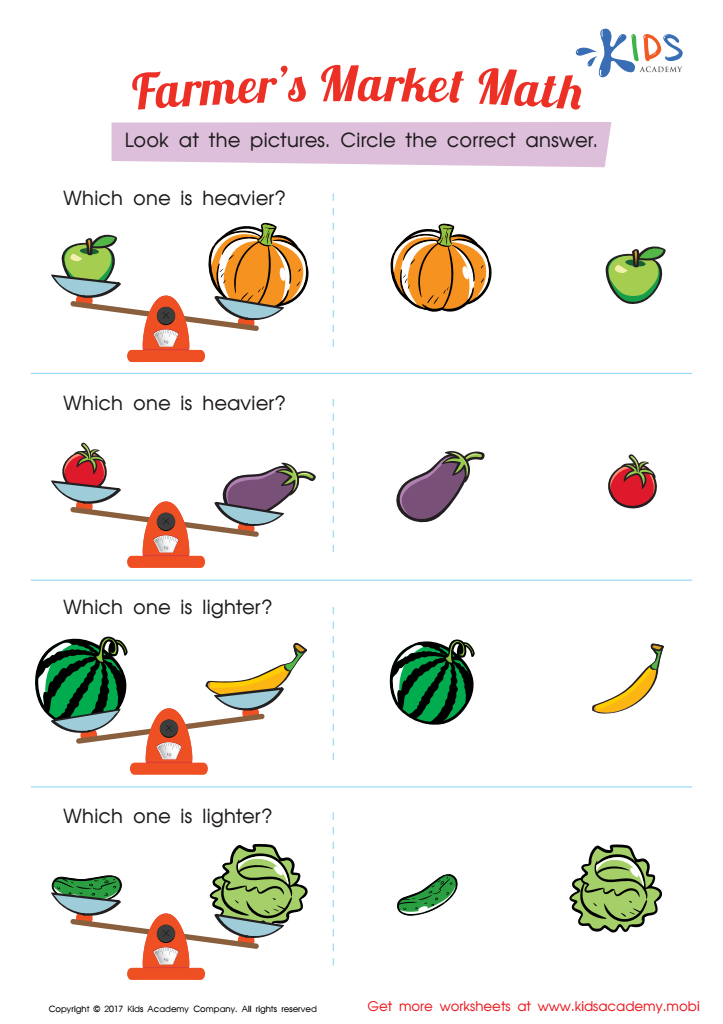
Which One Is Heavier Worksheet
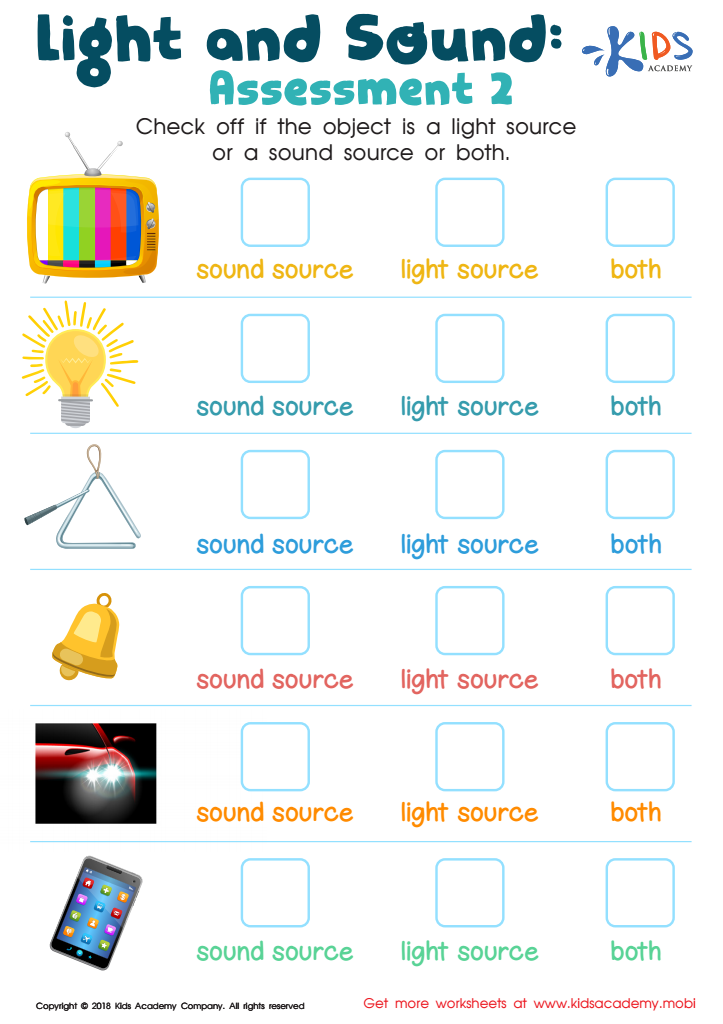
Light and Sound: Assessment 2 Worksheet
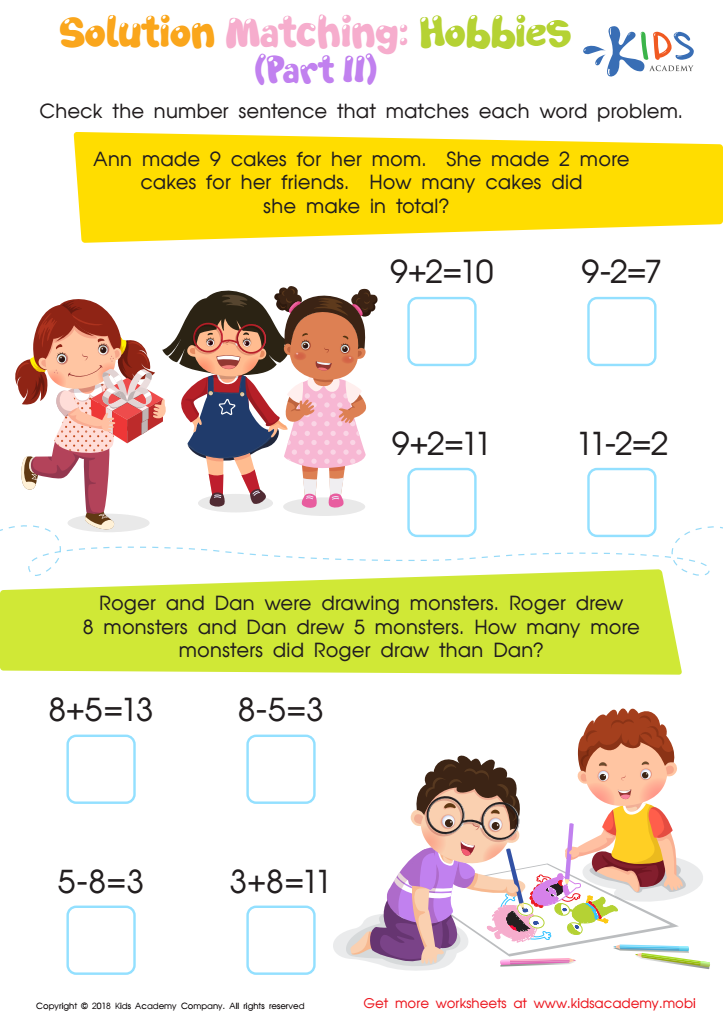
Solution Matching: Hobbies. Part 2 Worksheet
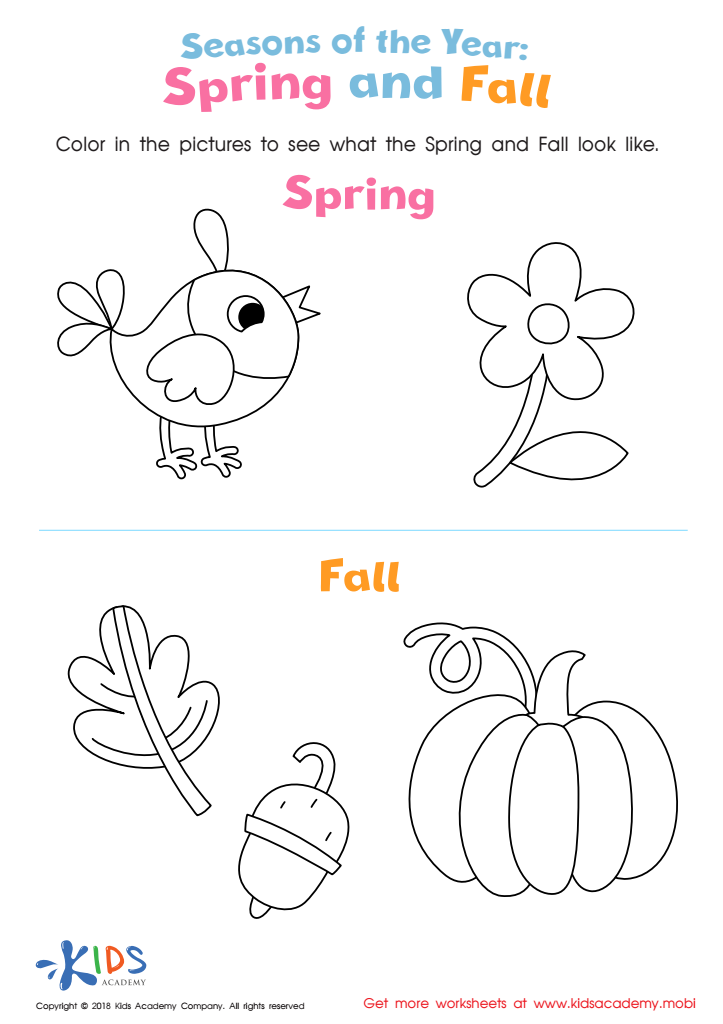
Spring and Fall Worksheet
 Assign to My Students








Developing observation skills in 6-year-olds is vital for several reasons. At this age, children are naturally curious and eager to explore their surroundings. By fostering strong observational skills, parents and teachers can enhance this curiosity, leading to improved critical thinking and problem-solving abilities. Observation encourages children to engage with the world around them, allowing them to notice details and patterns that promote cognitive development.
Enhanced observation skills also support literacy and numeracy. For instance, observing details in illustrations can aid in comprehension, while recognizing shapes and patterns lays the groundwork for mathematical concepts. Furthermore, these skills help children develop social awareness, as they learn to read non-verbal cues and understand emotional expressions in others.
Observation promotes a love for learning, encouraging children to ask questions and seek answers, which is essential for lifelong learning. For teachers, incorporating observation activities into the classroom can guide instruction more effectively, helping to tailor lessons to each child's needs and interests.
In conclusion, nurturing observation skills is crucial for children's holistic development—cognitively, socially, and emotionally—and significantly shapes their learning experience. By prioritizing these skills, adults can help children thrive academically and personally.








