Emotional identification Worksheets for 6-Year-Olds
3 filtered results
-
From - To
Help your six-year-old develop crucial emotional intelligence with our engaging Emotional Identification Worksheets. Designed to enhance understanding of feelings, these worksheets encourage children to recognize and express emotions effectively. Featuring colorful illustrations and relatable scenarios, kids will gain insight into their own emotions as well as those of others. Through fun activities, they will learn to identify and name different emotions, fostering empathy and strong communication skills. Every worksheet promotes active learning, enabling your child to navigate social interactions with confidence. Ideal for home or classroom use, these resources support emotional development and a positive mindset. Explore our worksheets today!
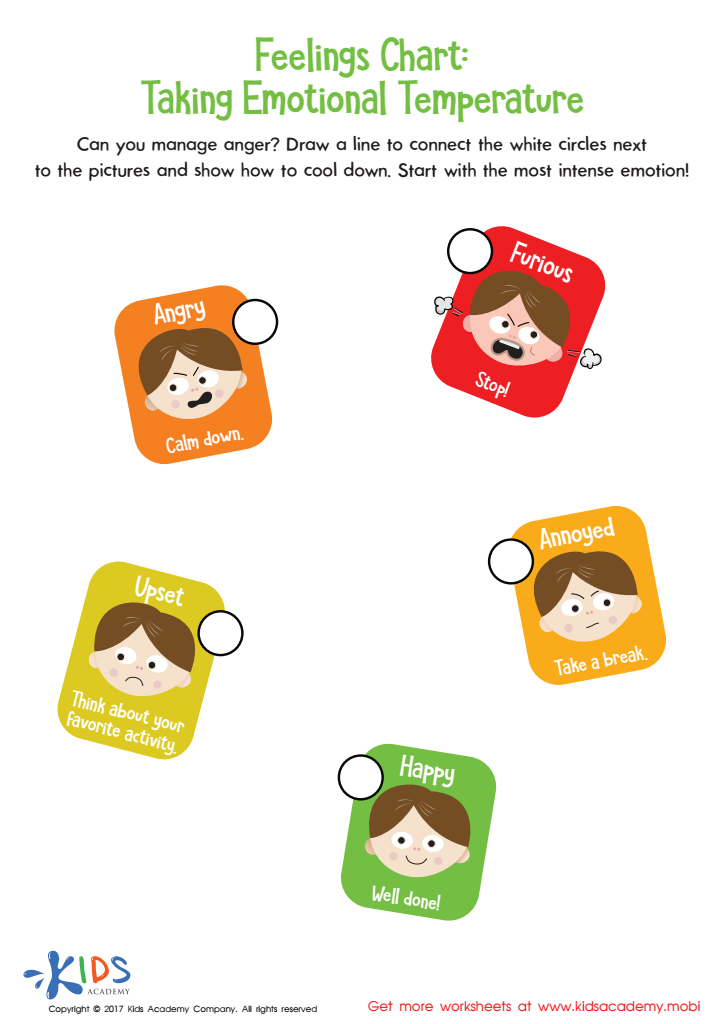
Feelings Chart Worksheet
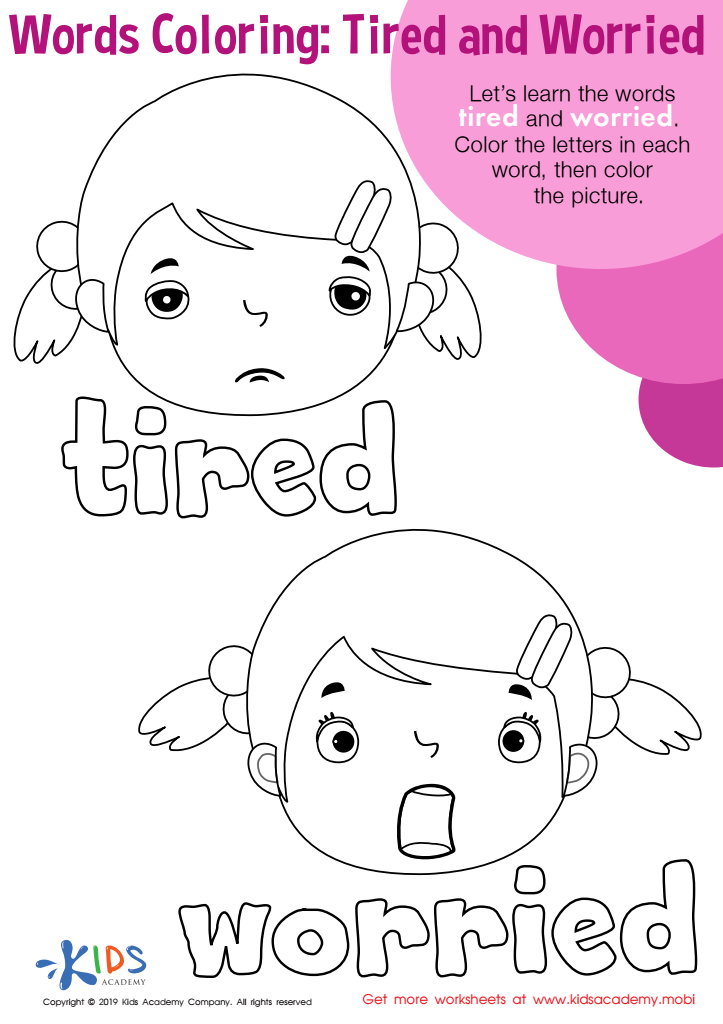
Tired and Worried Words Coloring Worksheet
 Assign to My Students
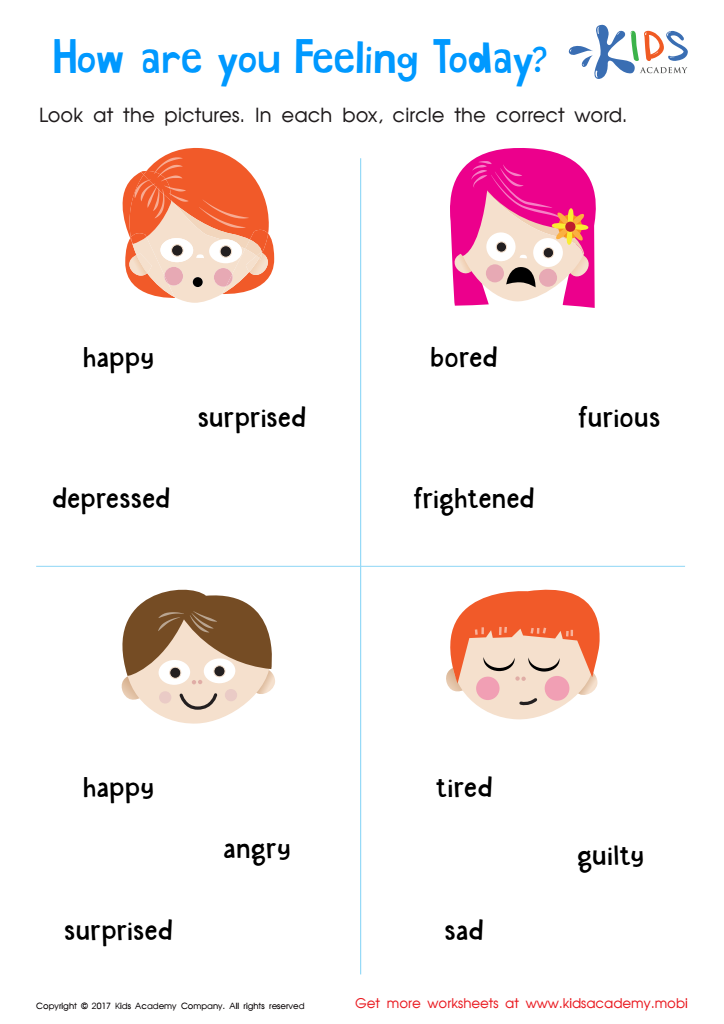
Understanding Feelings Worksheet







Emotional identification is vital for six-year-olds as it lays the foundation for emotional intelligence, which significantly influences their development. At this age, children are beginning to understand and express their emotions but often struggle to identify them accurately. Encouraging emotional identification helps children articulate how they feel, leading to better self-regulation and communication skills.
Parents and teachers play a crucial role in guiding children through this process. By recognizing emotions, children learn to differentiate between feelings like happiness, sadness, fear, and anger. This awareness fosters empathy, making them more sensitive to the emotions of others, which is essential for building healthy relationships.
Moreover, children equipped with emotional identification skills are better able to cope with stress and frustration, ultimately improving their overall well-being and academic performance. When parents and educators promote a safe environment where feelings can be expressed openly, it further encourages emotional exploration and validation.
In summary, prioritizing emotional identification for six-year-olds cultivates emotional intelligence, nurtures social skills, and helps them navigate their world with greater resilience and understanding. That makes emotional development not just an aspect of growing up; it’s a critical component of holistic education and parenting.








