Discover engaging and interactive worksheets designed to enhance math skills for 6-year-olds. Our collection focuses on foundational concepts, including addition, subtraction, shapes, and counting, encouraging a fun learning experience. Each worksheet is tailored to align with age-appropriate learning standards, making it easy for young learners to grasp essential math skills. Created with vibrant visuals and interactive activities, these worksheets aim to foster confidence and enthusiasm in math. Perfect for both classroom and home use, these resources are designed to help children develop a strong mathematical foundation while enjoying the learning process. Start your child's math journey today!

Check out this FREE "Improving math skills" Trial Lesson for age 6!

Draw it Out and Write an Equation

Favorites
With answer key
Interactive
  • 6
  • Improving math skills
Find The Difference Worksheet

Find The Difference Worksheet

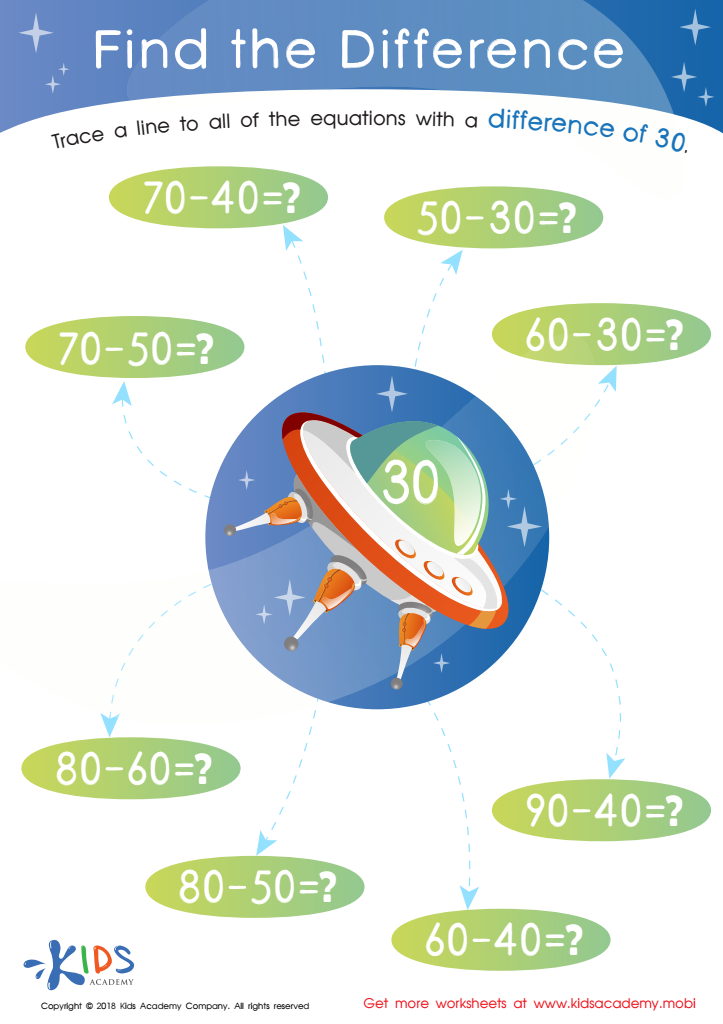
Kindergarteners need to work out subtraction problems and get the right answers. To help them, point to the alien ship with '30' in it on the worksheet. Get them to follow a line to the equations with a difference of 30. Solving these simple subtraction problems will give the answers.
Find The Difference Worksheet
Worksheet
Addition Equations With Base 10 Blocks Worksheet

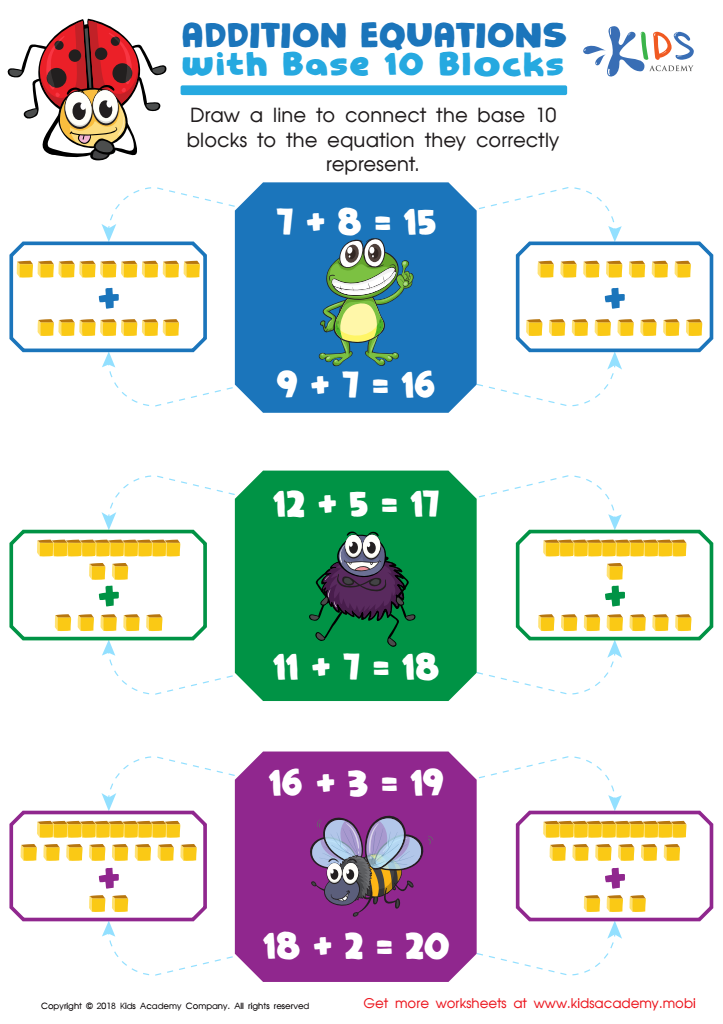
Addition Equations With Base 10 Blocks Worksheet

If your students are struggling with base 10 addition, this worksheet is here to help. Guide them with connecting the blocks to the equation with a line. It's a fun and colourful way to encourage learning.
Addition Equations With Base 10 Blocks Worksheet
Worksheet
Missing Number: Ferris Wheel Math Worksheet

Missing Number: Ferris Wheel Math Worksheet

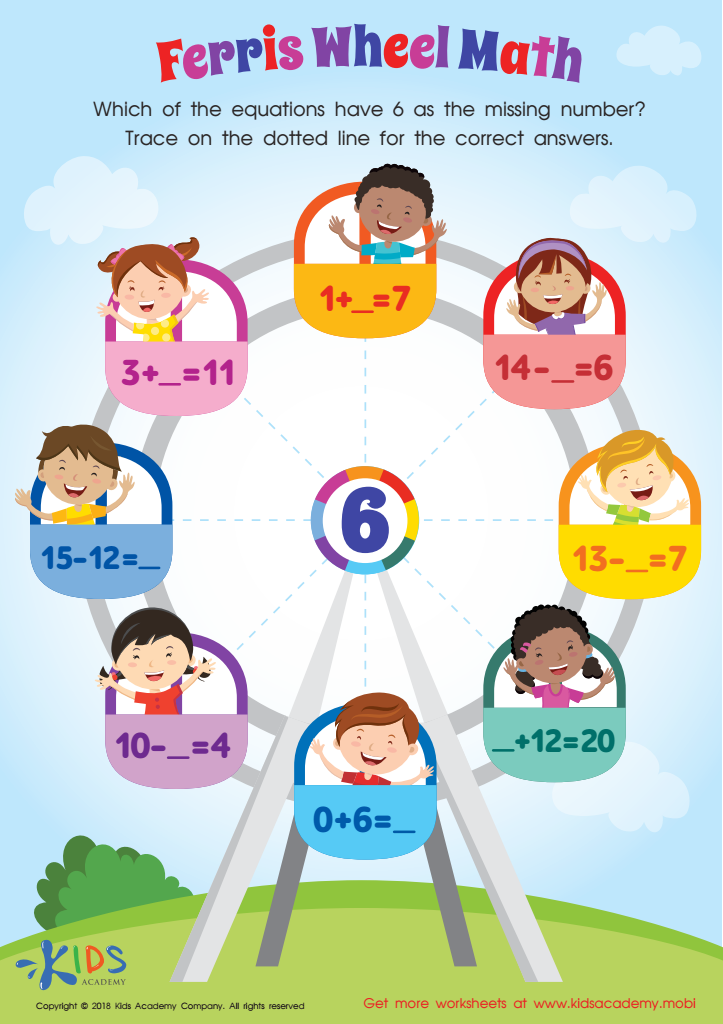
Hop on the Ferris wheel and solve the equations in the baskets! If the missing number is 6, draw a line from the basket to the middle of the wheel. Kids Academy's addition worksheet will not only help practice pre-algebra but also keep kids entertained with its vibrant illustrations. So, go round and round and have fun with math!
Missing Number: Ferris Wheel Math Worksheet
Worksheet
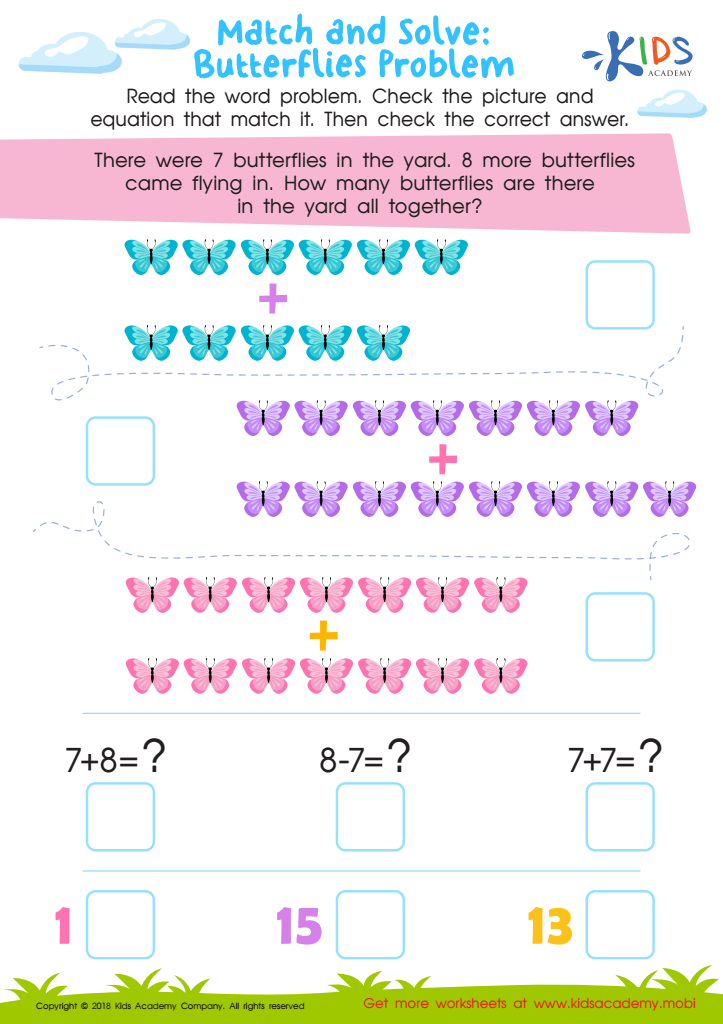
Match and Solve: Butterfly Problem Worksheet

Match and Solve: Butterfly Problem Worksheet

Kids should practice math problems in different ways. This fun worksheet uses butterflies to represent numbers in word problems. Help your child read the problem and count the butterflies to find the correct illustration. Then, pick the equation with the correct answer and find the solution. Tick the box to complete! (80 words)
Match and Solve: Butterfly Problem Worksheet
Worksheet
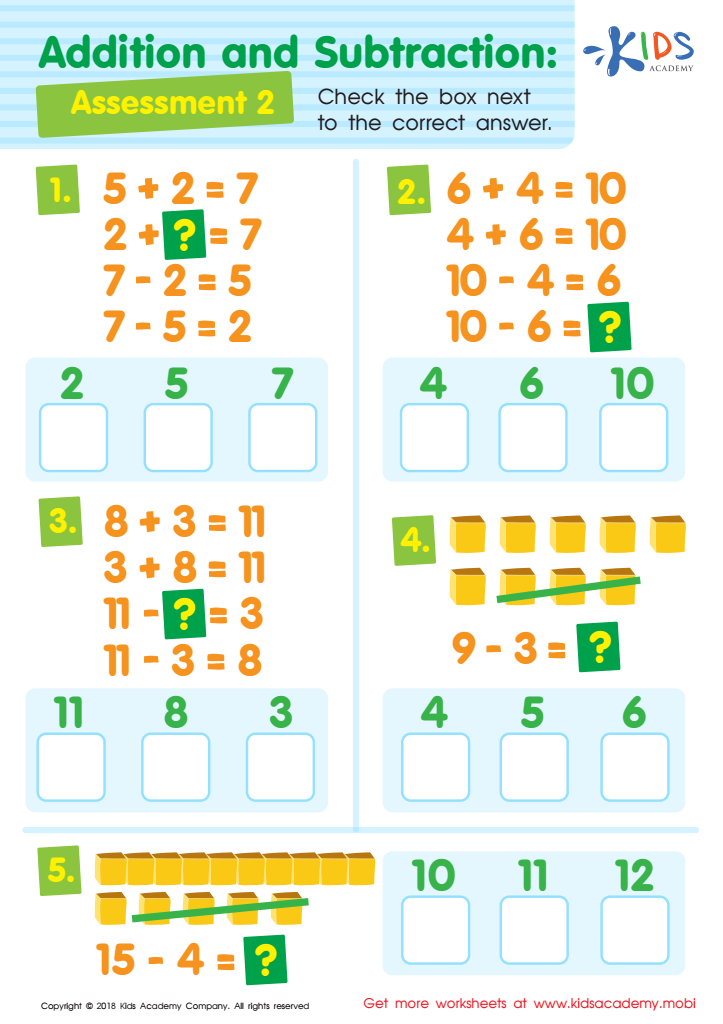
Addition and Subtraction Assessment 2 Worksheet

Addition and Subtraction Assessment 2 Worksheet

As your child grows, math problems become harder. To keep their brains active and provide extra help if needed, use this math worksheet. It'll help them become more familiar with equations. Go through each one carefully with your child and have them check the box next to the right answer.
Addition and Subtraction Assessment 2 Worksheet
Worksheet
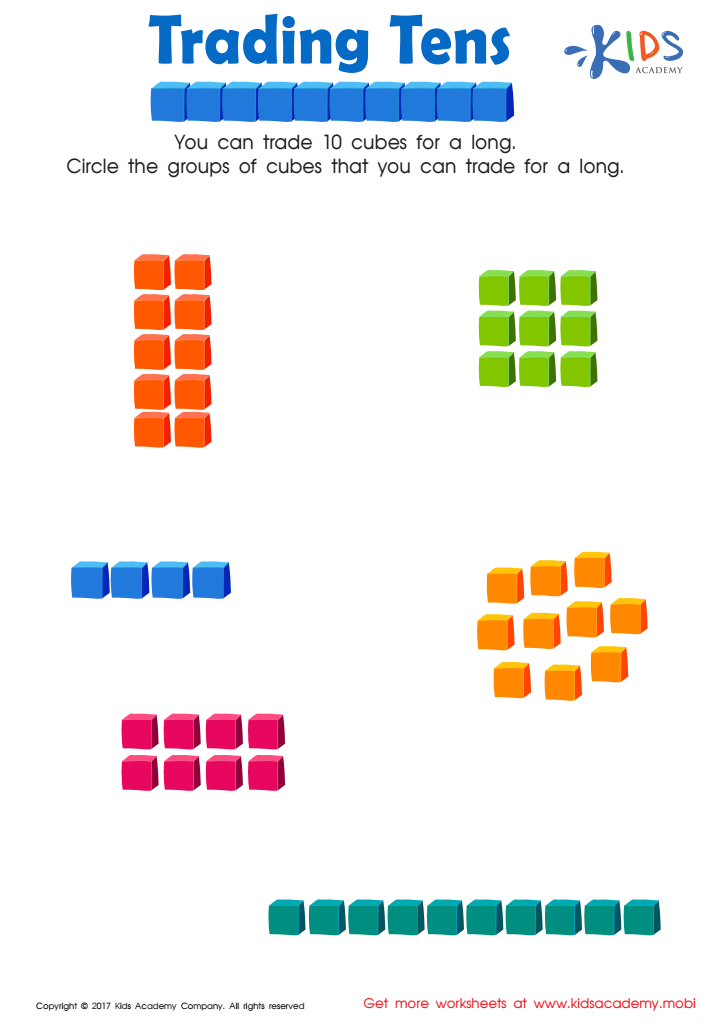
Trading Tens Worksheet


Trading Tens Worksheet

Students will hone their counting skills with this worksheet. They must identify groups of 10 cubes to trade for a long. The cubes are arranged in different ways, so students must rely on individual counting. Completing this printable pdf will help 1st graders develop problem-solving abilities and a better understanding of counting.
Trading Tens Worksheet
Worksheet
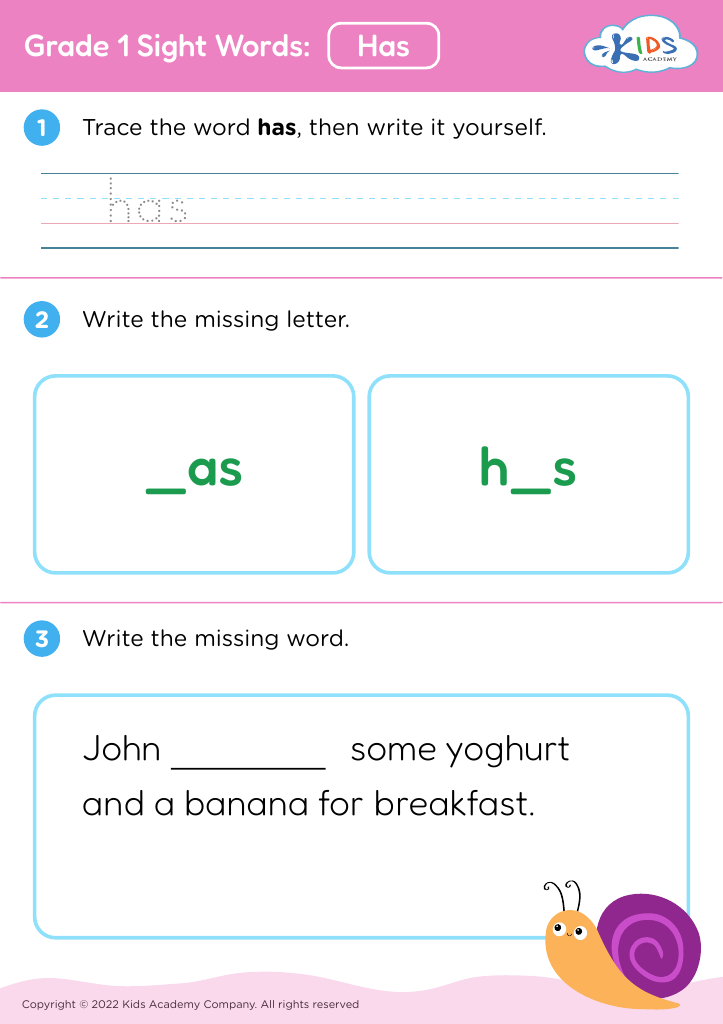
Grade 1 Sight Words: Has

Grade 1 Sight Words: Has

Grade 1 Sight Words: Has
Worksheet


Improving math skills for 6-year-olds is crucial for several reasons. First, early mathematical proficiency lays the foundation for future academic success. At this age, children are developing critical thinking and problem-solving abilities, and a solid grasp of math concepts fosters these essential skills. Engaging with math helps children learn to think logically and quantitatively, which are invaluable skills throughout their education and life.

Second, strong math skills can boost a child's confidence and enjoyment of learning. When children grasp math concepts early on, they are more likely to engage in math-related activities voluntarily and feel empowered to tackle challenges. Building positive attitudes towards math can prevent future math anxiety, which is prevalent among students.

Moreover, these skills are not isolated; they intertwine with other subjects and everyday life, enhancing a child's overall learning experience. Ensuring that children develop strong math skills can also directly support their parents’ and teachers’ goals, leading to better classroom participation, effective communication of thoughts, and collaborative skills among peers.

In conclusion, investing time and resources into improving math skills for 6-year-olds is vital for fostering future success, building confidence, and providing children with an essential toolkit for their lifelong learning journey.