Mathematical reasoning Worksheets for 6-Year-Olds - Page 2
29 filtered results
-
From - To
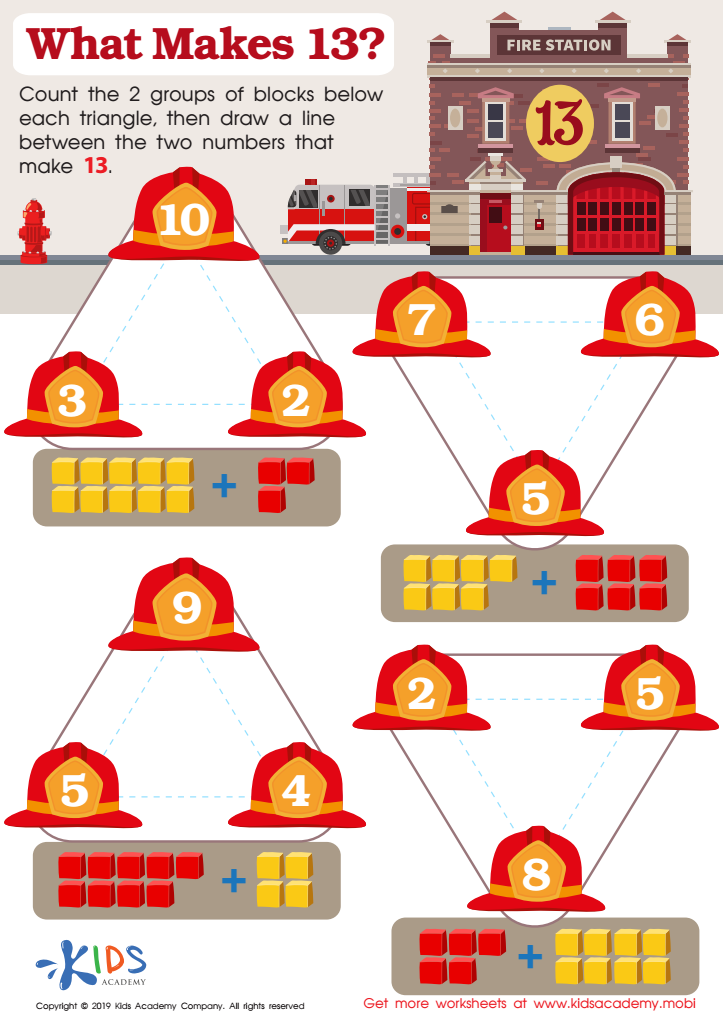
What Makes 13 Worksheet
 Assign to My Students
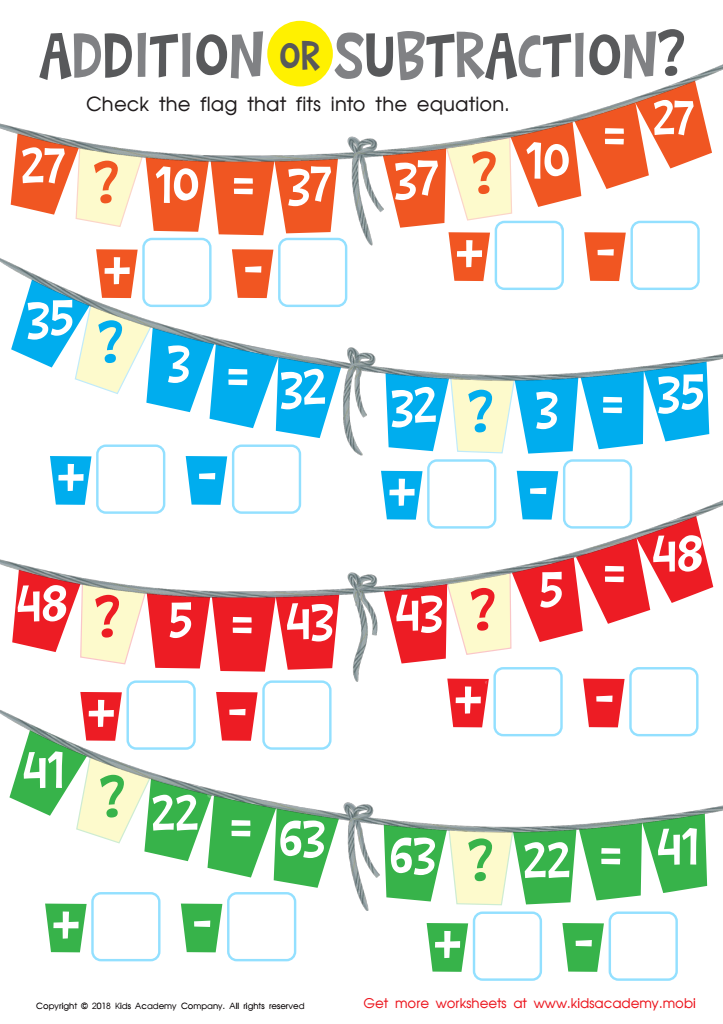
Addition or Subtraction? Worksheet
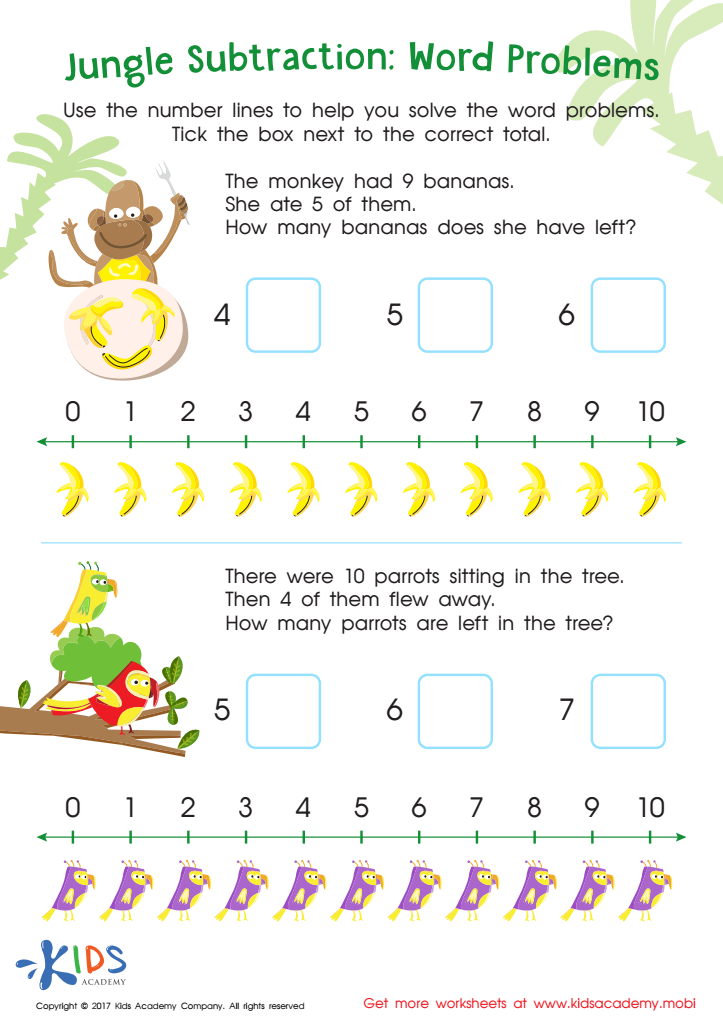
Jungle Subtraction Word Problems Substraction Worksheet








Mathematical reasoning is a pivotal skill for 6-year-olds, and parents or teachers should prioritize it because it serves as the foundational building block for future academic success and everyday problem-solving. At this age, children are naturally curious and absorbent, making it an ideal period to cultivate these skills.
Firstly, developing mathematical reasoning helps children understand the "why" behind mathematical concepts rather than merely memorizing facts. This deep understanding fosters critical thinking and enables them to apply their knowledge flexibly in various contexts, from the classroom to the playground.
Secondly, early mathematical reasoning nurtures a child's ability to solve problems systematically. When children encounter a problem, they learn to break it down into manageable parts, recognize patterns, and use logical sequences to find solutions. These problem-solving skills are transferable to all areas of learning and across multiple disciplines, such as science, technology, engineering, and beyond.
Lastly, fostering these skills at a young age builds confidence. When children understand concepts deeply, they feel more competent and less intimidated by challenges, which promotes a positive attitude toward learning.
In summary, investing in the development of mathematical reasoning for 6-year-olds equips them with essential tools for academic achievement and empowers them with a mindset geared toward logical, critical, and creative thinking.








