
Science knowledge Worksheets for 6-Year-Olds
4 filtered results
Difficulty Level
Grade
Age
-
From - To
Subject
Activity
Standards
Explore our engaging Science Knowledge Worksheets for 6-year-olds, designed to ignite curiosity and foster a love for learning! Our user-friendly resources introduce young learners to essential scientific concepts, encouraging exploration of the world around them. From simple experiments to fun facts about nature, our worksheets cater to various learning styles, making science accessible and enjoyable. Perfect for home or classroom use, these worksheets promote critical thinking, observation skills, and creativity. Empower your child’s scientific journey with hands-on activities that inspire discovery and make learning an adventure. Visit our site today to download your free Science Knowledge Worksheets!
Favorites
With answer key
Interactive
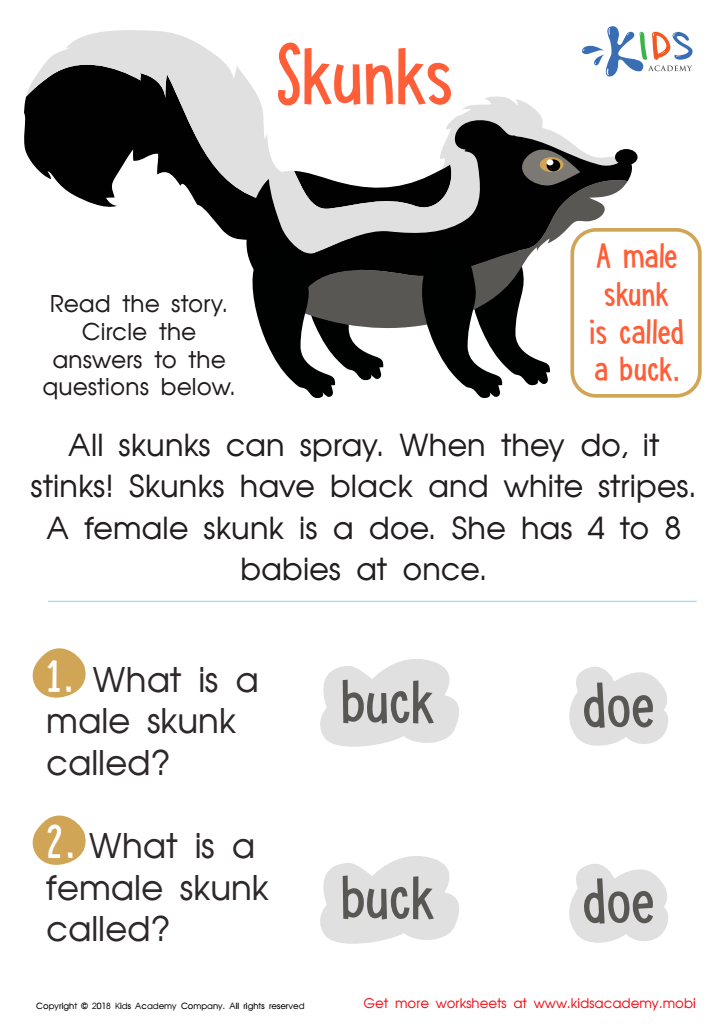
Skunks Worksheet
Kids can learn fascinating information about a beloved and smelly animal with this fun worksheet. They'll read articles, texts, and look at an accompanying picture while reading. Captions and sidebars can give extra details. Finally, answer the given questions by selecting the correct response. Reading is a fun and informative way to gain knowledge!
 Assign to My Students
Skunks Worksheet
Worksheet
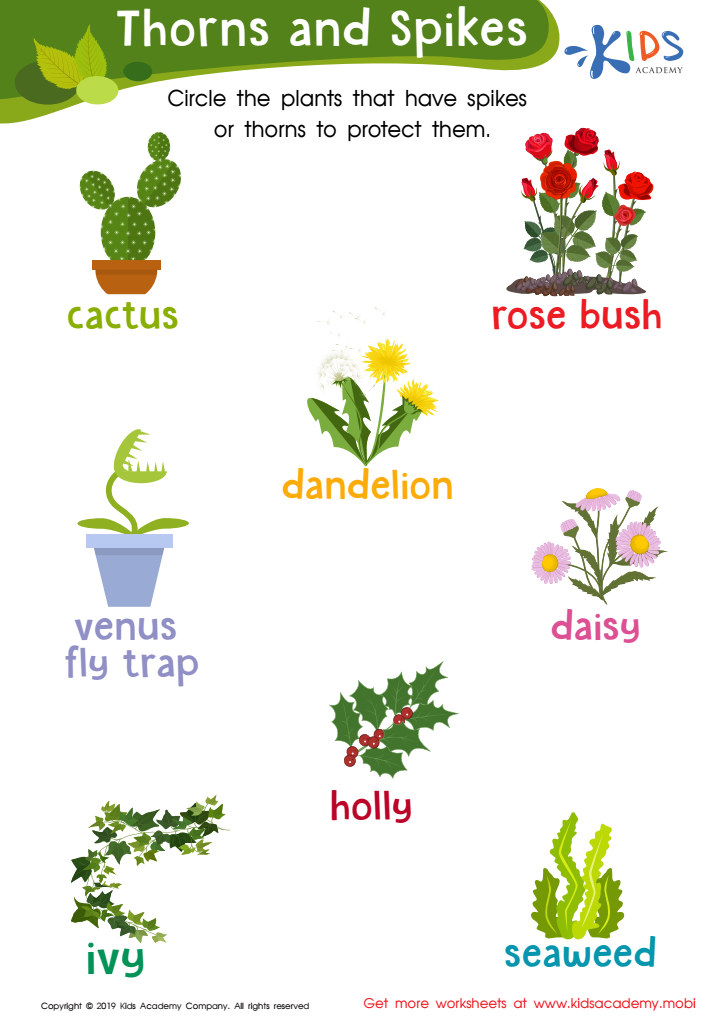
Thorns and Spikes Worksheet
Can your students name and identify the plants and flowers in this worksheet? Ask them to read out the names and circle the ones with spikes or thorns. Help them appreciate nature's beauty and understand how plants protect themselves.
Thorns and Spikes Worksheet
Worksheet
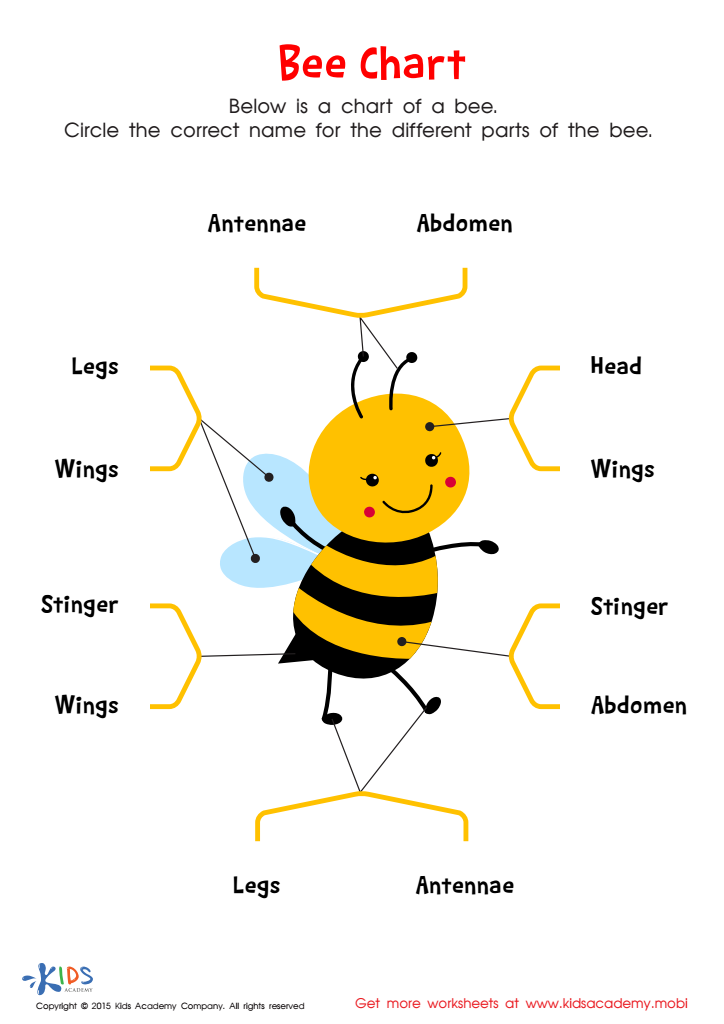
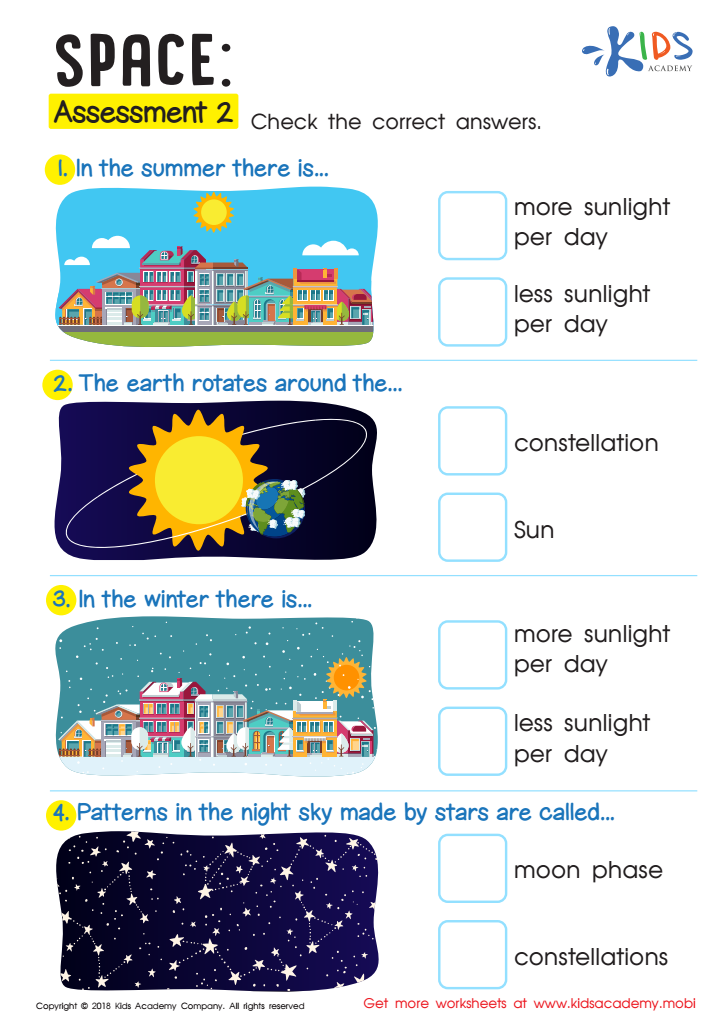
Space: Assessment 2 Worksheet
Test your kids' knowledge of the weather, constellations and Earth with this worksheet. Show them the 4 images and ask what's happening; then read the questions and options and help them pick the right answers. This printout is a helpful and fun way to learn!
Space: Assessment 2 Worksheet
Worksheet
Join Kids Academy for Free
Who is primarily going to use this learning content?








Teaching science to 6-year-olds is essential as it lays the foundation for lifelong learning and curiosity. At this age, children are naturally inquisitive and often ask questions about the world around them. Engaging them in science helps satisfy their curiosity and encourages critical thinking. Understanding basic scientific concepts fosters problem-solving skills, as children learn to observe, hypothesize, experiment, and draw conclusions.
Moreover, science education cultivates a sense of wonder about nature and the universe, promoting environmental awareness and appreciation from a young age. Incorporating hands-on activities can make learning more enjoyable and memorable, helping children develop a positive relationship with learning.
Another reason parents and teachers should prioritize science knowledge is its interdisciplinary nature. Science intersects with math, literacy, and social studies, enhancing overall academic performance. A solid grasp of scientific fundamentals nurtures future innovators and informed citizens who can engage intelligently with societal challenges.
Additionally, equipping children with a scientific mindset empowers them to understand and feel confident in discussing real-world issues, from climate change to health, thereby fostering responsible and informed future generations. In short, investing in science knowledge for young learners is vital for holistic development and a better future.








