Shape Recognition Worksheets for 6-Year-Olds - Page 4
73 filtered results
-
From - To
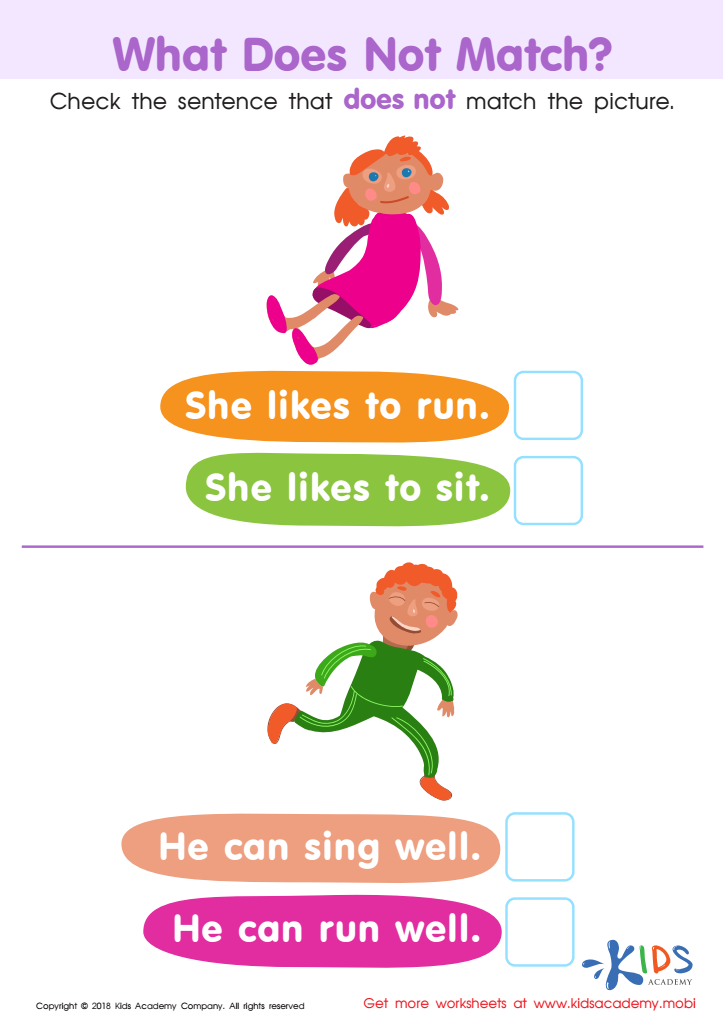
What Does Not Match? Worksheet
 Assign to My Students







Shape recognition plays a crucial role in the cognitive and developmental growth of 6-year-olds. At this age, children are naturally curious and eager to explore their environment, making it an ideal time to introduce them to different shapes. Understanding shapes fosters spatial reasoning, which is essential for many aspects of learning later in life, especially in subjects like math and science.
From a practical perspective, shape recognition lays the groundwork for essential skills, such as counting, sorting, and problem-solving. When children identify various shapes, they enhance their ability to classify objects, which is foundational for more complex mathematical concepts. Furthermore, recognizing shapes helps improve fine motor skills, as children often engage in activities like drawing or crafting, which require hand-eye coordination.
Socially and emotionally, learning about shapes can boost a child's confidence. When they successfully identify and name shapes, they build a sense of accomplishment. Engaging with shapes through play fosters creativity and teamwork in group activities. Consequently, both parents and teachers should prioritize shape recognition, as it nurtures essential cognitive abilities, promotes confidence, and prepares children for future academic challenges. A strong foundation in shape recognition ultimately enriches a child’s overall learning experience.








