Time recognition Worksheets for 6-Year-Olds
3 filtered results
-
From - To
Discover our engaging Time Recognition Worksheets designed specifically for 6-year-olds! These interactive printables help young learners grasp the concept of time through fun activities that enhance their understanding of clocks, both digital and analog. Each worksheet is tailored to boost critical thinking and problem-solving skills, making learning about minutes and hours enjoyable. With colorful illustrations and age-appropriate exercises, children can practice reading clocks, matching times, and completing enjoyable time-related puzzles. Equip your child with the essential skills of time management and solidify their learning foundation in a playful, educational environment. Explore our worksheets and watch your child's confidence grow!
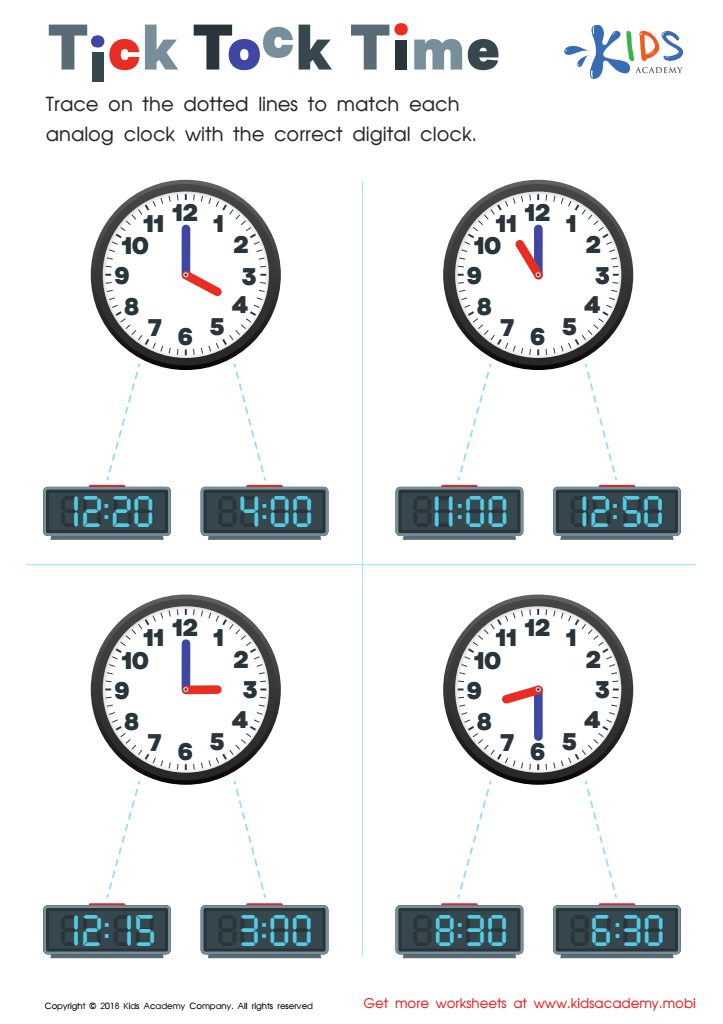
Tick Tock Time Worksheet
 Assign to My Students
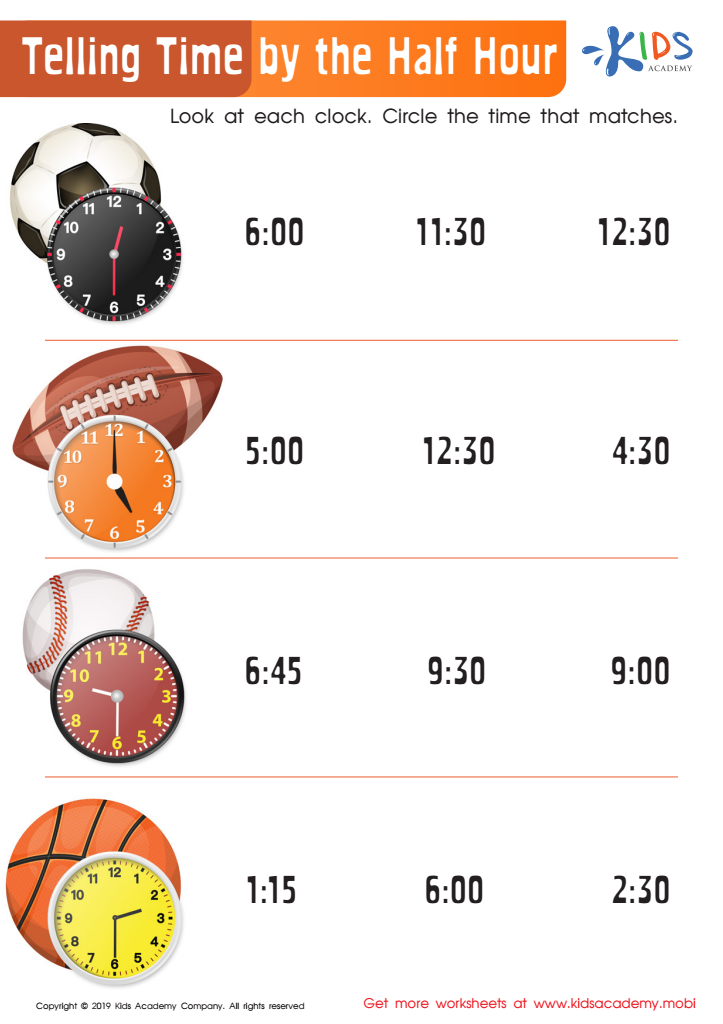
Telling Time by the Half Hour Worksheet
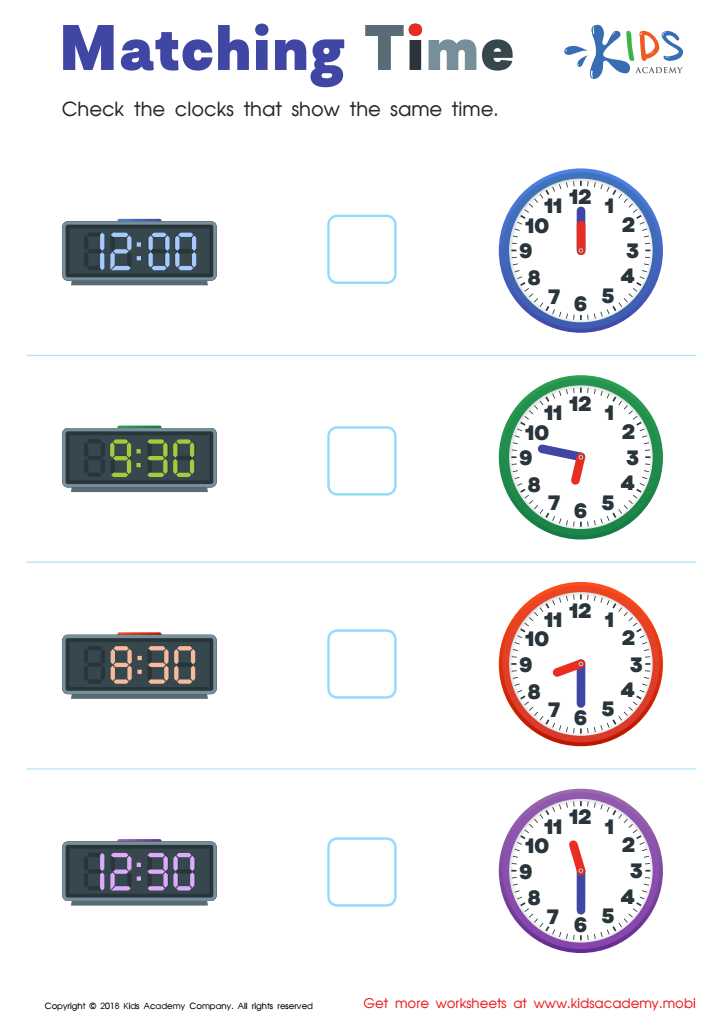
Matching Time Worksheet








Time recognition is a crucial skill for 6-year-olds, as it lays the foundation for future learning and daily functioning. Understanding time helps children grasp essential concepts such as routines, punctuality, and the importance of scheduling. When children learn to tell time, they develop a sense of responsibility and independence; they can better manage their activities and understand transitions between tasks, fostering self-regulation.
From a cognitive perspective, learning how to read clocks—both analog and digital—promotes critical thinking and problem-solving abilities. It requires recognizing numbers, understanding sequences, and comparing intervals, which are foundational math skills. Moreover, time-based activities can enhance social skills as children learn to collaborate with their peers, such as waiting for their turn or coordinating playtime.
For parents and teachers, instilling time recognition in young children is also vital for promoting a sense of discipline and meeting societal expectations. As children navigate school environments and structured activities, being aware of time helps them participate more fully and reduces anxiety related to time mismanagement. Ultimately, fostering time recognition sets children on a path toward improved organization, academic success, and the ability to navigate daily life efficiently.








