Understanding adjectives Worksheets for 6-Year-Olds
4 filtered results
-
From - To
Unlock the vibrant world of descriptions with our "Understanding Adjectives Worksheets for 6-Year-Olds." Designed by education experts, these printable resources help young learners master adjectives effortlessly. Through engaging activities and colorful visuals, children identify and use descriptive words, enhancing their vocabulary and sentence-building skills. Perfect for classroom use or at-home practice, these worksheets ensure kids understand and apply adjectives in fun and creative ways. Set your child on the path to linguistic brilliance and watch their love for learning grow. Explore our collection today and make adjectives an exciting part of their language development journey.
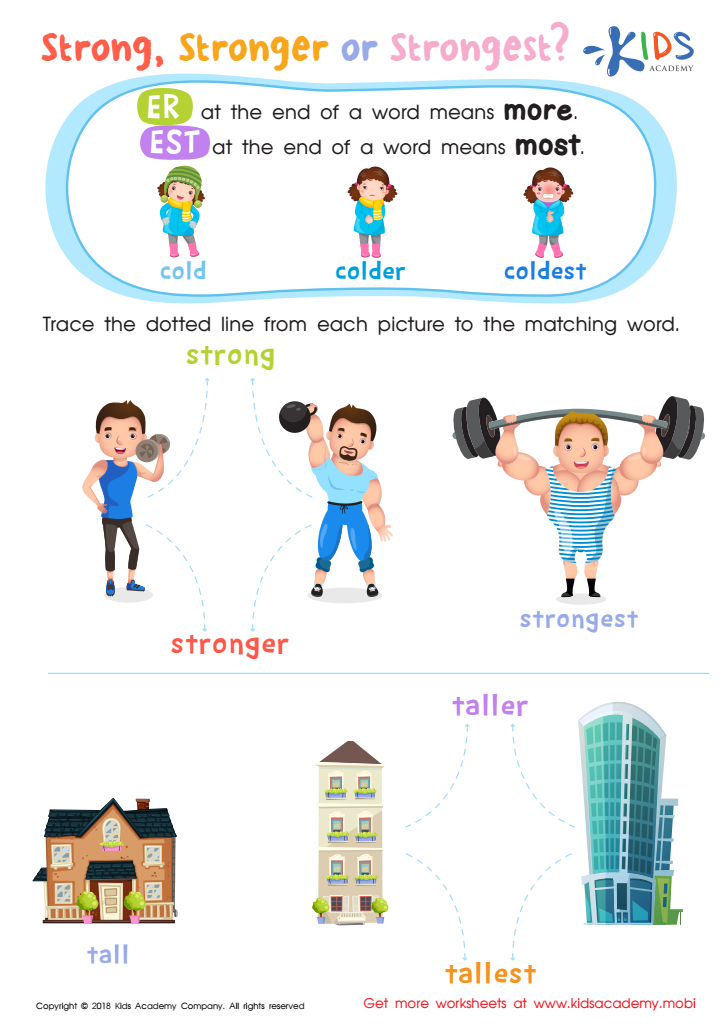
Strong or Stronger? Worksheet
 Assign to My Students
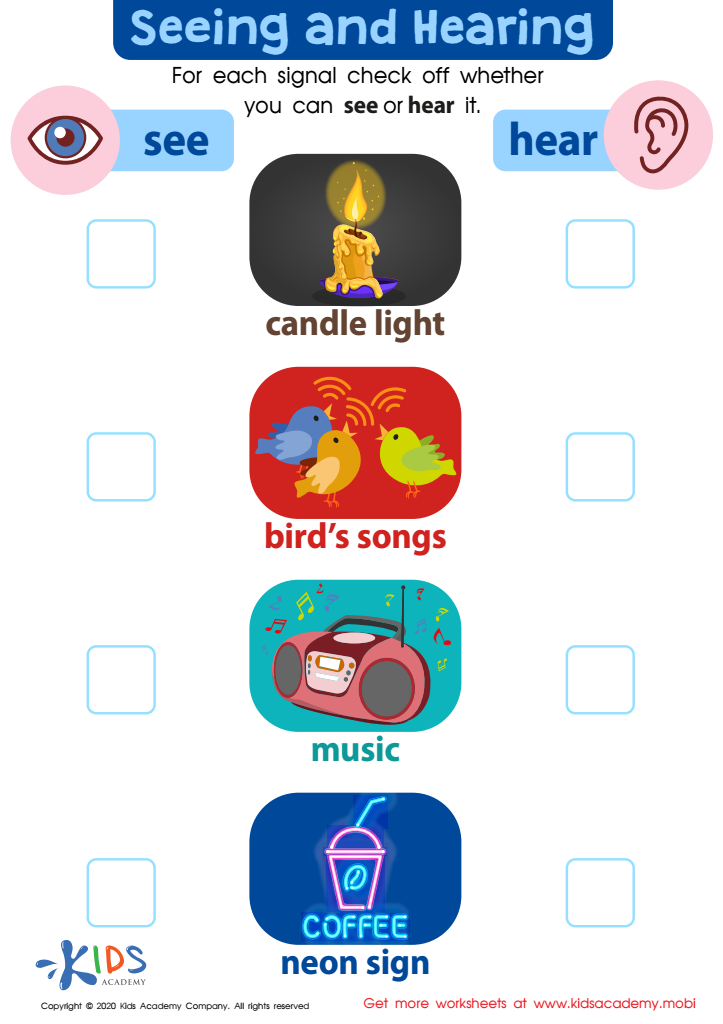
Seeing and Hearing Worksheet
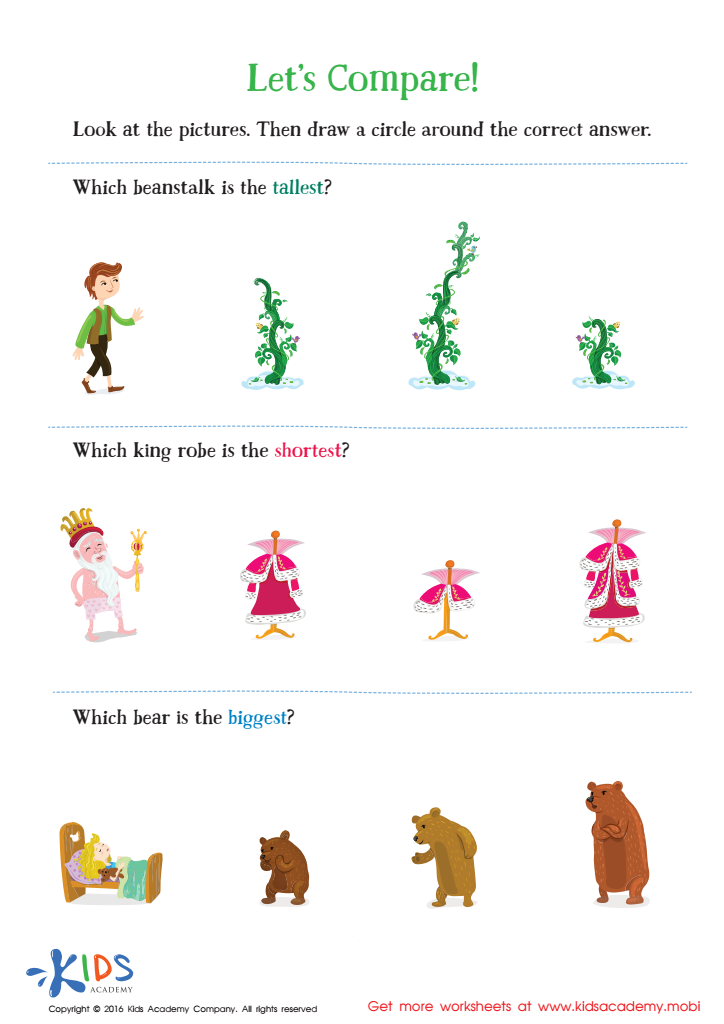
Fairy Tale Worksheet: Let's Compare

Arctic Animals: Polar Bear Worksheet







Understanding adjectives is crucial for 6-year-olds as it enhances their language ability and cognitive development. Adjectives are words that describe or modify nouns, giving more detail and vibrant imagery to sentences. When children grasp how to use adjectives, their communication skills flourish. They can express themselves more thoroughly and accurately by adding descriptive words to their speech and writing.
For instance, instead of saying "a dog," a child could say "a fluffy, brown dog," which paints a clearer picture. This skill enriches their storytelling and creative writing capabilities, fostering a love for language and literature.
From an educational standpoint, knowing adjectives helps children perform better across subjects by understanding and following instructions more precisely. If a teacher asks a child to pick the “large, red block,” comprehension of adjectives ensures the correct selection is made, aiding learning activities.
Furthermore, adjectives build a robust vocabulary, which is fundamental for reading comprehension. Knowing a variety of descriptive words allows children to understand texts more deeply, improving their overall literacy. This foundation ultimately sets the stage for future academic success and effective communication. Therefore, both parents and teachers should prioritize and encourage learning adjectives, making it a fun and integral part of early education.








