Understanding syllables Worksheets for 6-Year-Olds
3 filtered results
-
From - To
Unlock the joy of learning with our engaging "Understanding Syllables Worksheets for 6-Year-Olds"! Designed to help young learners master syllable segmentation and boost their phonological awareness, these worksheets combine fun activities with essential educational content. Through vibrant illustrations and interactive exercises, children will learn to break words into syllables, promoting better reading and pronunciation skills. Perfect for classroom use or at-home practice, these printable worksheets are crafted to keep little ones entertained while solidifying their foundational language skills. Give your 6-year-old a head start in literacy with Kids Academy’s expertly designed, easy-to-follow syllable worksheets!
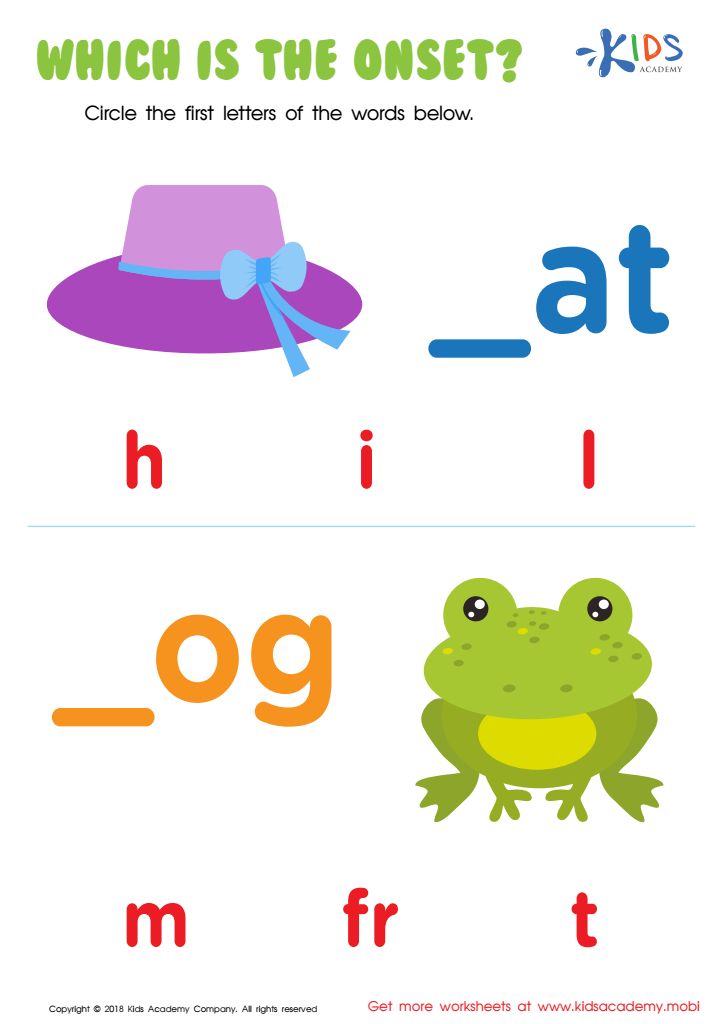
Which Is the Onset? Worksheet
 Assign to My Students
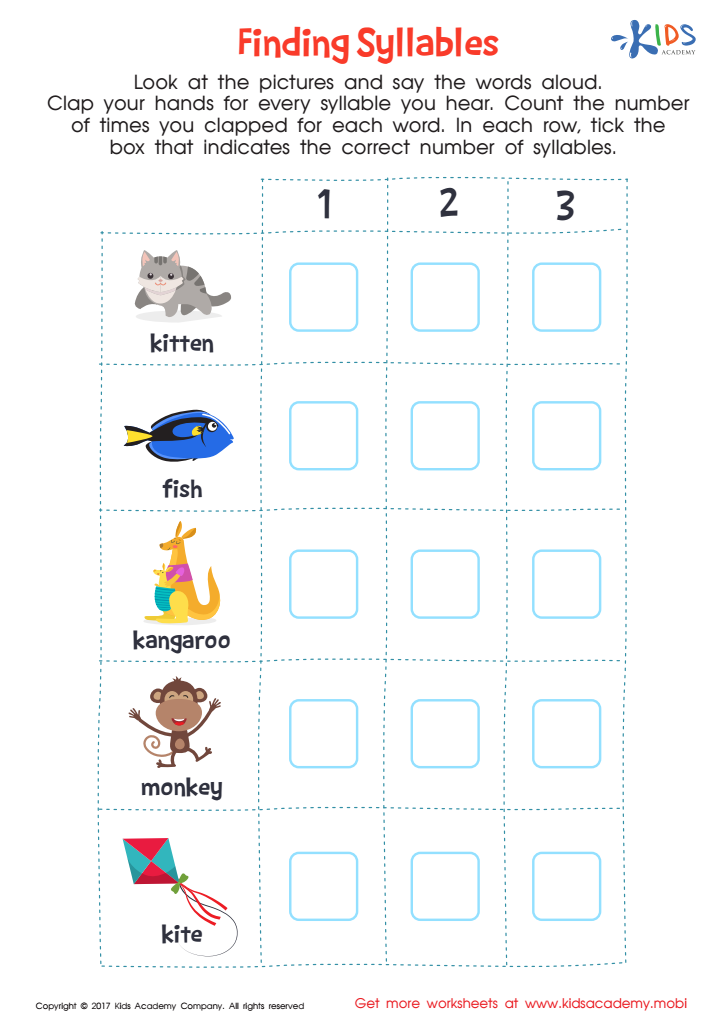
Finding Syllables Word Structure Worksheet
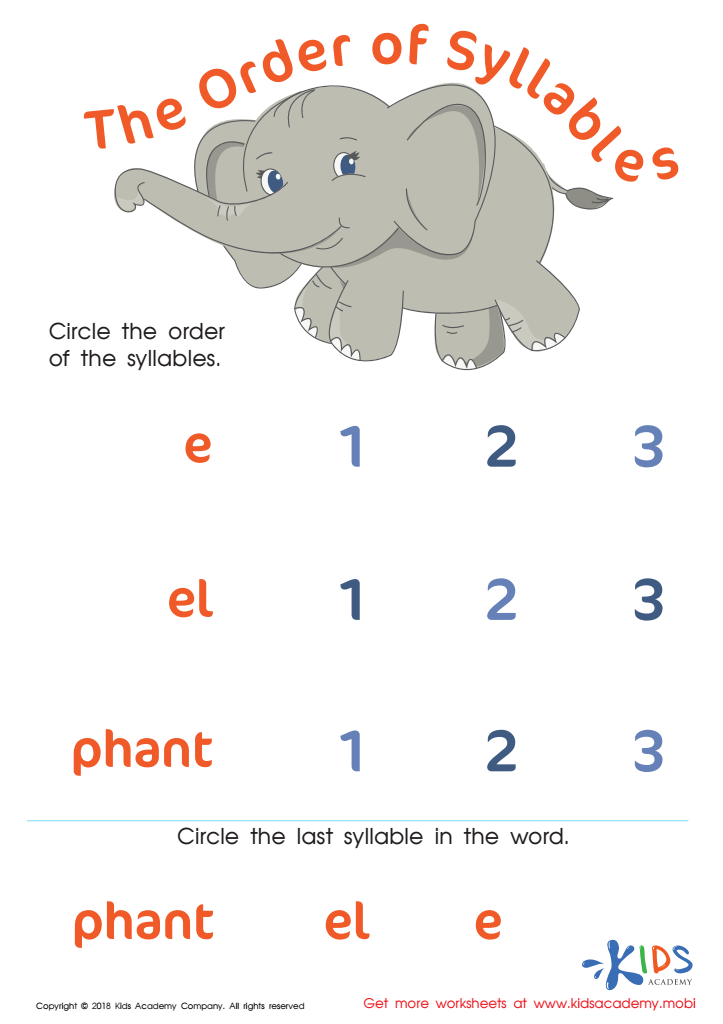
The Order of Syllables Worksheet







Understanding syllables is a fundamental aspect of early literacy that significantly impacts a child's ability to read and write effectively. For 6-year-olds, recognizing and working with syllables helps break down complex words into manageable parts, making the reading process less intimidating and more approachable.
When children learn about syllables, they develop key phonological skills that enhance their phonemic awareness. This awareness is critical as it enables kids to hear, identify, and manipulate individual sounds in words, which are essential skills for learning to read. Mastery of syllables can also aid in spelling, as children begin to understand that words can be segmented into smaller, more predictable chunks.
Parents and teachers should prioritize this aspect of learning because it lays a strong foundation for future academic success. Syllable awareness can improve word decoding skills, enhance vocabulary, and boost reading comprehension. Additionally, it makes expressing thoughts in writing more accessible, as children become more confident in spelling longer words.
Educators and parents can support this learning through fun, engaging activities like clapping out syllables, using visual aids, and playing interactive word games. By focusing on syllable awareness, they significantly contribute to a child's literacy development, ensuring they are prepared for more advanced language and reading challenges in the years ahead.








