Uppercase identification Worksheets for 6-Year-Olds
5 filtered results
-
From - To
Unlock your child's potential with our engaging Uppercase Identification Worksheets designed specifically for 6-year-olds! These interactive worksheets offer a fun and effective way to teach uppercase letters. Perfect for young learners, they include color-by-letter activities, tracing exercises, and letter recognition games that boost fine motor skills and enhance literacy understanding. By exploring these unique resources, children will develop confidence in identifying and using uppercase letters in everyday communication. Whether as part of classroom instruction or at-home practice, these worksheets serve as an essential tool for foundational reading skills, ensuring your child is ready for future learning adventures. Download now and watch their literacy flourish!
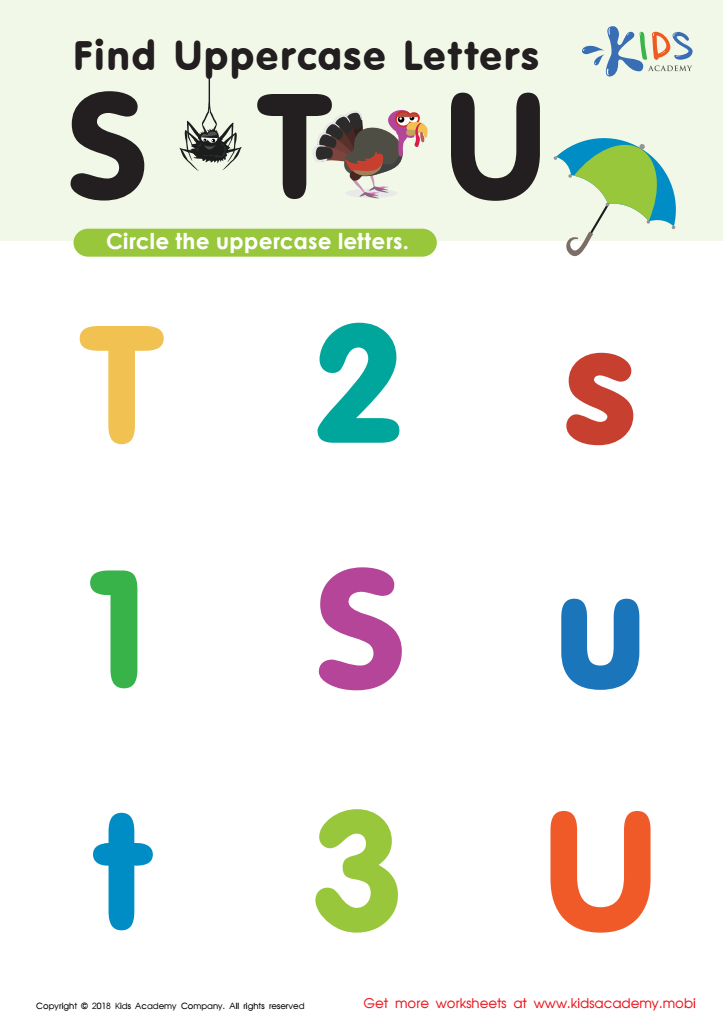
Find Uppercase Letters Worksheet
 Assign to My Students
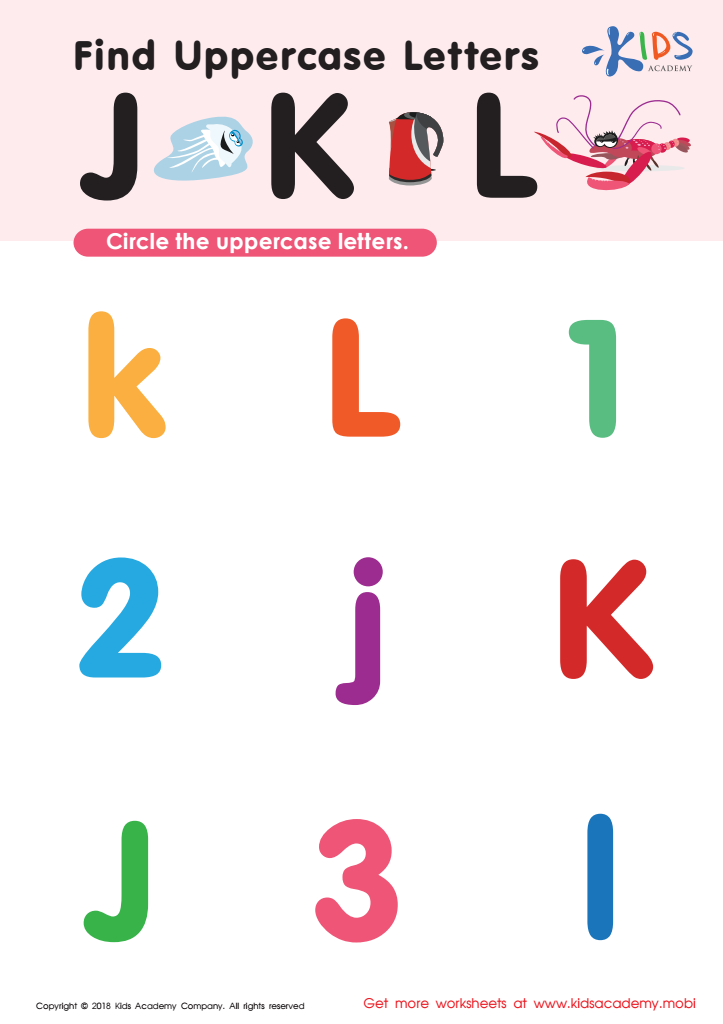
Find Uppercase Letters J, K, and L Worksheet
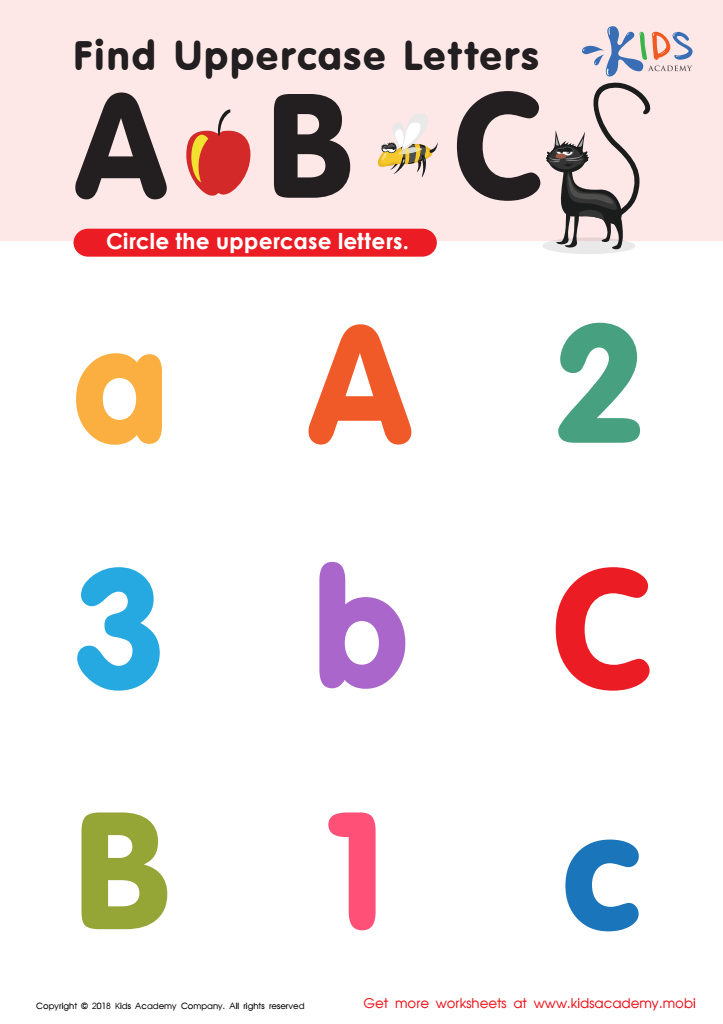
Find Uppercase Letters A, B, and C Worksheet
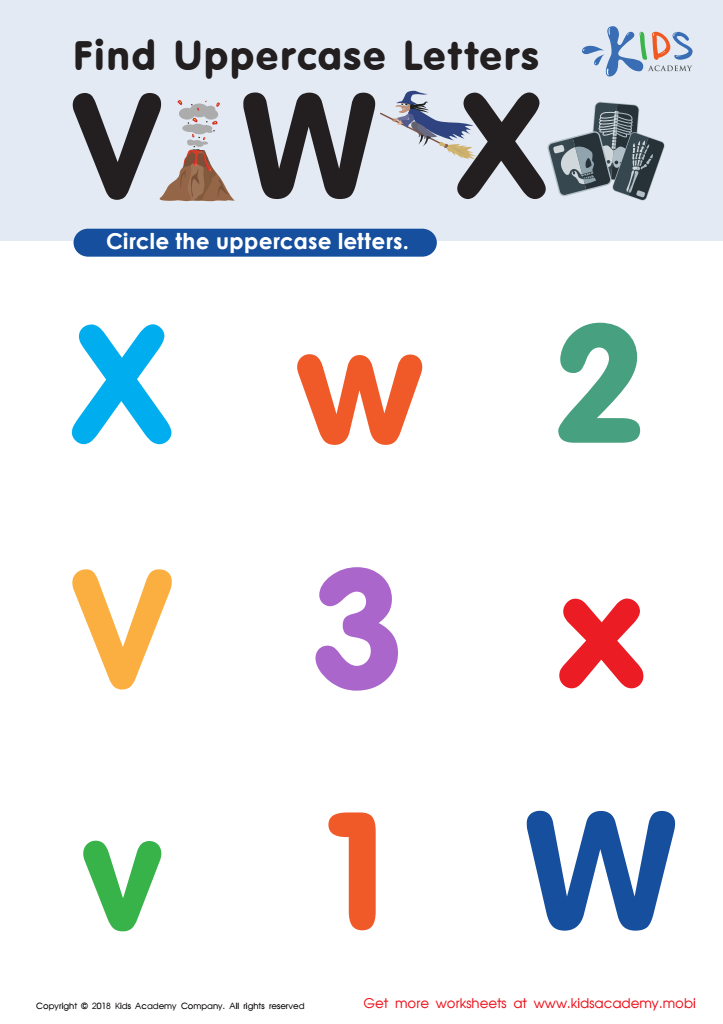
Find Uppercase Letters V, W, X Worksheet
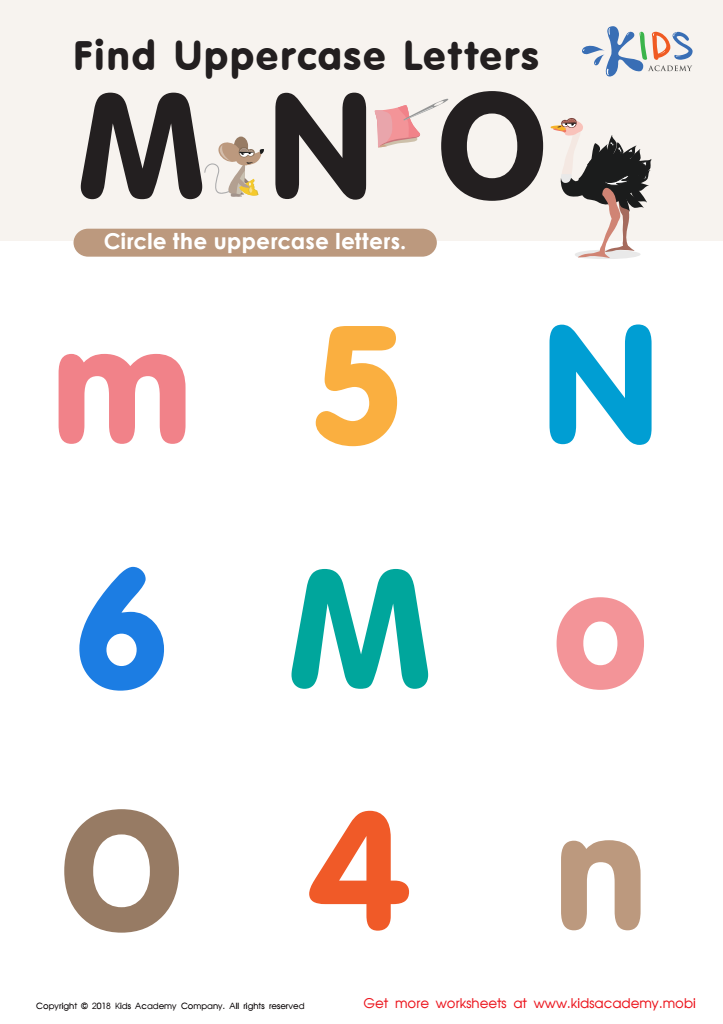
Find Uppercase Letters M, N, and O Worksheet





.jpg)


Uppercase letter identification is a crucial skill for 6-year-olds as it forms the foundation for reading and writing. At this age, children are developing literacy skills that encompass recognizing letters and associating them with sounds. Knowing uppercase letters aids in distinguishing between them and lowercase letters, facilitating smoother transitions to constructing readable texts.
Parents and teachers should care about uppercase identification because it significantly enhances a child's reading comprehension. Recognizing uppercase letters helps children identify the start of sentences, proper nouns, and signals for context within text. Moreover, mastering uppercase letters fosters confidence, encouraging children to engage more readily in writing tasks, such as their names, important places, and titles of stories.
Additionally, understanding uppercase letters is important from a social and cognitive perspective; children find their names and familiar terms in print, creating connections between written language and their individual experiences. This cultivates a love for learning and boosts motivation in literacy activities.
In essence, focusing on uppercase letter identification equips 6-year-olds with essential tools for academic success, nurturing critical thinking and establishing strong early literacy foundations that will benefit them for years to come. Thus, collaborative efforts from parents and educators are vital in reinforcing this essential skill.








