Weather identification Worksheets for 6-Year-Olds
5 filtered results
-
From - To
Introduce young learners to the wonders of weather with our engaging Weather Identification Worksheets for 6-Year-Olds. These printable activities from Kids Academy are designed to spark curiosity and enhance understanding of different weather conditions. Through a variety of interactive tasks, children will learn to identify, describe, and categorize weather phenomena, fostering essential learning skills such as observation and critical thinking. Perfectly tailored for first graders, our worksheets offer a fun, educational experience that aligns with early learning standards. Discover a seamless blend of play and education, helping your child become a little meteorologist!
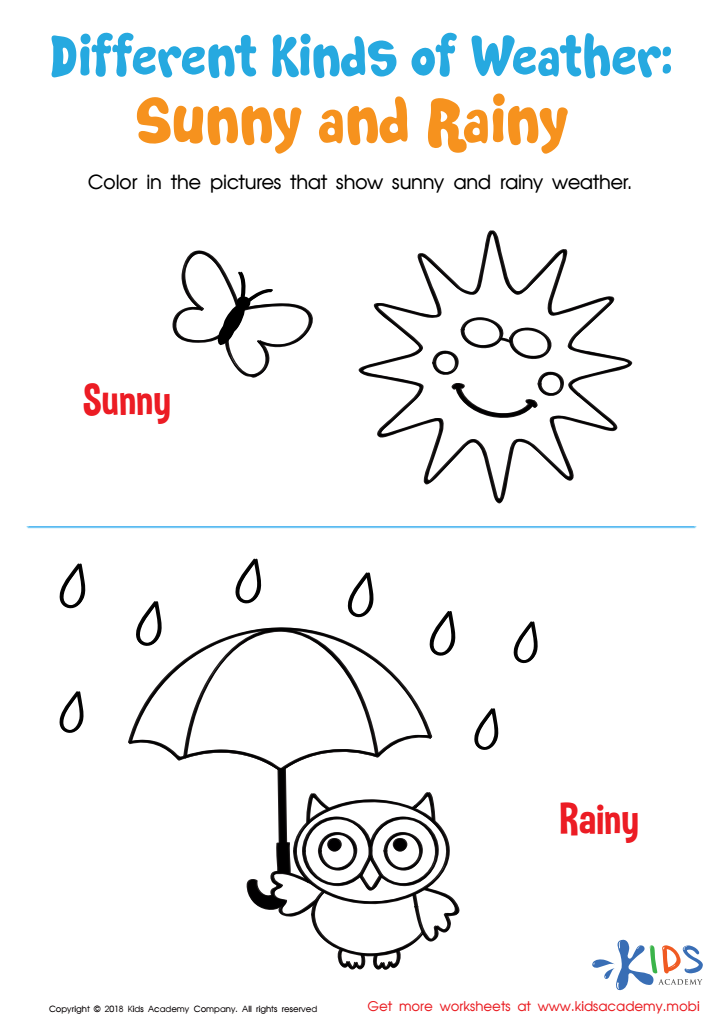
Different Kinds of Weather: Sunny and Rainy Worksheet
 Assign to My Students
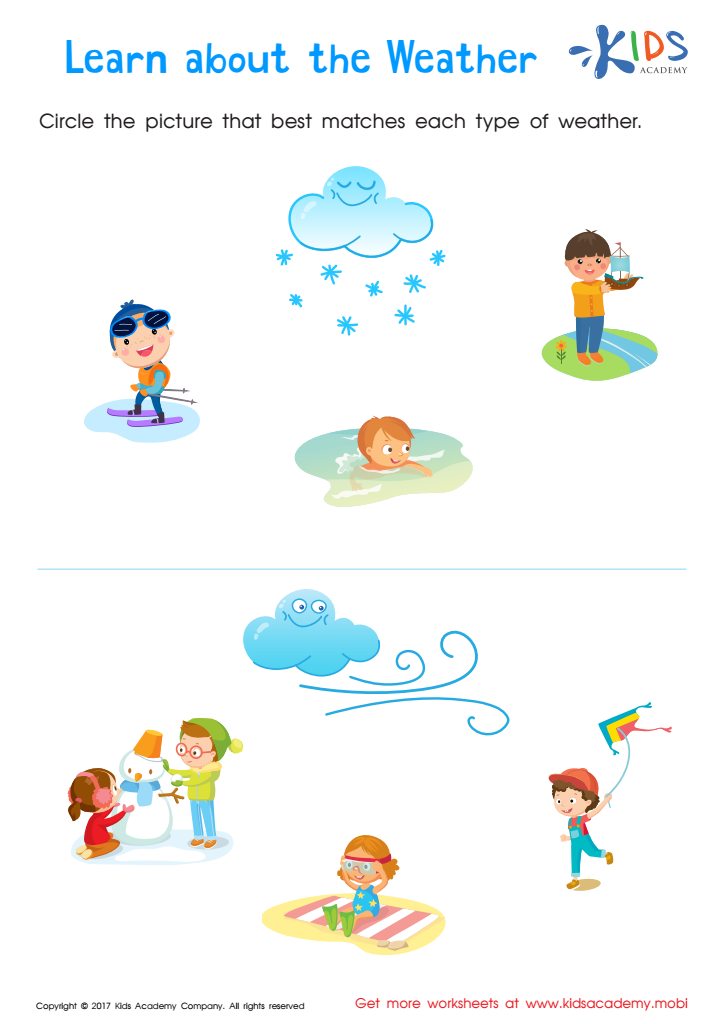
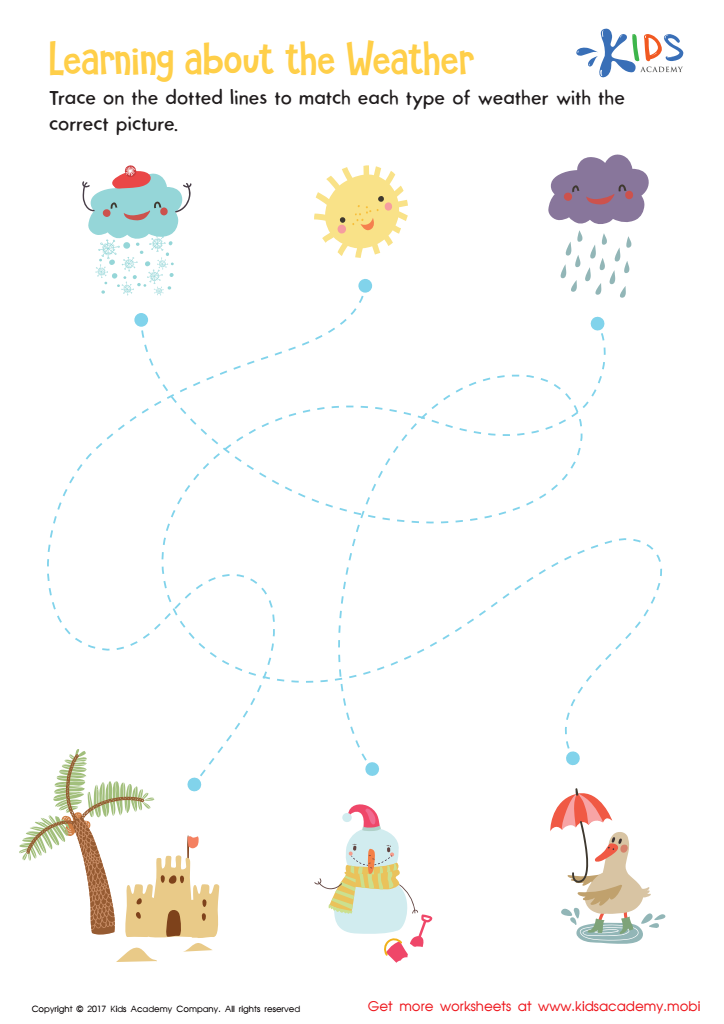
About the Weather Printable
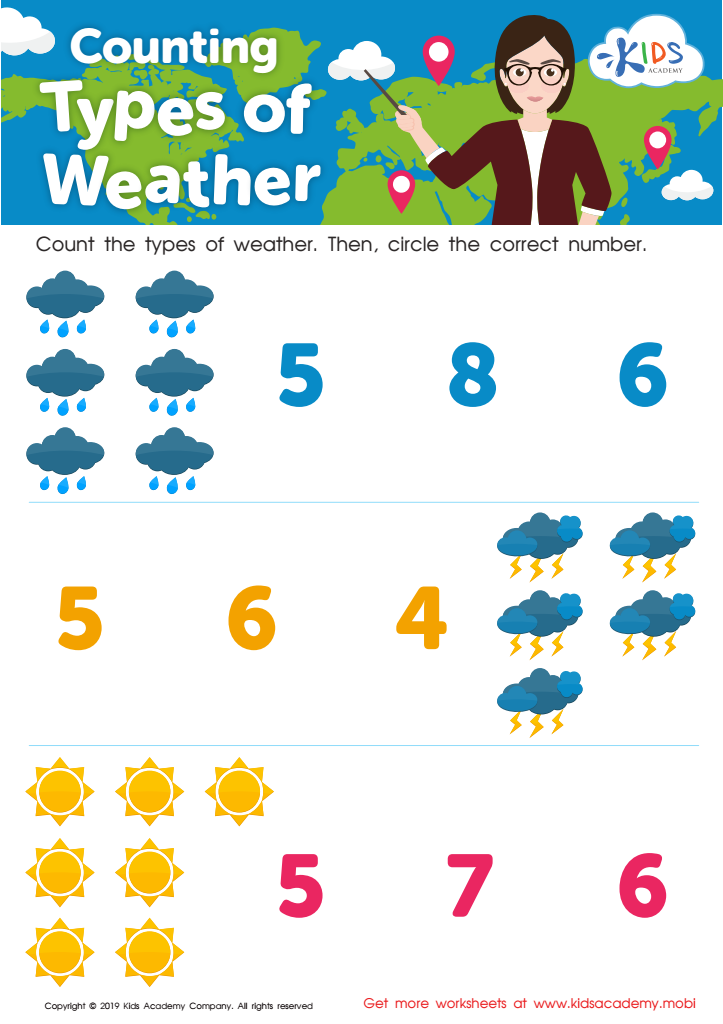
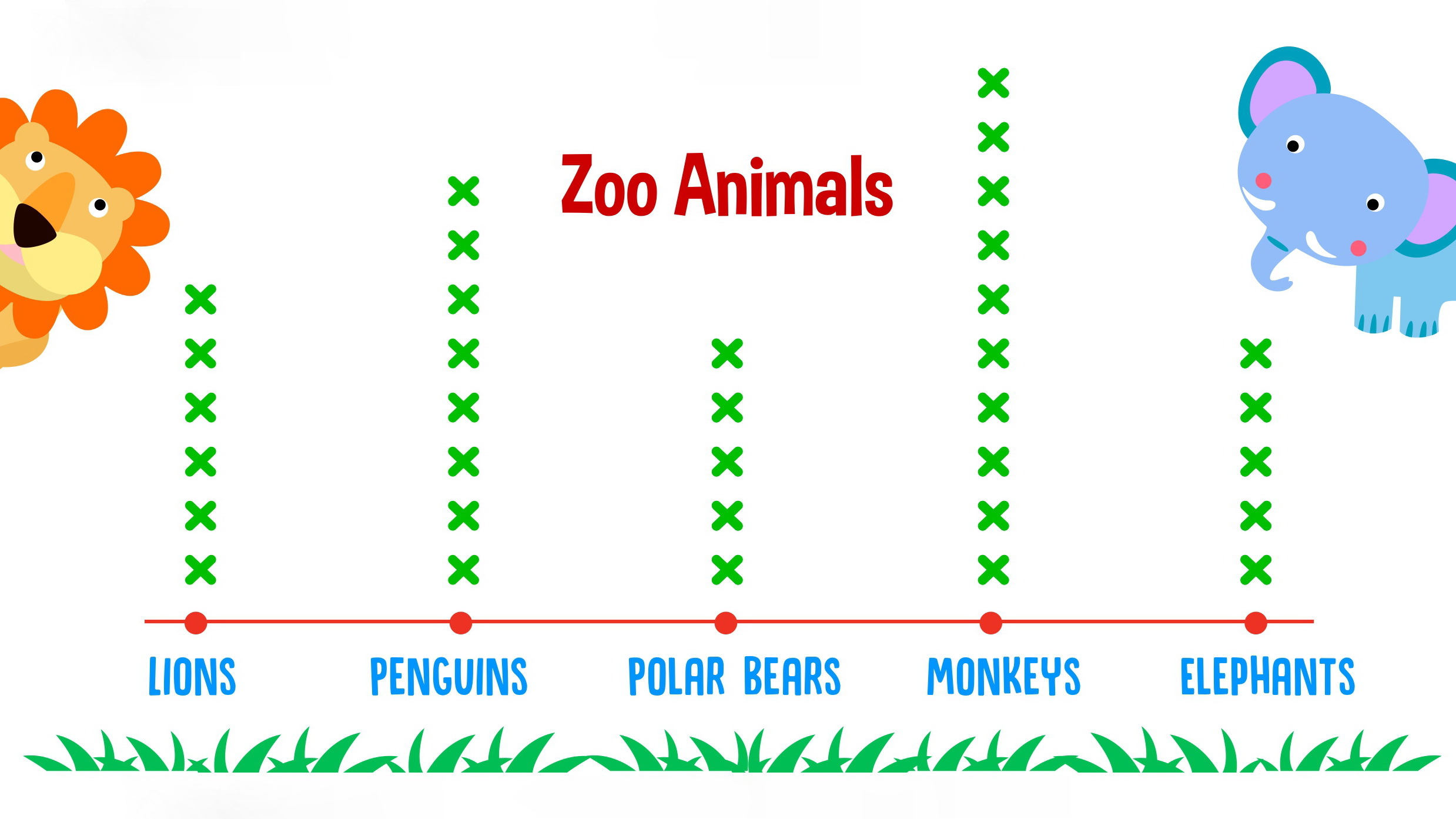
Counting Types of Weather Worksheet
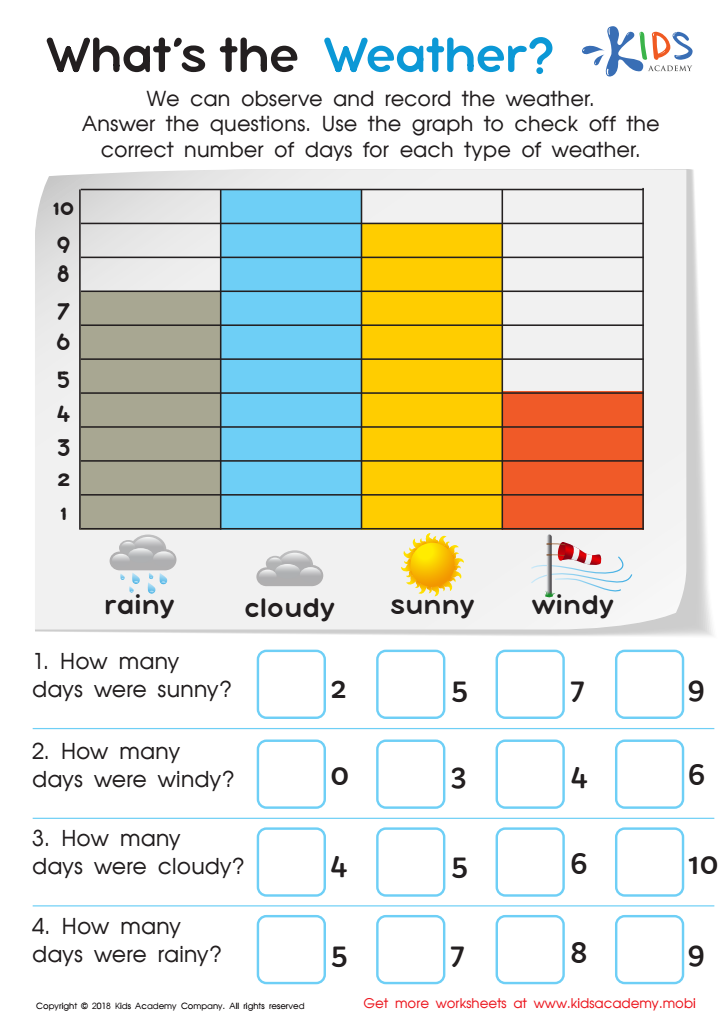
What's the Weather? Worksheet







Parents and teachers should care about weather identification for 6-year-olds because it serves as a foundational element in their early education, underpinning critical life skills and safety knowledge. Learning about weather helps children understand their environment, making them more aware of seasonal changes and daily weather patterns. This awareness fosters curiosity and promotes scientific thinking, encouraging them to ask questions, make predictions, and observe natural phenomena.
Weather identification is also important for safety. Understanding different weather conditions, such as the difference between sunny, rainy, windy, and stormy days, can help children make better decisions about clothing and activities. For instance, they will learn why they need to wear a raincoat and boots on rainy days or why it's important to wear a hat and sunscreen on sunny days.
Moreover, discussing weather helps to develop children’s descriptive vocabulary and communication skills. They learn new terms and enjoy sharing their observations, which can be an excellent way to build descriptive and narrative skills. Incorporating weather identification into daily routines can make learning fun and relevant, helping young children connect classroom knowledge to real-world situations. Overall, weather education is an engaging way to enhance early cognitive skills and ensure children’s well-being and development.








