Counting practice Addition and Subtraction Word Problems Worksheets for 6-Year-Olds
5 filtered results
-
From - To
Enhance your child's math skills with our Counting Practice Addition and Subtraction Word Problems Worksheets designed specifically for 6-year-olds! These engaging worksheets provide a fun and interactive way for kids to grasp essential counting concepts while solving real-life problems. By practicing addition and subtraction through relatable scenarios, young learners will develop critical thinking and problem-solving skills. Our carefully crafted problems cater to different learning levels, ensuring children build confidence in their abilities. Explore our diverse collection of worksheets and support your child's journey toward numerical proficiency and a love for math. Start counting, adding, and subtracting today!
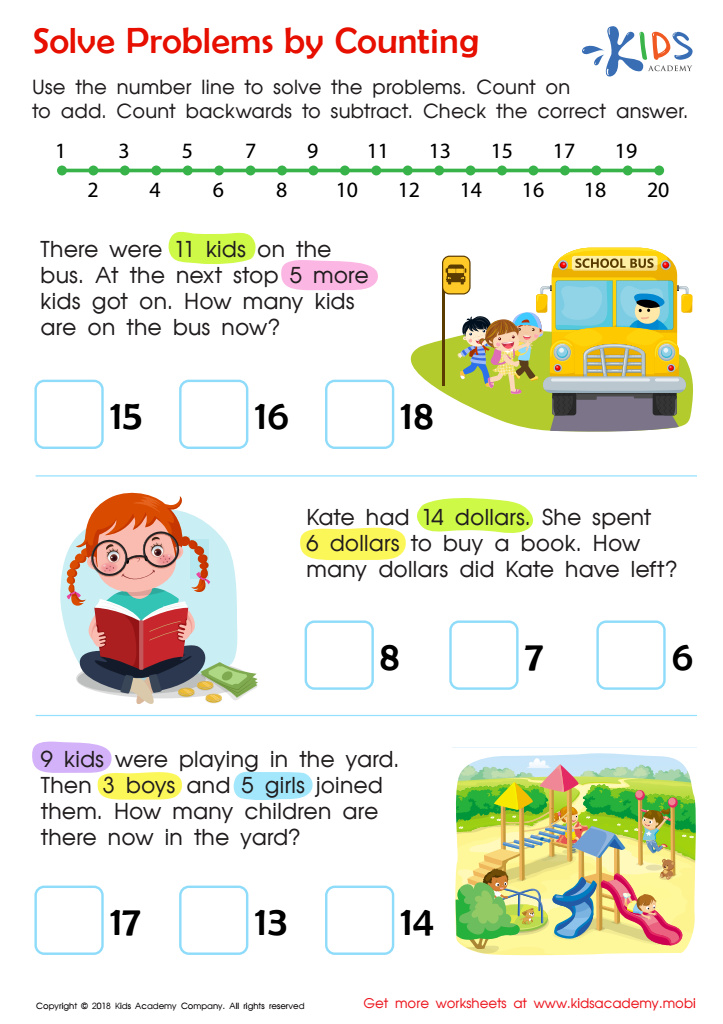
Solve Problems by Counting Worksheet
 Assign to My Students
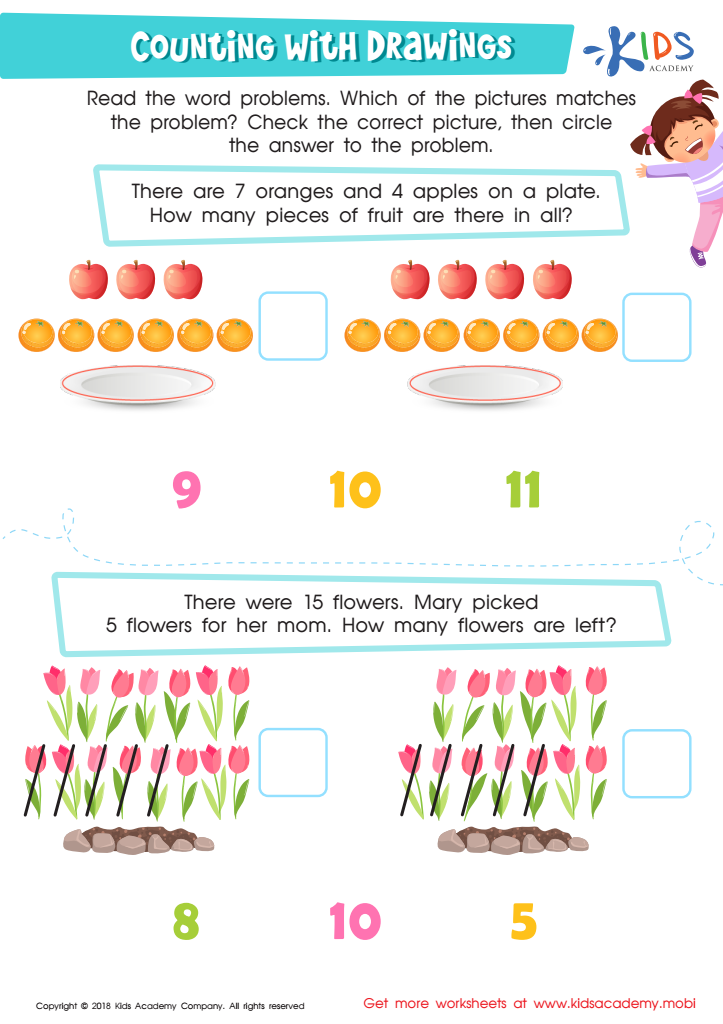
Counting with Drawings: Fruits & Chocolates Worksheet
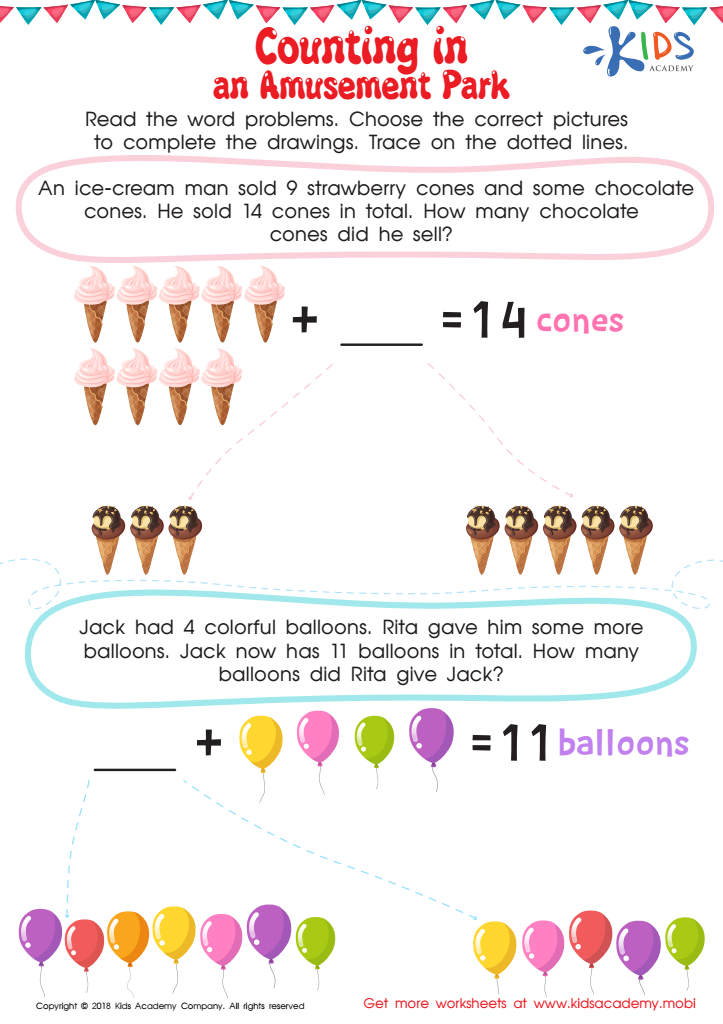
Counting in an Amusement Park Worksheet
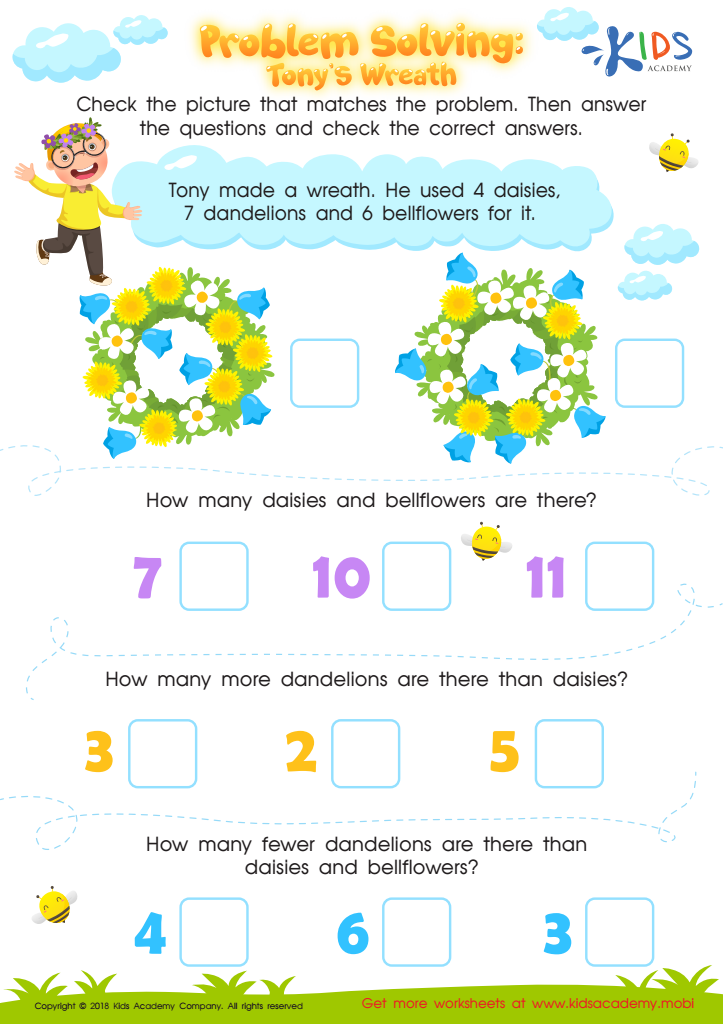
Problem Solving: Tony's Wreath Worksheet
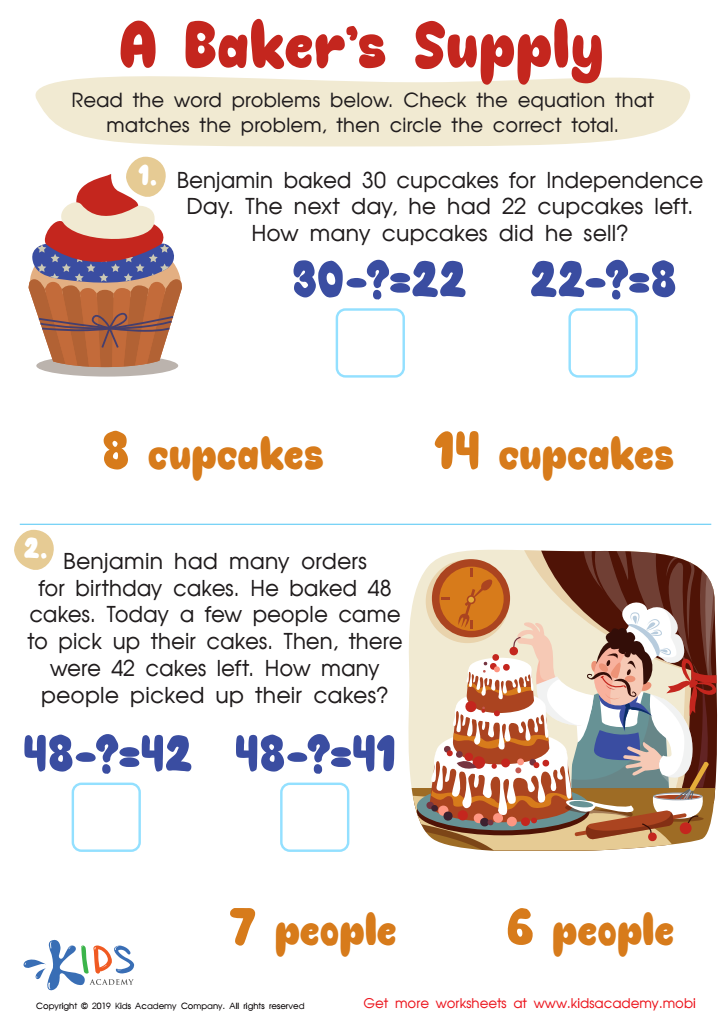
A Baker's Supply Worksheet








Counting practice, along with addition and subtraction word problems, is crucial for the cognitive and emotional development of 6-year-olds. At this age, children are not only learning basic math skills, but they are also honing critical thinking and problem-solving abilities. These activities encourage kids to apply mathematical concepts in real-world contexts, helping them understand the relevance of math in daily life.
Word problems promote comprehension skills, requiring children to decipher language and extract necessary information, which enhances their reading skills. Furthermore, engaging in counting and problem-solving fosters perseverance, as children encounter and overcome challenges, building resilience.
Parents and teachers play an essential role in reinforcing these skills. Early support in math also sets a positive tone for future learning, promoting a growth mindset. If children master foundational concepts in a supportive environment, they are more likely to feel confident and capable as they progress through school.
Moreover, proficiency in addition and subtraction lays the groundwork for more advanced mathematical concepts and fosters a sincere appreciation for numbers. Encouraging this practice can create positive learning experiences and instill a love for learning in children, making it vital for adults to prioritize this area of development.