Problem-solving development Addition & Subtraction Worksheets for 6-Year-Olds
3 filtered results
-
From - To
Discover an engaging collection of Problem-solving Addition & Subtraction Worksheets designed specifically for 6-year-olds! Our resources help young learners develop essential math skills through fun, interactive exercises that enhance problem-solving abilities. Each worksheet features colorful graphics and relatable scenarios, making math concepts more accessible and enjoyable. From simple addition and subtraction tasks to engaging word problems, these worksheets encourage critical thinking and boost confidence in young mathematicians. Perfectly aligned with educational standards, they offer an ideal way for parents and teachers to support foundational learning in a playful, stimulating environment. Explore our worksheets and inspire a love for math in your child today!
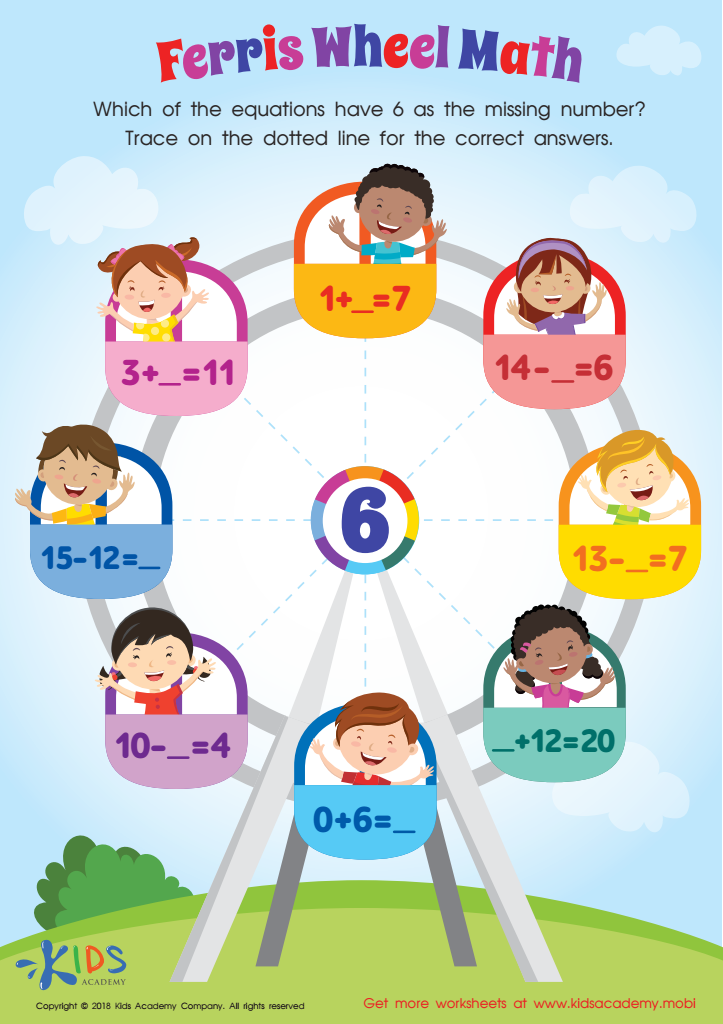
Missing Number: Ferris Wheel Math Worksheet
 Assign to My Students
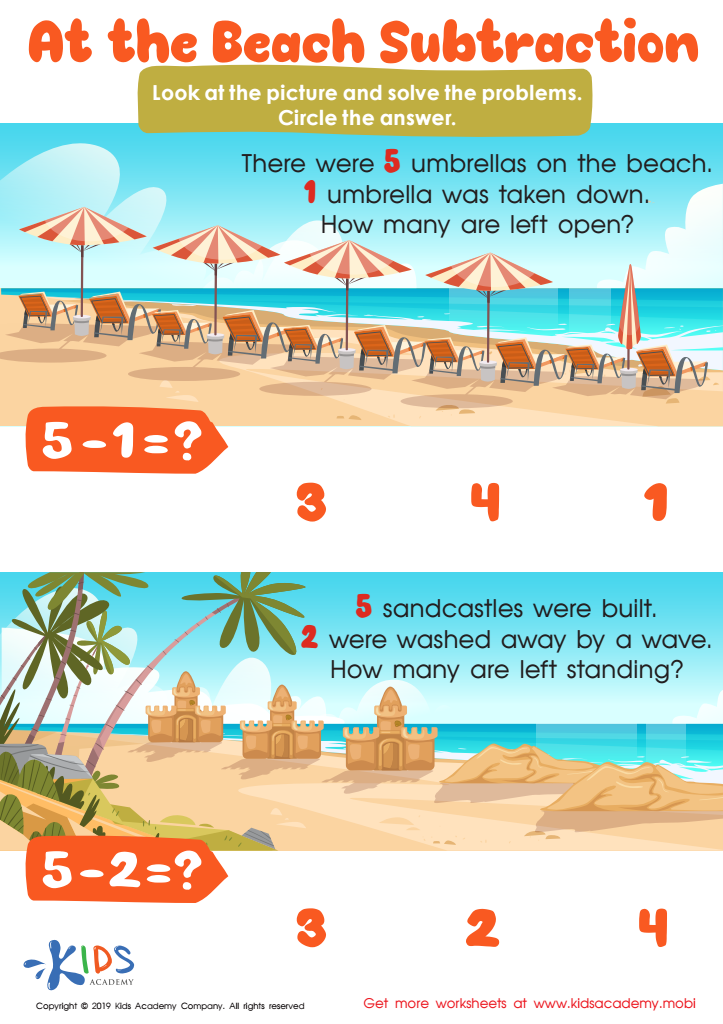
At the Beach Subtraction Worksheet
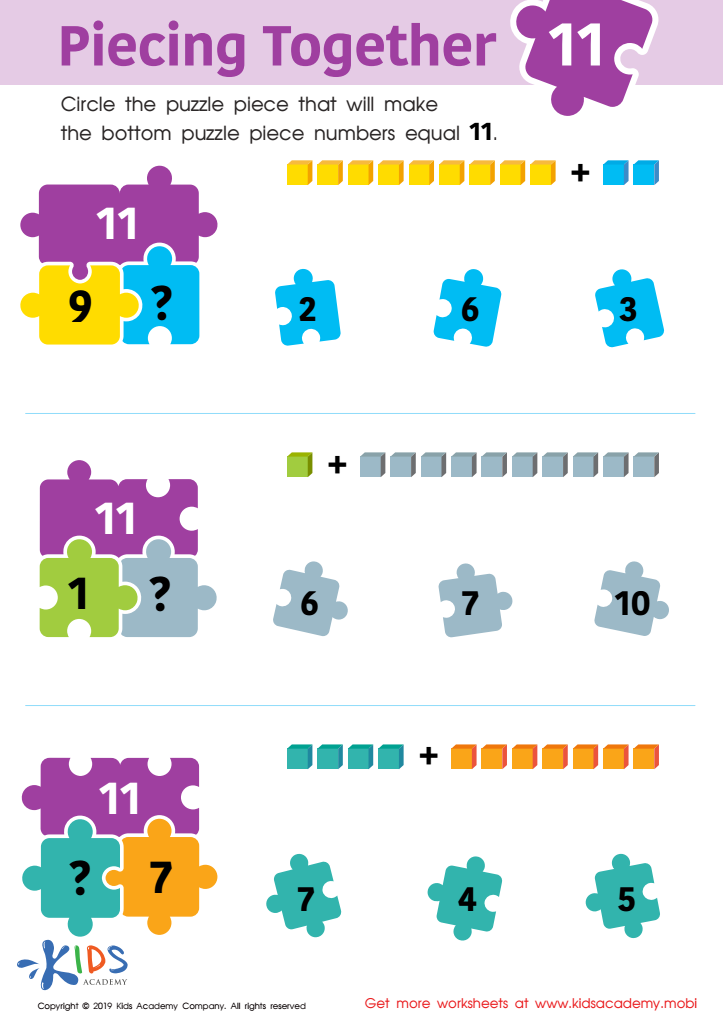
Piecing Together 11 Worksheet








Parents and teachers play a crucial role in fostering problem-solving skills in young learners, especially in foundational areas like addition and subtraction. For 6-year-olds, mastering these basic arithmetic functions is essential, as they underpin future mathematical concepts and everyday problem-solving.
When children engage with addition and subtraction tasks, they not only learn how numbers work but also develop critical thinking and analytical skills. These experiences empower them to tackle more complex mathematical challenges later on. Furthermore, understanding these concepts enhances their confidence, encouraging them to approach problems methodically rather than resorting to guesswork.
Developing problem-solving skills through addition and subtraction can also lead to greater engagement in learning. Interactive activities like games and puzzles can make math enjoyable and relatable, benefiting both academic growth and emotional well-being. Additionally, these skills promote perseverance, as children learn to navigate challenges and explore different strategies for arriving at solutions.
Ultimately, by prioritizing problem-solving development, parents and teachers can help cultivate a positive attitude towards math and learning in general, equipping children with the necessary tools to succeed in school and beyond. Supporting this aspect of education is not just about numbers; it’s about nurturing resilient and thoughtful problem solvers for the future.








