Mental math skills Addition Worksheets for 6-Year-Olds
5 filtered results
-
From - To
Boost your child's numerical prowess with our Mental Math Skills Addition Worksheets, specially designed for 6-year-olds. These engaging activities focus on enhancing rapid calculation abilities, crucial for developing strong math foundations. Vibrant and stimulating, each worksheet challenges kids to solve addition problems mentally, fostering swift thinking and confidence. Tailored to align with early math learning objectives, our printable resources integrate fun puzzles and exercises, making practice enjoyable. Build your child's arithmetic fluency with tools thoughtfully crafted to make learning effortless and delightful. Perfect for both classroom use and home practice, these worksheets propel young students toward math mastery.
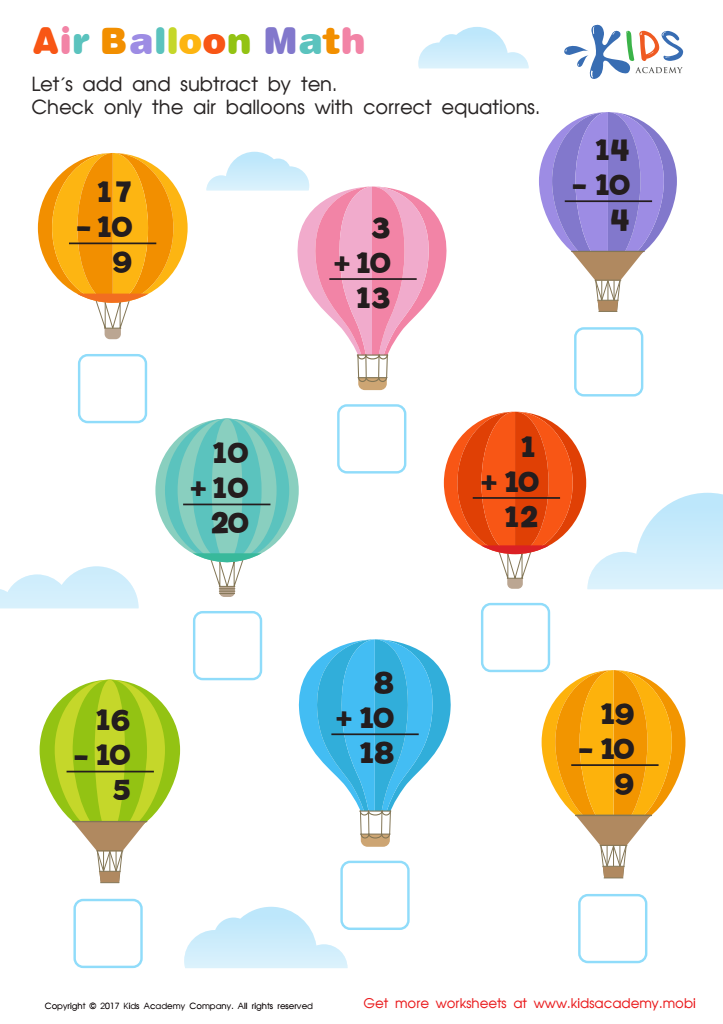
Air Balloon Math Worksheet
 Assign to My Students
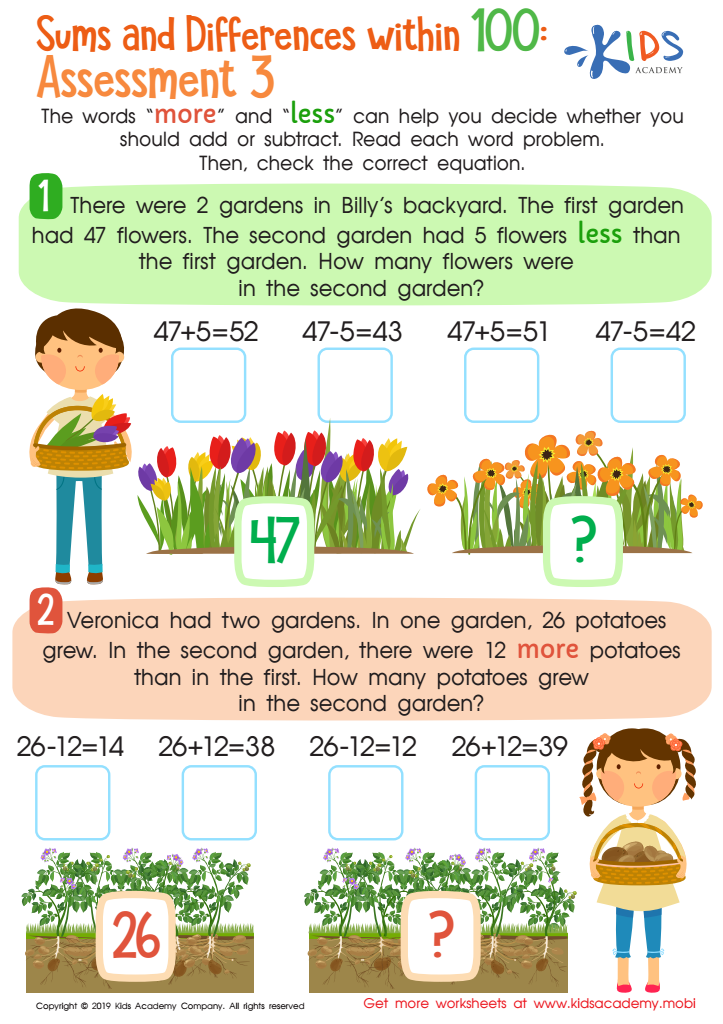
Sums and Differences Within 1 - Assessment 1 Worksheet
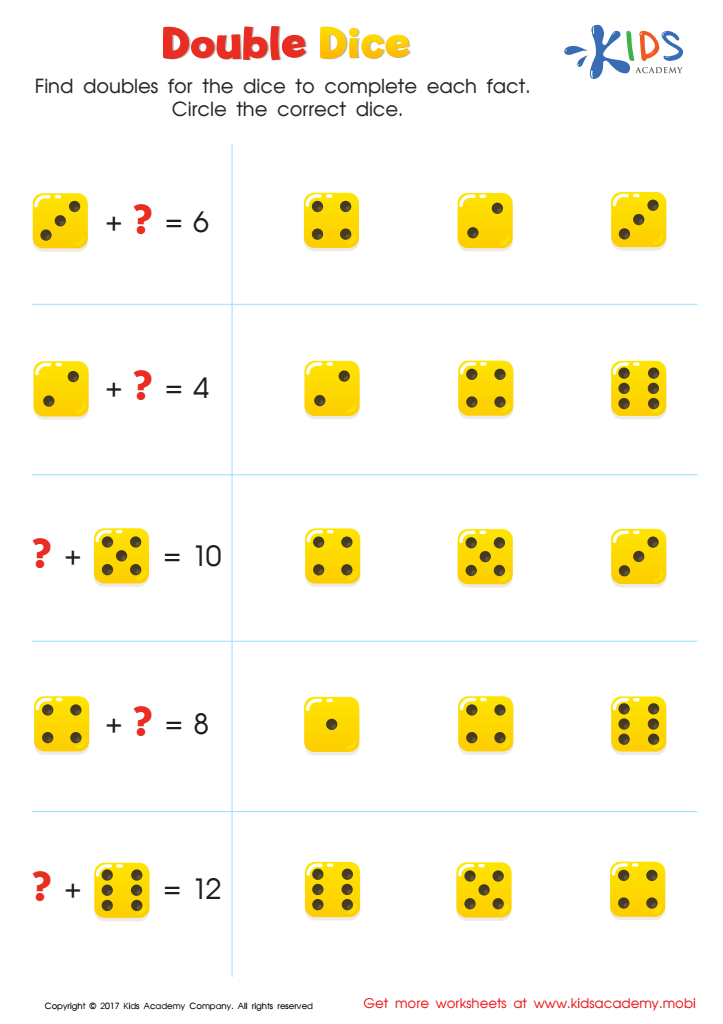
Addition Facts: Double Dice Worksheet
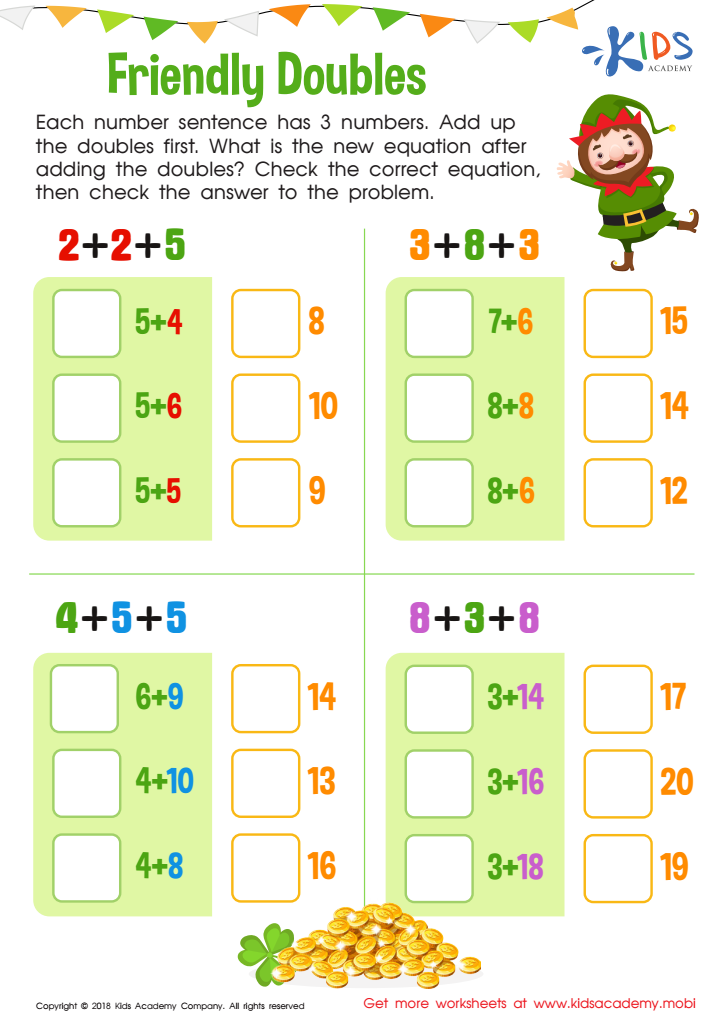
Friendly Doubles Worksheet
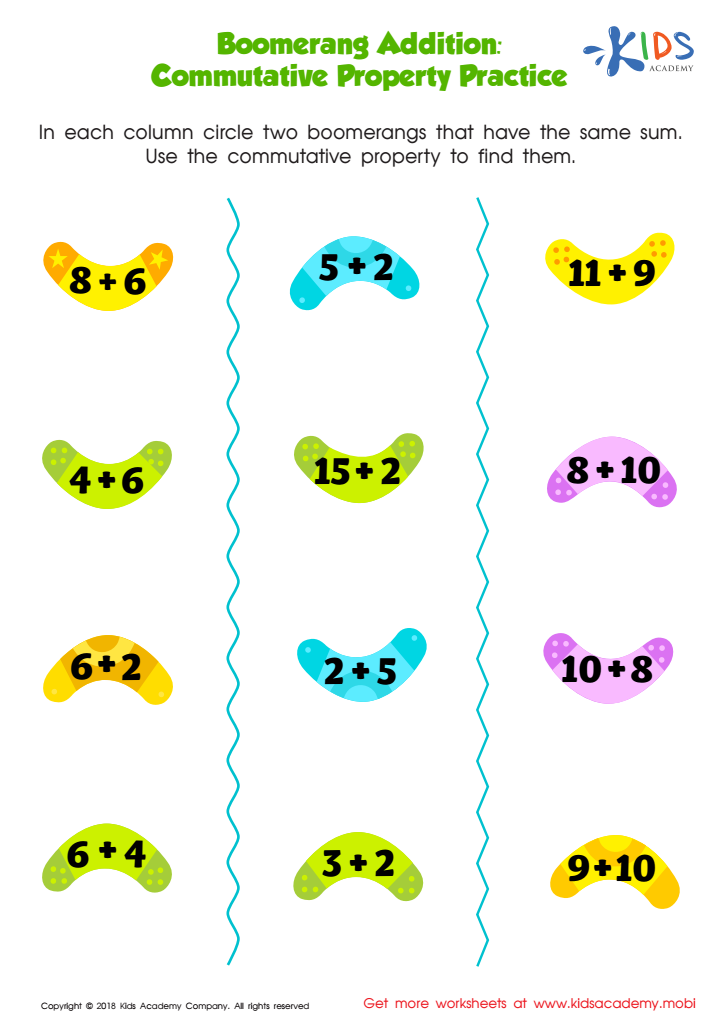
Boomerang Addition Worksheet







.jpg)
Parents and teachers should care deeply about developing mental math skills in 6-year-olds, particularly in addition, for several crucial reasons. At this formative age, children’s brains are highly receptive to new information, making it the perfect time to introduce fundamental math concepts. Mastering mental addition nurtures a child's number sense, which is essential for more complex mathematical tasks later on. It helps them understand the relationships between numbers, improves their memory, and boosts their confidence in handling math problems independently.
Moreover, enhancing mental math skills supports cognitive development, fostering critical thinking and problem-solving abilities that are valuable across all areas of learning. It encourages children to manipulate numbers in their minds, leading to better concentration and greater mental agility. This foundation not only prepares them for academic success but also equips them with practical life skills like quick estimation and logical reasoning.
Additionally, when parents and teachers demonstrate an investment in developing these skills, it instills a positive attitude towards math. This, in turn, reduces anxiety or fear around the subject. Creating engaging and supportive learning environments for mental math sets the groundwork for lifelong mathematical competency and fosters a love for learning that extends beyond the classroom.








