Logical Reasoning Geometry Worksheets for 6-Year-Olds
3 filtered results
-
From - To
Unlock your child's potential with our Logical Reasoning Geometry Worksheets designed for 6-year-olds. These engaging and educational activities promote critical thinking by challenging young minds with puzzles, shape recognition tasks, and problem-solving exercises. Crafted to foster intellectual growth, these worksheets not only enhance geometry skills but also develop essential logical reasoning abilities. Perfect for at-home learning or classroom use, our fun and interactive resources ensure that kids enjoy doing math while building a strong foundation in geometry. Help your child succeed academically with these expertly designed worksheets tailored for their developmental stage.
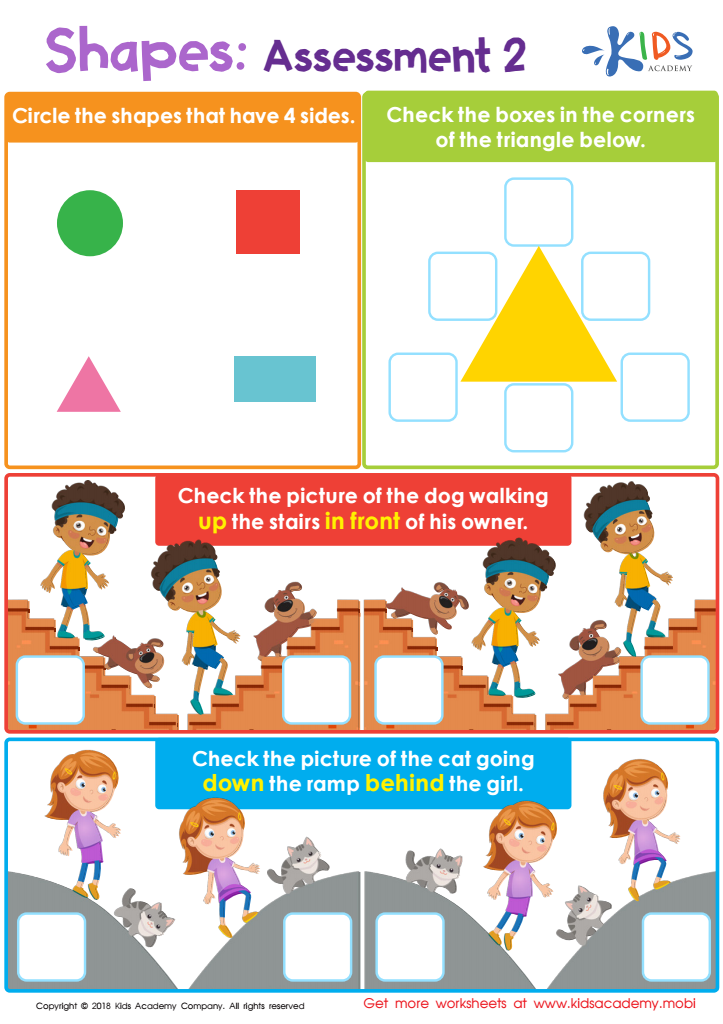
Shapes: Assessment 2 Worksheet
 Assign to My Students











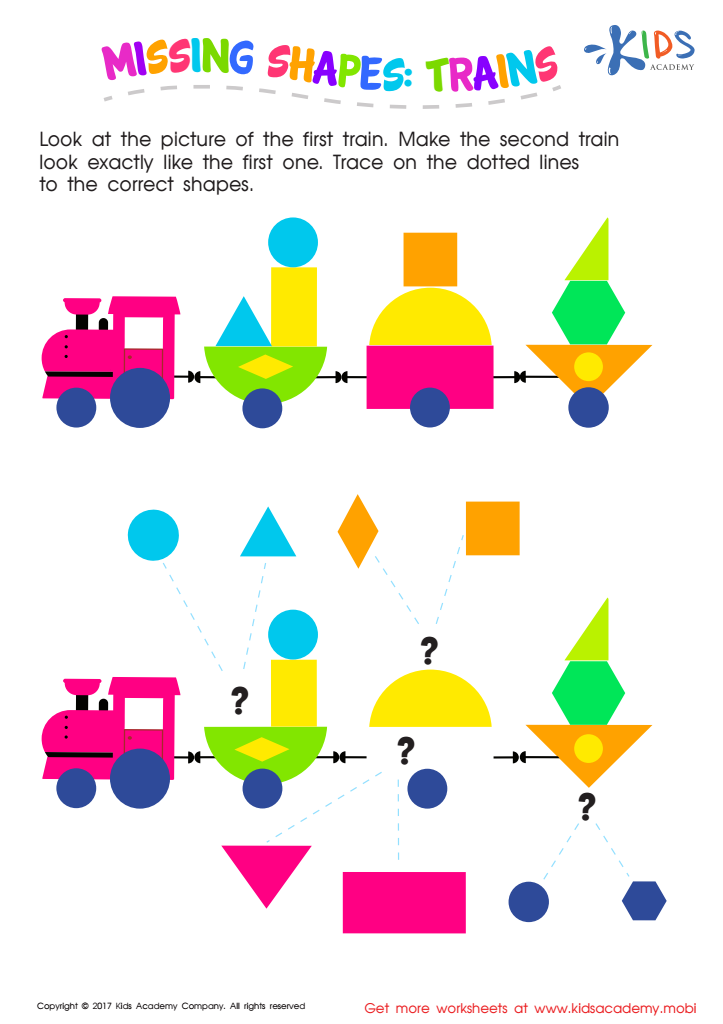
Missing Shapes: Trains Worksheet
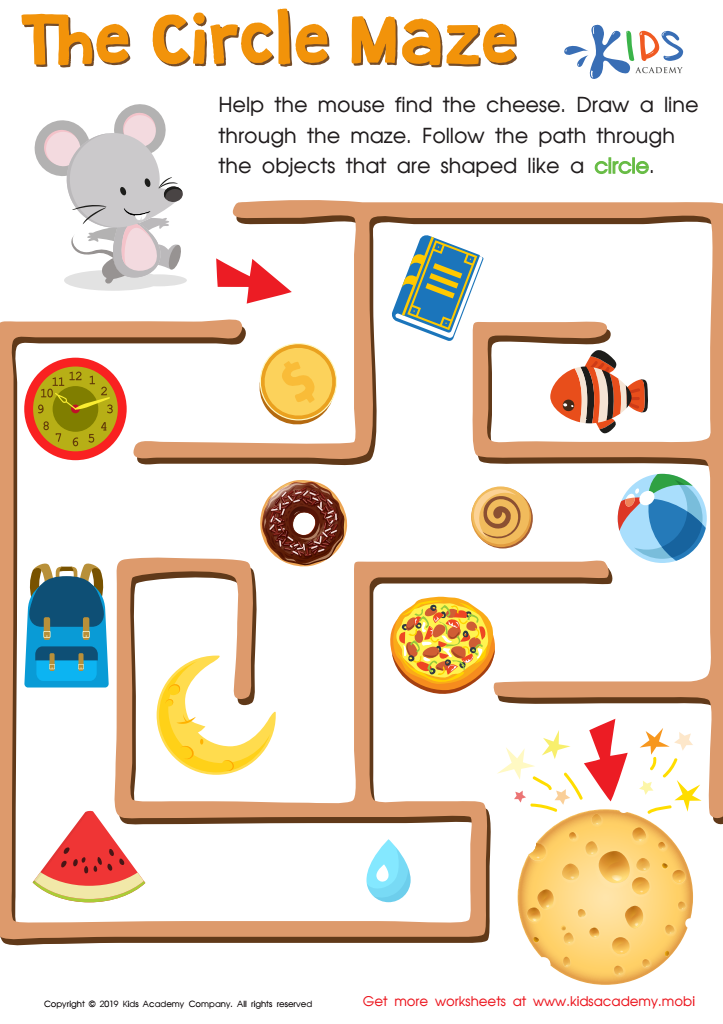
The Circle Maze Worksheet








Logical reasoning and geometry are foundational skills that serve as a critical part of cognitive development and problem-solving abilities for 6-year-olds. Engaging in logical reasoning activities helps young children develop their critical thinking and analytical skills, which are essential for everyday decision-making and understanding the world around them. These activities teach children how to approach problems systematically, recognize patterns, and make connections between different concepts.
Geometry, on the other hand, introduces children to shapes, spatial relationships, and the properties of objects. Understanding geometric concepts is crucial as it provides the basis for more advanced math and science skills. When children grasp fundamental ideas about geometry, such as differentiating between shapes, recognizing symmetry, and understanding spatial orientation, they build a solid foundation for future academic achievement.
Moreover, integrating logical reasoning and geometry into early education fosters a love for learning and curiosity. Children who are exposed to these concepts early on are more likely to develop a positive attitude toward math, leading to increased confidence and success in later years. For teachers and parents, focusing on these areas supports holistic development, combining cognitive growth with enthusiasm for exploration and discovery. Ultimately, helping children strengthen these skills equips them with essential tools for lifelong learning and problem-solving.








