Spatial reasoning Geometry Worksheets for 6-Year-Olds
3 filtered results
-
From - To
Enhance your 6-year-old's spatial reasoning and geometry skills with our specially designed worksheets! At Kids Academy, our engaging and interactive activities help young learners grasp essential concepts like shapes, patterns, and spatial relationships. Each worksheet is crafted to make learning fun and effective, promoting critical thinking and problem-solving abilities. With vibrant illustrations and varied exercises, children will enjoy progressing from basic shape recognition to more complex spatial tasks. Boost their confidence and academic performance with our expert-developed geometry worksheets tailored just for young minds. Discover the perfect blend of learning and play, and watch your child excel!
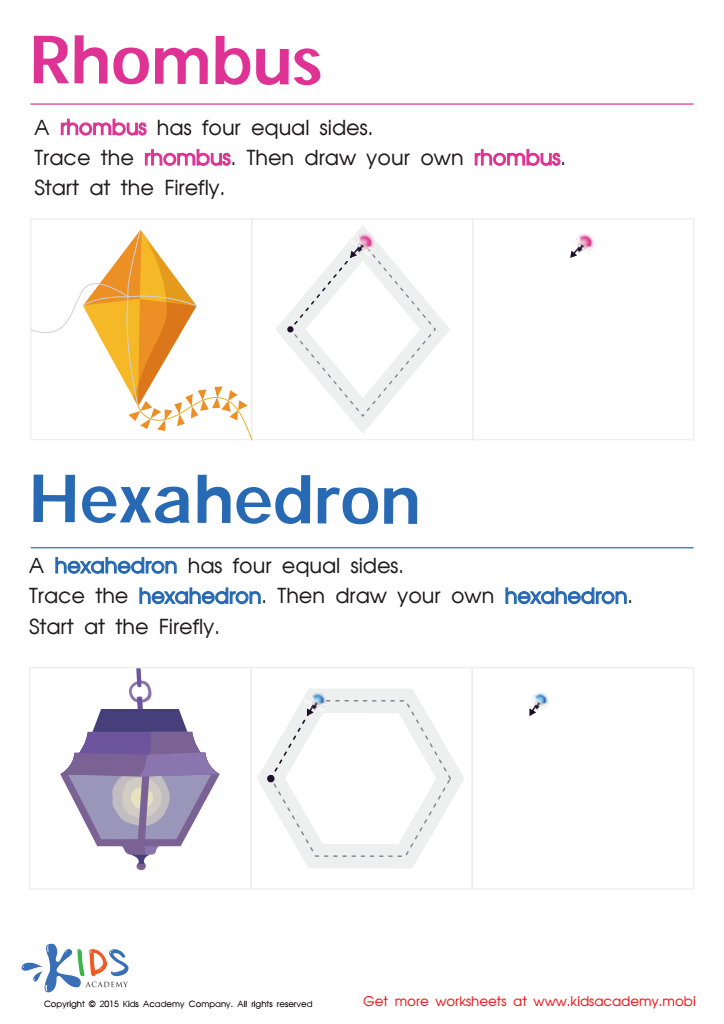
Draw a Rhombus And a Hexahedron Printable
 Assign to My Students











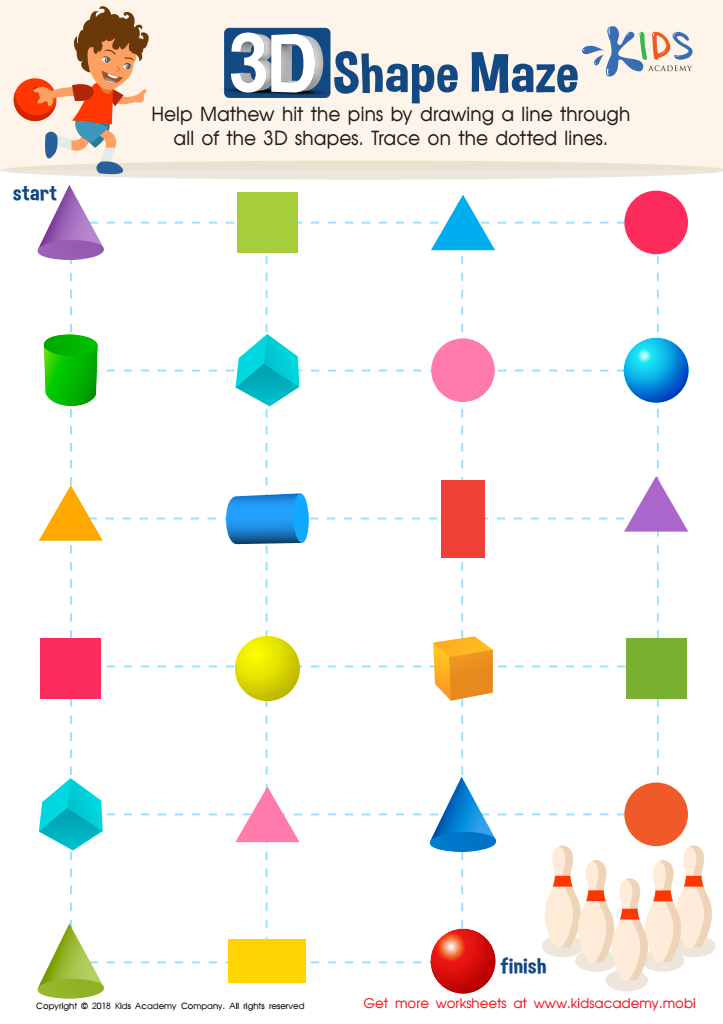
Shapes Maze Geometry Worksheet
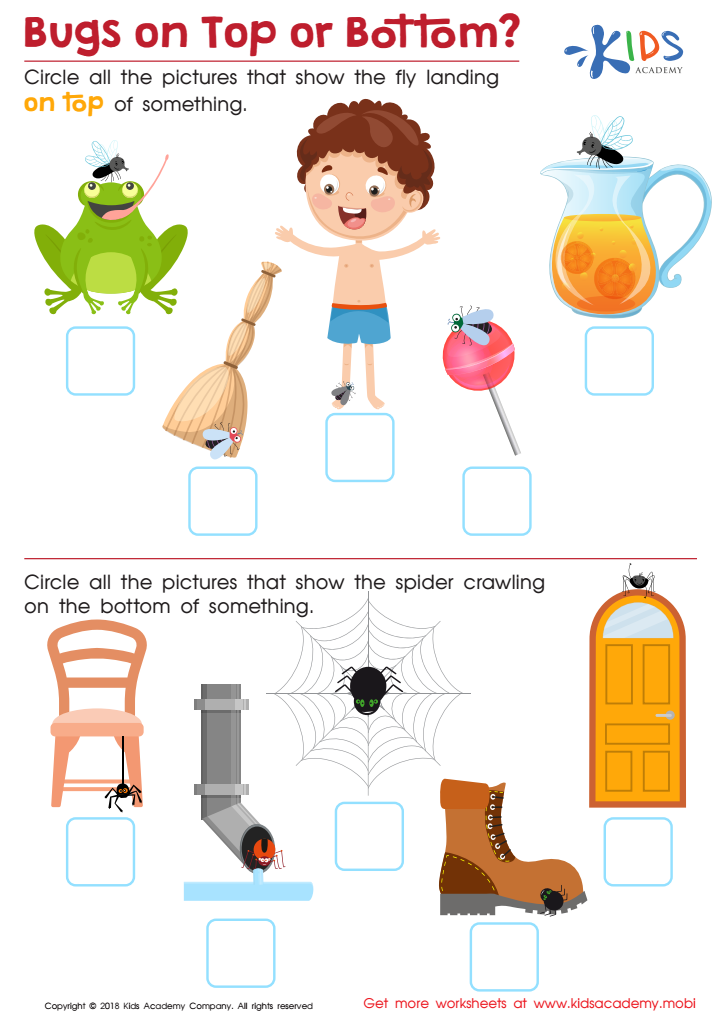
Bugs on Top or Bottom? Worksheet








Spatial reasoning and geometry are crucial building blocks in early childhood development that parents and teachers should prioritize for 6-year-olds. Spatial reasoning involves understanding the relationships among objects in space, which is foundational for skills in mathematics, science, and everyday life. When children learn geometry and spatial reasoning, they enhance their ability to think critically and solve problems.
At this age, engaging with puzzles, blocks, and other hands-on activities helps children visualize and manipulate objects, fostering their cognitive development. This type of thinking not only aids in grasping more abstract mathematical concepts like fractions and algebra in their later years but also supports reading comprehension as they improve their ability to recognize shapes and patterns in letters and words.
Moreover, spatial reasoning skills can translate into better performance in STEM fields, as these subjects require the ability to visualize and manipulate objects mentally. Improved spatial skills can also enhance creativity and artistic ability, such as understanding perspective and proportions in drawings.
For these reasons, providing young children with opportunities to explore and play with spatial concepts is vital. This can include simple activities like building with Legos, drawing shapes, or engaging in structured games that require them to navigate or transform objects in imaginative ways. Investing in developing these foundational skills through playful learning can set the stage for academic success and everyday problem-solving abilities.








