Basic addition practice Numbers Worksheets for 6-Year-Olds
5 filtered results
-
From - To
Discover our engaging "Basic Addition Practice Numbers Worksheets for 6-Year-Olds" to help young learners master fundamental math skills. Designed by educational experts, these worksheets feature fun, colorful exercises that transform learning into an enjoyable experience. With a variety of simple addition problems tailored to 6-year-olds, these printables enhance number sense, boost confidence, and foster a love for math. Perfect for both classroom use and at-home practice, our worksheets ensure a solid foundation in math for early learners. Download these essential resources today and watch your child’s math skills flourish.
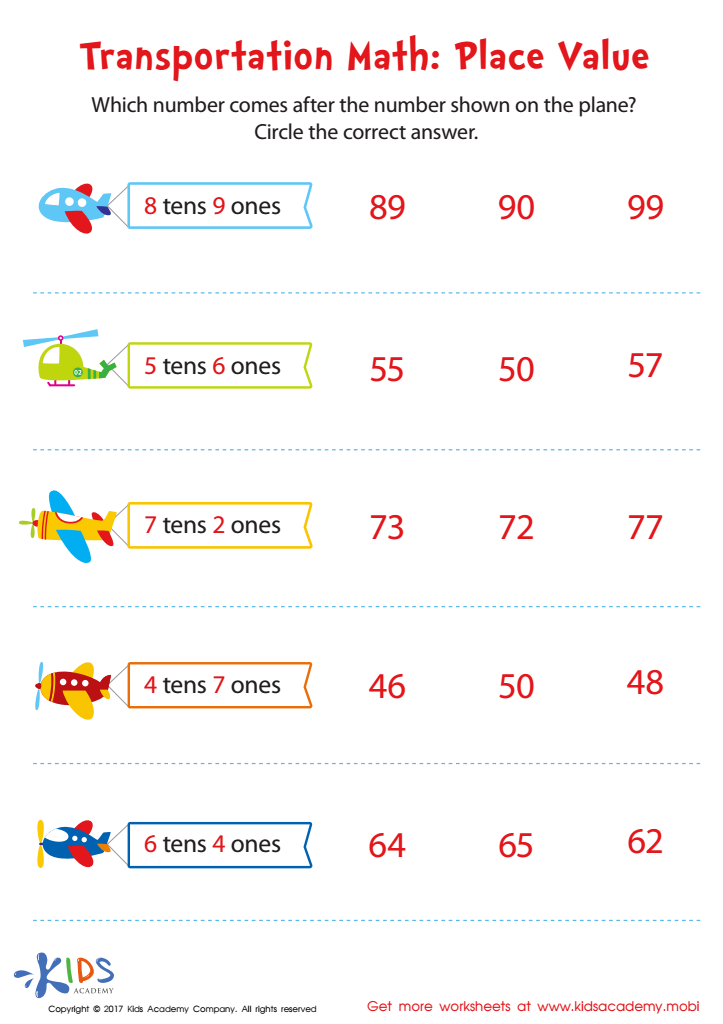
Transportation Math Printable
 Assign to My Students
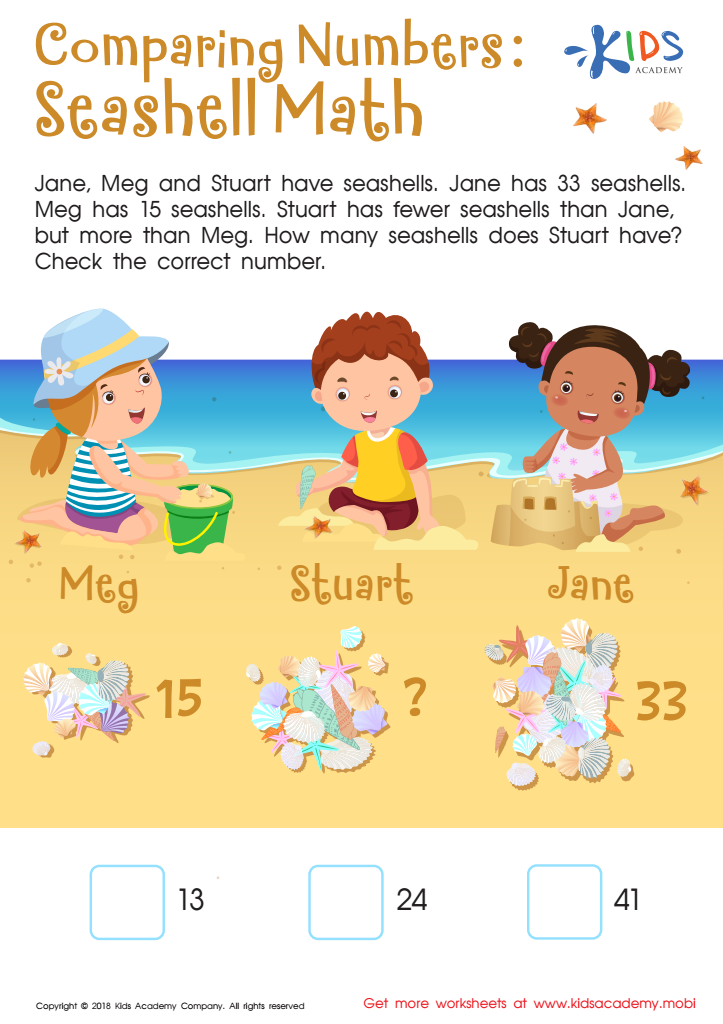
Seashell Collectors Worksheet
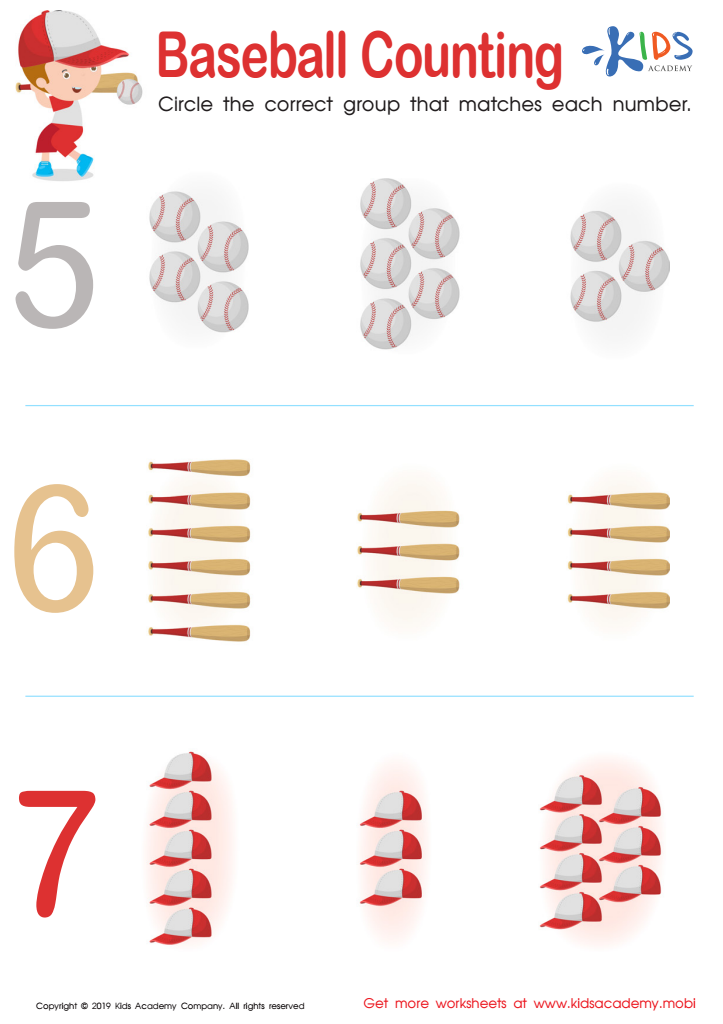
Baseball Counting Worksheet
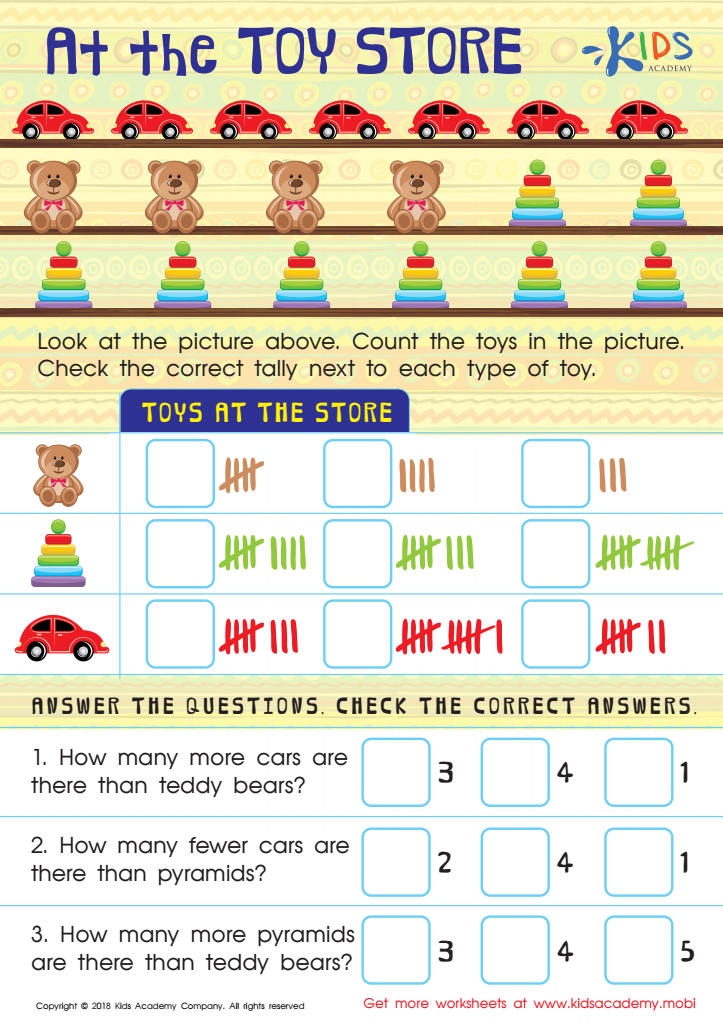
Tally Chart: At the Toy Store Worksheet
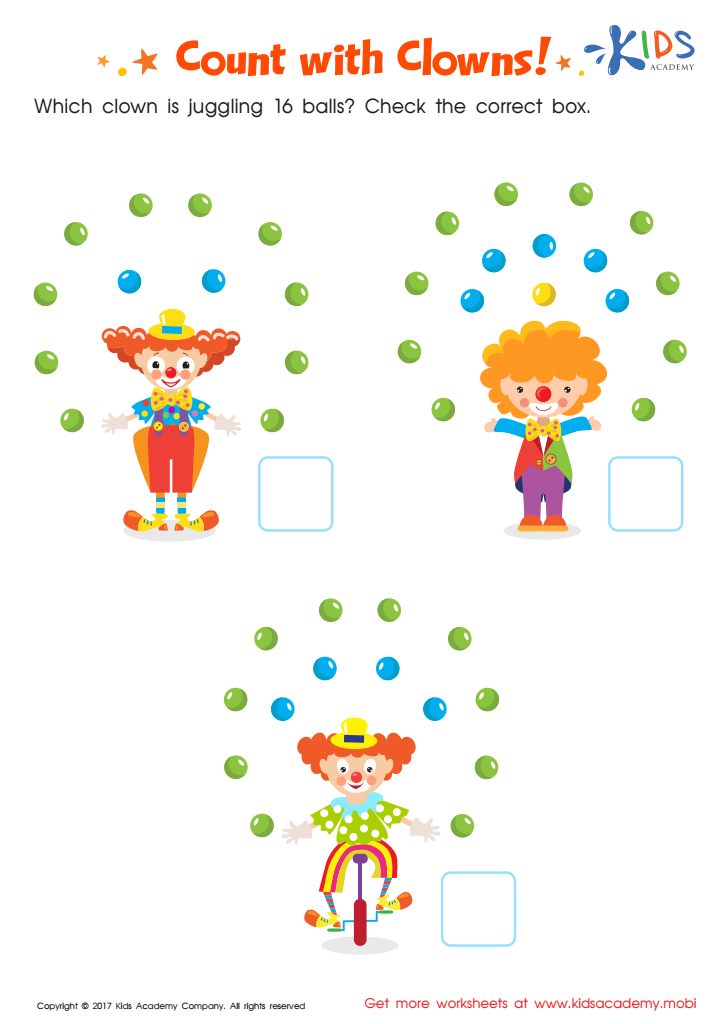
Count with Clowns Worksheet


.jpg)




Parents and teachers should care about basic addition practice for 6-year-olds because foundational math skills serve as the building blocks for future academic success. During early childhood, specifically around age six, children's brains are exceptionally receptive to learning new concepts, including the principles of arithmetic. Engaging in basic addition practice helps young learners develop critical thinking, problem-solving skills, and numerical literacy. These skills are essential for more complex math topics they will encounter later.
Additionally, early familiarity with math promotes confidence and a positive attitude towards the subject. When children practice and succeed in basic addition, they feel capable and motivated, fostering a growth mindset. This early success widens their curiosity and reinforces a healthy relationship with learning, not just in math but in other academic areas as well.
Basic addition also has practical, everyday applications. By understanding addition, children can manage simple tasks, such as counting toys, sharing snacks fairly, or eventually dealing with money. Therefore, consistent practice with addition equips them with necessary life skills.
Incorporating addition exercises at an early age ensures children's readiness for the increasingly challenging curriculum they will face in higher grades. It's about laying a strong foundation that supports each child's educational journey, fosters self-confidence, and prepares them for real-world experiences.








