Understanding sequencing Numbers Worksheets for 6-Year-Olds
4 filtered results
-
From - To
Understanding sequencing numbers is crucial for 6-year-olds as it lays the foundation for their math skills. Our comprehensive worksheets at Kids Academy are designed to make this essential concept engaging and straightforward. These age-appropriate activities help young learners arrange numbers in ascending and descending order, fostering critical thinking and problem-solving skills. With colorful designs and interactive exercises, children stay motivated while mastering foundational math concepts. Perfect for use at home or in the classroom, our worksheets ensure your child builds a strong understanding of numerical order through fun and effective practice. Empower your child's mathematical journey with Kids Academy today!
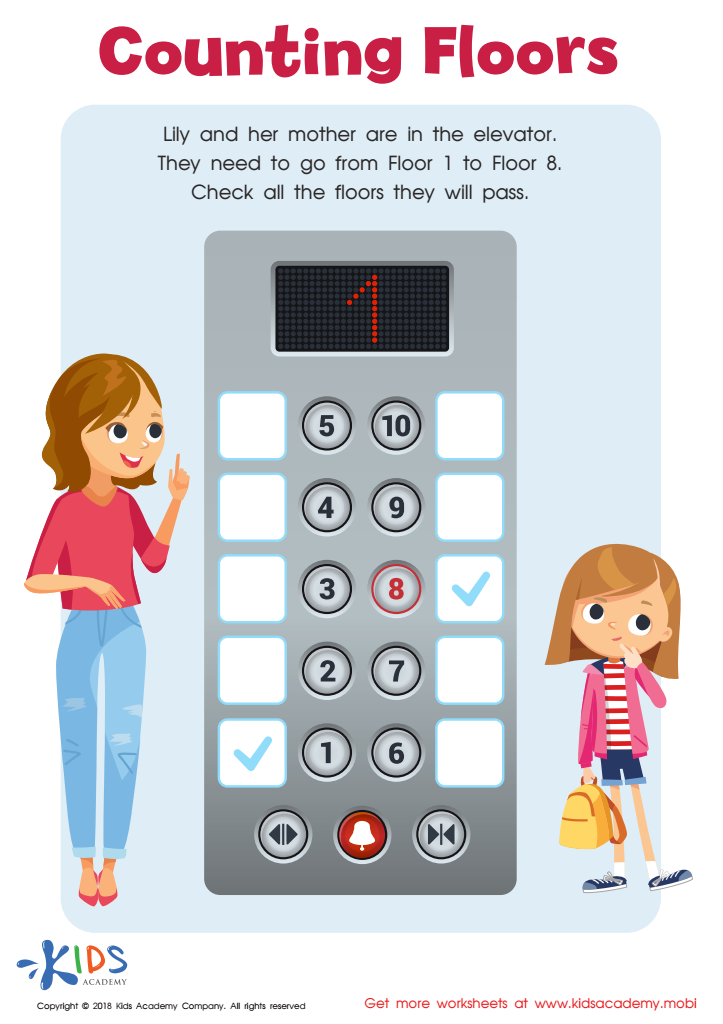
Counting Floors Worksheet
 Assign to My Students

One More Jumps In Worksheet
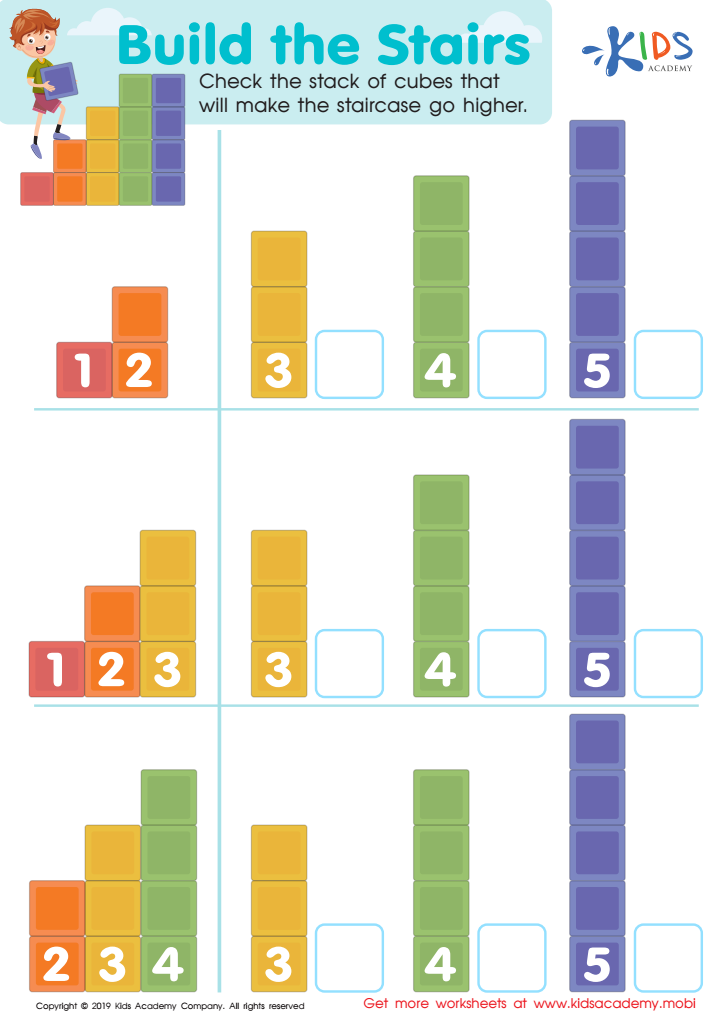
Build the Stairs Worksheet
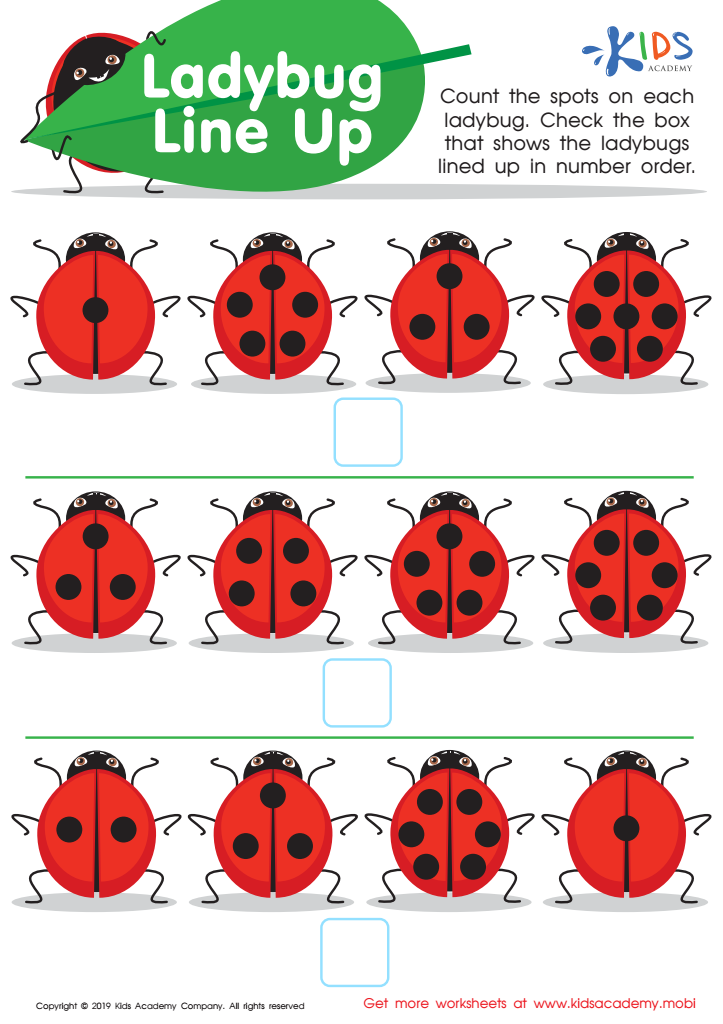
Ladybug Line Up Worksheet







Understanding sequencing numbers is pivotal for 6-year-olds as it lays a critical foundation for future mathematical learning and cognitive development. Sequencing involves the ability to understand and order numbers in a logical and coherent manner, an essential skill for higher mathematical concepts such as addition, subtraction, and more advanced problem-solving.
When children grasp sequencing, they develop a strong sense of number order, which leads to improved counting skills. This foundational understanding allows children to progress to more complex mathematical tasks with confidence. Moreover, sequencing numbers aids in enhancing memory and organizational skills as it prompts children to recall number sequences in the correct order.
Parents and teachers should care about this development stage because it also touches upon life skills beyond mathematics. For example, understanding the sequence helps in following daily routines, understanding patterns, and executing multi-step tasks. It encourages critical thinking and attention to detail.
Early mastery of sequencing numbers sets the stage for academic success, makes learning enjoyable, and significantly enhances a child's overall cognitive abilities. It builds a robust framework for future learning, fostering a child's ability to tackle more complex challenges both inside and outside the classroom. Therefore, adults should actively support children in exploring and mastering this fundamental skill.








