
Comparing quantities Math Worksheets for 6-Year-Olds
5 filtered results
Difficulty Level
Grade
Age
-
From - To
Subject
Activity
Standards
Our "Comparing Quantities Math Worksheets for 6-Year-Olds" are designed to foster early math skills through engaging activities. Each worksheet helps young learners understand and compare different quantities using visual aids and relatable examples. As children compare numbers, they will enhance their critical thinking and problem-solving abilities. Tailored for 6-year-olds, these worksheets align with core educational standards, ensuring a solid foundation in mathematics. With colorful graphics and interactive tasks, children will find learning math fun and challenging. Perfect for both classroom use and at-home practice, our worksheets make mastering the concept of comparing quantities enjoyable and effective.
Favorites
With answer key
Interactive
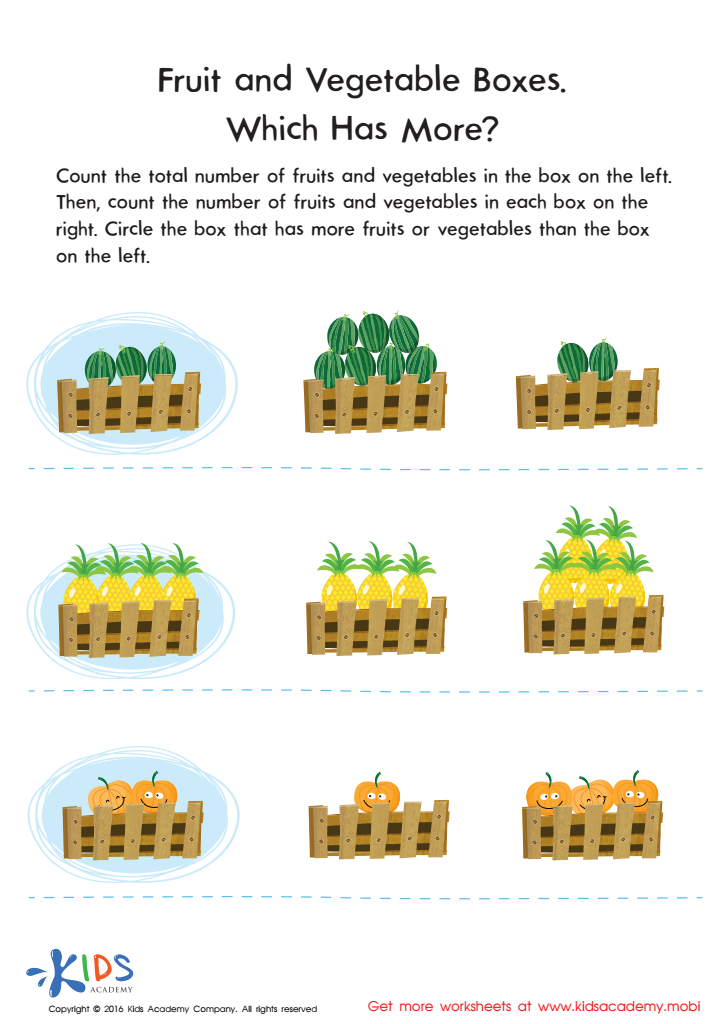
Which Has More? Size Worksheet
This worksheet is perfect for your child to practice critical thinking and logical reasoning. Your child will count and compare the fruits and veggies in the crates to decide which one has more. They will use complex cognitive skills and practice following precise rules. Guide them through the directions and help keep their focus, while enjoying the images.
 Assign to My Students
Which Has More? Size Worksheet
Worksheet
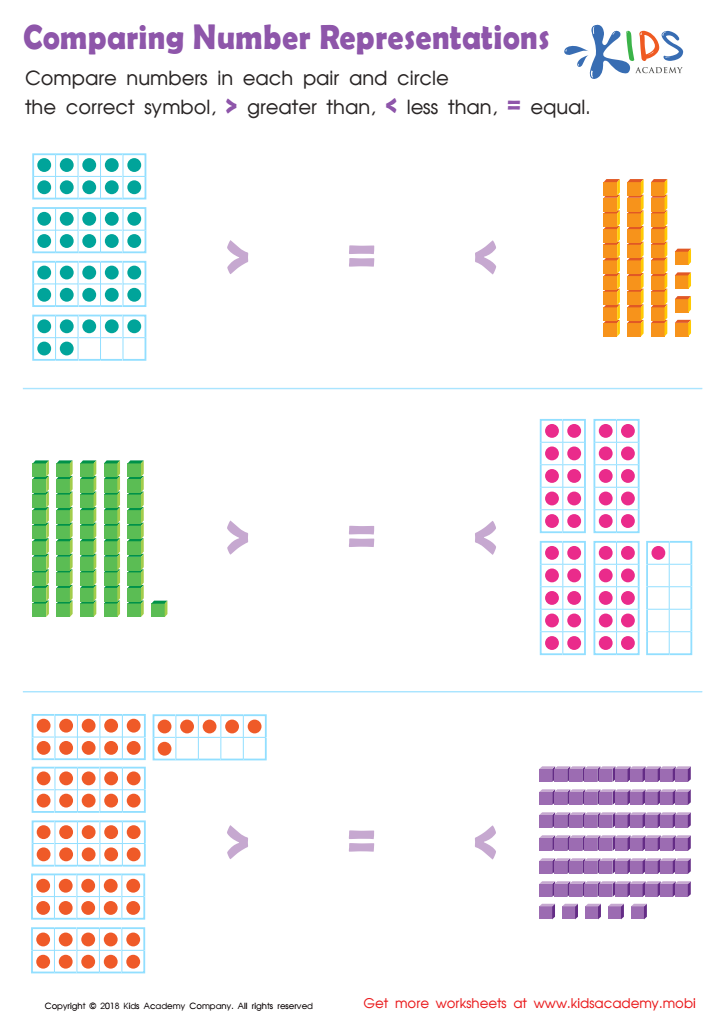
Comparing Number Representations Worksheet
Children need number representation skills to develop efficient computation and number sense. This free worksheet gives them practice with ten frames and place value blocks. They compare numbers and select the right comparative symbol: <, > or =. This helps them build a solid foundation for math.
Comparing Number Representations Worksheet
Worksheet
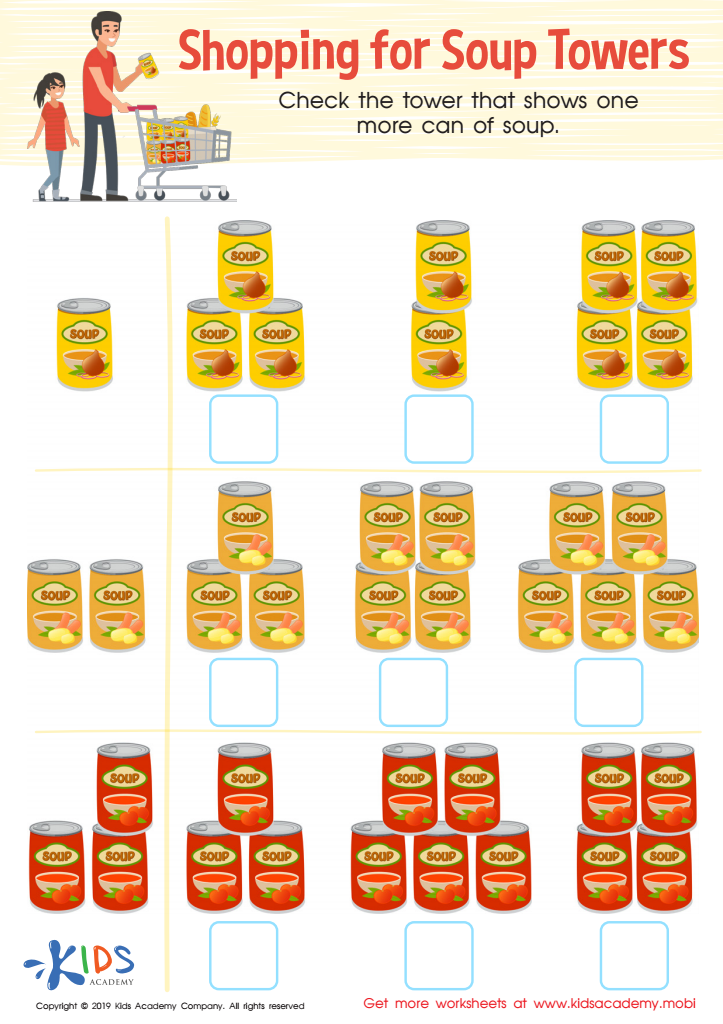
Soup Towers Worksheet
Do your kids come shopping? Transform it into a learning experience! Point out items and ask your kids what they are. Count each stack of cans, and have them check the tower with an extra can of soup. It's a great way to teach them counting and counting up!
Soup Towers Worksheet
Worksheet
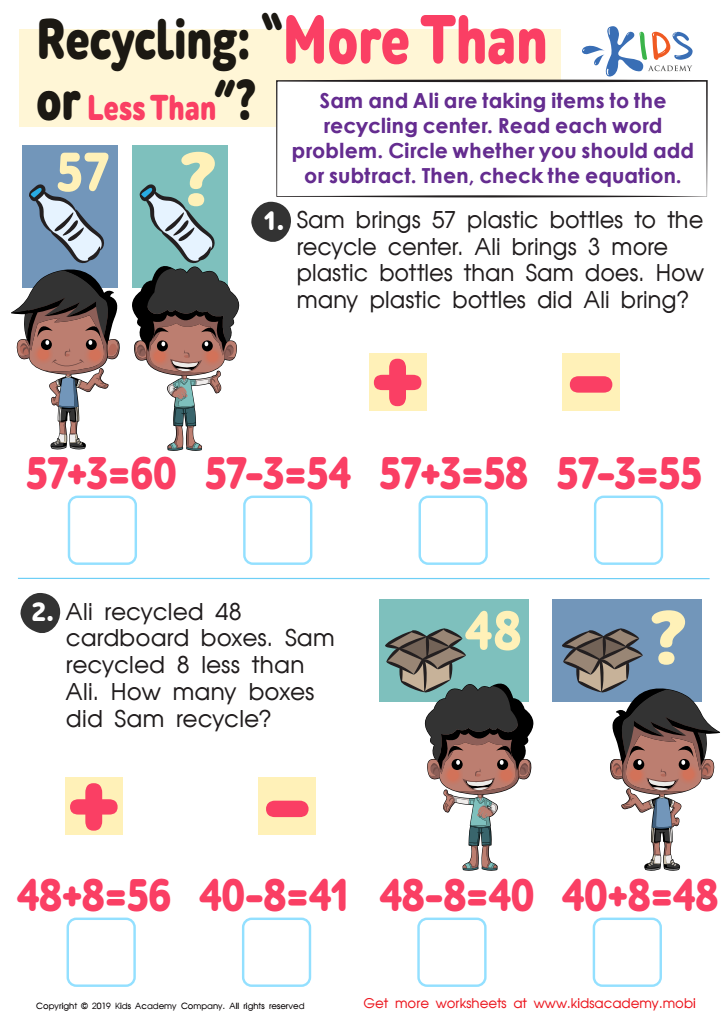
Recycling - More or Less Worksheet
Your child can compare numbers and solve word problems with this free worksheet. Help them understand what's being asked as Sam and Ali take items to the recycling center. They can choose the correct equation to match the word problem and apply their skills in reading and pulling out the appropriate information.
Recycling - More or Less Worksheet
Worksheet
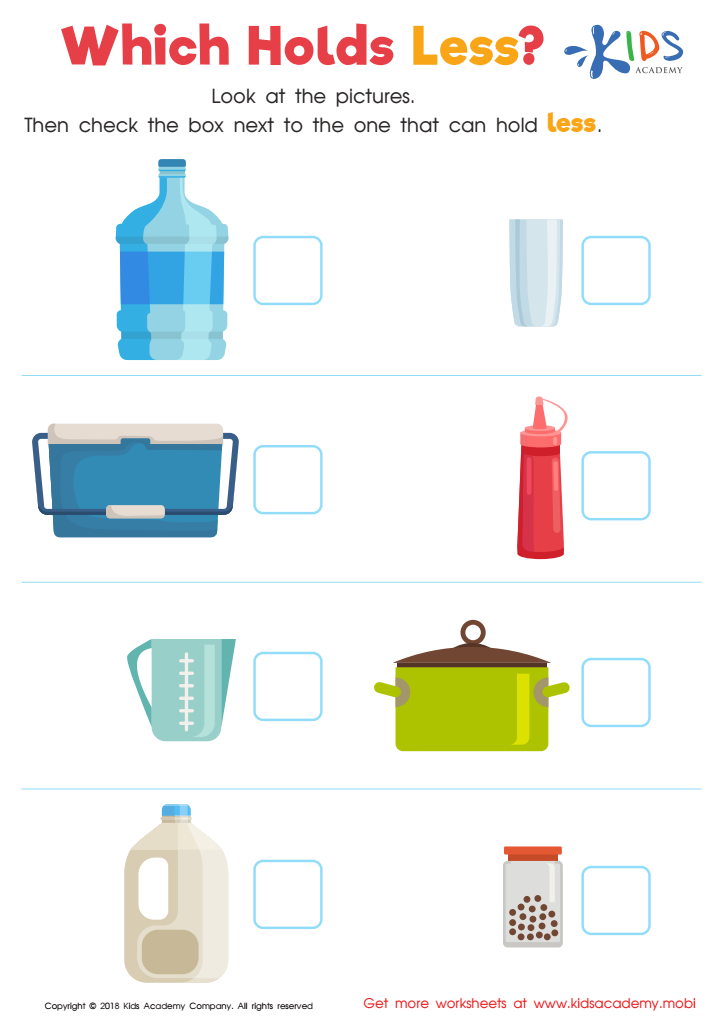
Which Holds Less? Worksheet
Students may find it hard to grasp volume without a visual aid. This free, downloadable worksheet helps with understanding by providing pictures of familiar objects. It allows students to practice comparing volumes and deciding which container holds less. It's a great introduction before they move onto using greater than and less than symbols.
Which Holds Less? Worksheet
Worksheet
Join Kids Academy for Free
Who is primarily going to use this learning content?








Comparing quantities is a fundamental math skill crucial for 6-year-olds as it underpins many other mathematical concepts and everyday experiences. For parents and teachers, fostering this skill in young learners provides multiple benefits.
Firstly, understanding comparing quantities helps children develop number sense. This foundational ability enables kids to recognize differences in quantity, value, and size, fostering a more intuitive grasp of numbers and arithmetic operations essential for future math learning.
Secondly, this skill enhances logical thinking and problem-solving. When children learn to compare quantities, they practice making decisions based on numerical information, which is a vital cognitive process. They assess more vs. less, equal vs. unequal, helping to build critical reasoning abilities applicable across all areas of learning.
Additionally, comparing quantities has practical applications. Whether at play or during routines, children encounter situations requiring comparison, such as sharing snacks or toys, determining which container holds more or less, or deciding who finished a task quicker. Skills in comparing support social interactions and practical decision-making in daily life.
Lastly, incorporating these lessons early helps prevent future math anxiety. An early positive experience with math builds confidence and lays the groundwork for a successful academic journey. In essence, focusing on comparing quantities fosters both cognitive growth and practical everyday skills in 6-year-olds, ensuring a holistic developmental impact.








