Sequencing numbers Math Worksheets for 6-Year-Olds
3 filtered results
-
From - To
Discover engaging Sequencing Numbers Math Worksheets designed especially for 6-year-olds at Kids Academy! These worksheets help young learners grasp the concept of number order through fun and interactive exercises. Your child will enjoy activities that challenge them to arrange numbers in ascending and descending order, complete number sequences, and enhance their counting skills. Perfect for building a solid math foundation, our worksheets are crafted to make learning enjoyable and effective. Visit Kids Academy to download now and support your child’s mathematical journey with expertly designed, age-appropriate sequencing number activities.
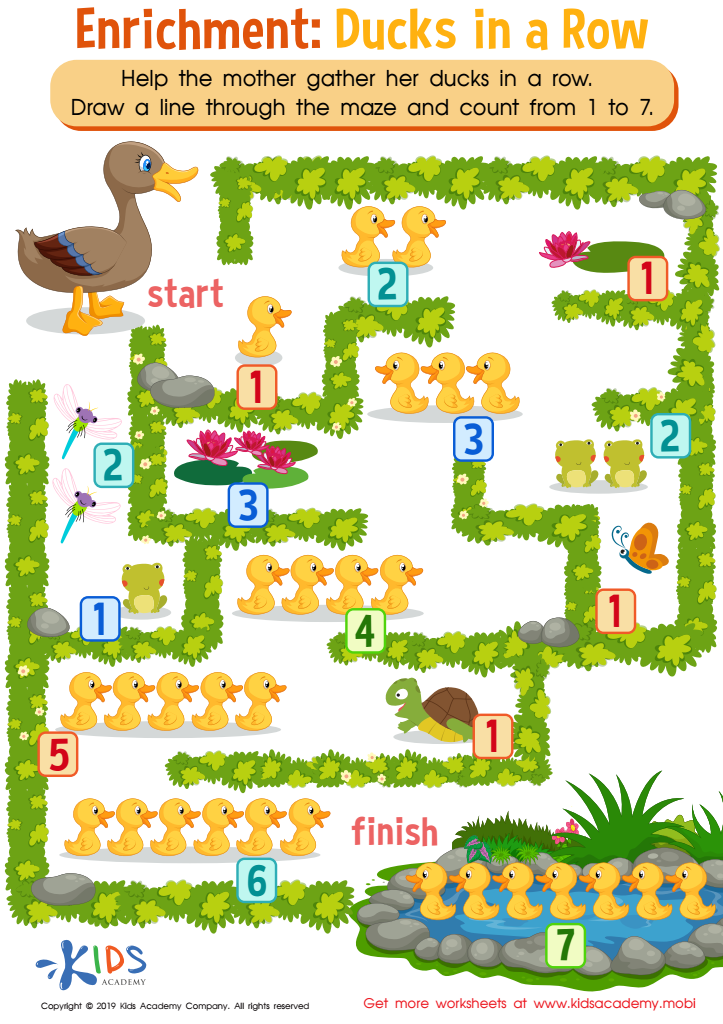
Ducks in a Row Worksheet
 Assign to My Students
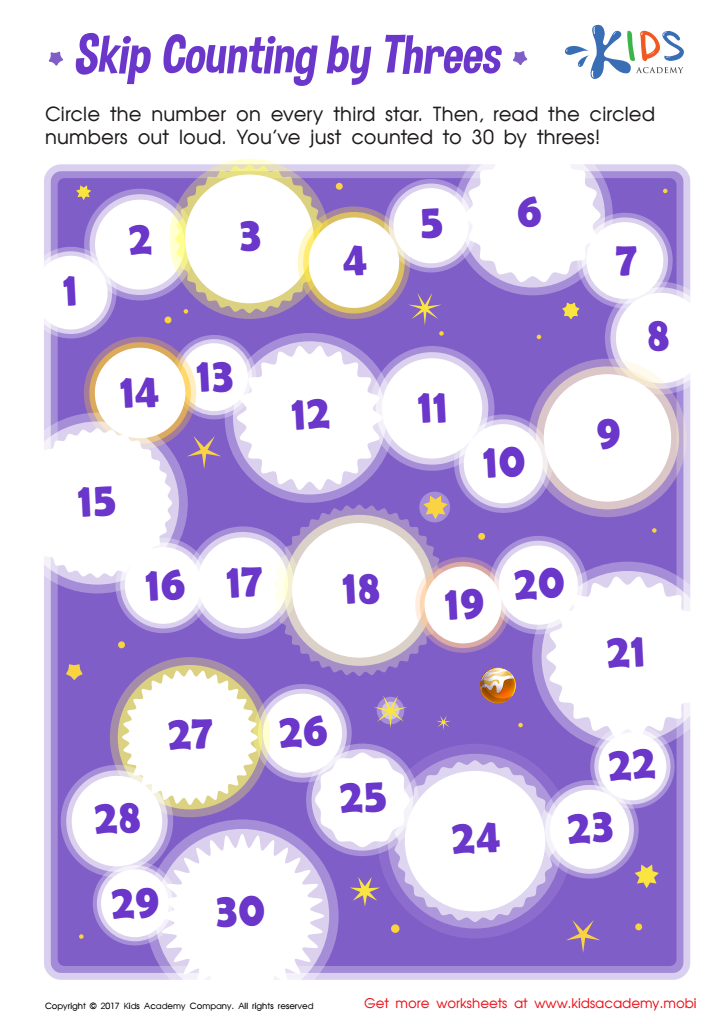
Skip Counting By Three Printable
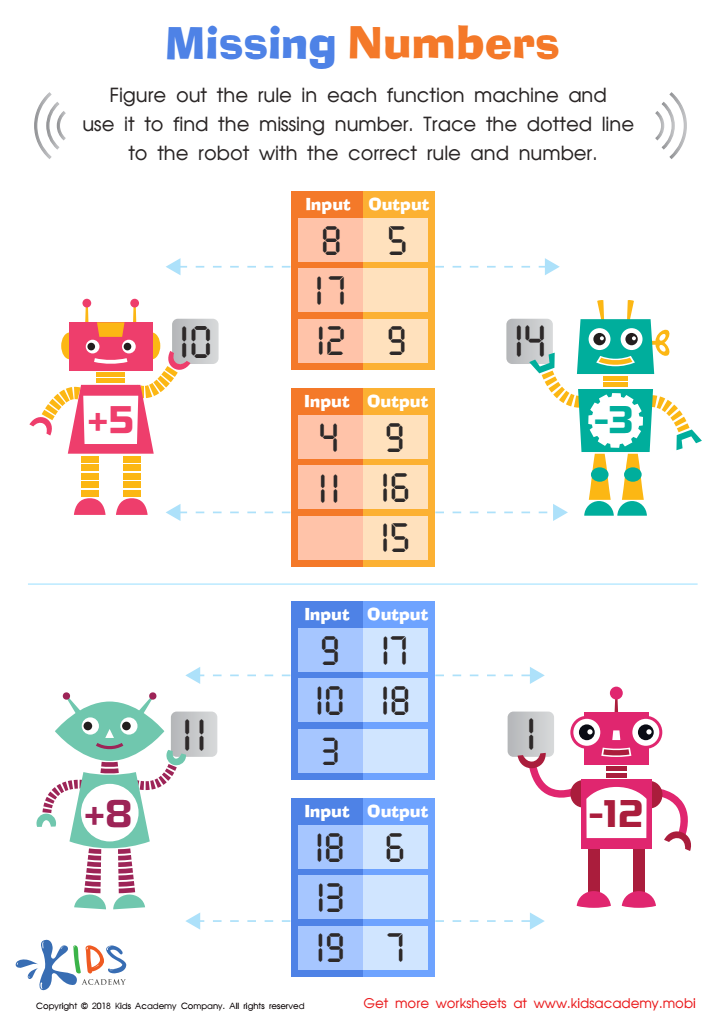
Missing Numbers Worksheet








Understanding and practicing sequencing numbers is a crucial skill for 6-year-olds, and parents and teachers should prioritize it for several reasons. Firstly, sequencing numbers lays a foundational understanding of number order, which is essential for all other arithmetic operations such as addition, subtraction, multiplication, and division. By recognizing patterns in numbers, children begin to develop critical thinking and problem-solving skills that are applicable across all academic subjects.
Additionally, sequencing helps improve memory by teaching children to recall number sequences and patterns, such as counting by twos or fives. This kind of mental practice forms the basis for higher-order math skills they'll tackle in future grades. Early success in understanding sequencing numbers can also boost a child’s confidence, reducing math anxiety that can hinder academic performance through their schooling years.
Moreover, sequencing is everywhere in daily life—from counting toys and telling time to understanding dates and navigating their everyday routines, sequencing skills are constantly in use. These real-world applications reinforce the importance and practicality of mastering basic numerical patterns.
In summary, focusing on sequencing numbers with 6-year-olds equips them with critical cognitive skills, builds their confidence, and bridges classroom learning with real-life situations, setting the stage for a lifelong competence in mathematics.








