
Understanding sizes Math Worksheets for 6-Year-Olds
3 filtered results
Difficulty Level
Grade
Age
-
From - To
Subject
Activity
Standards
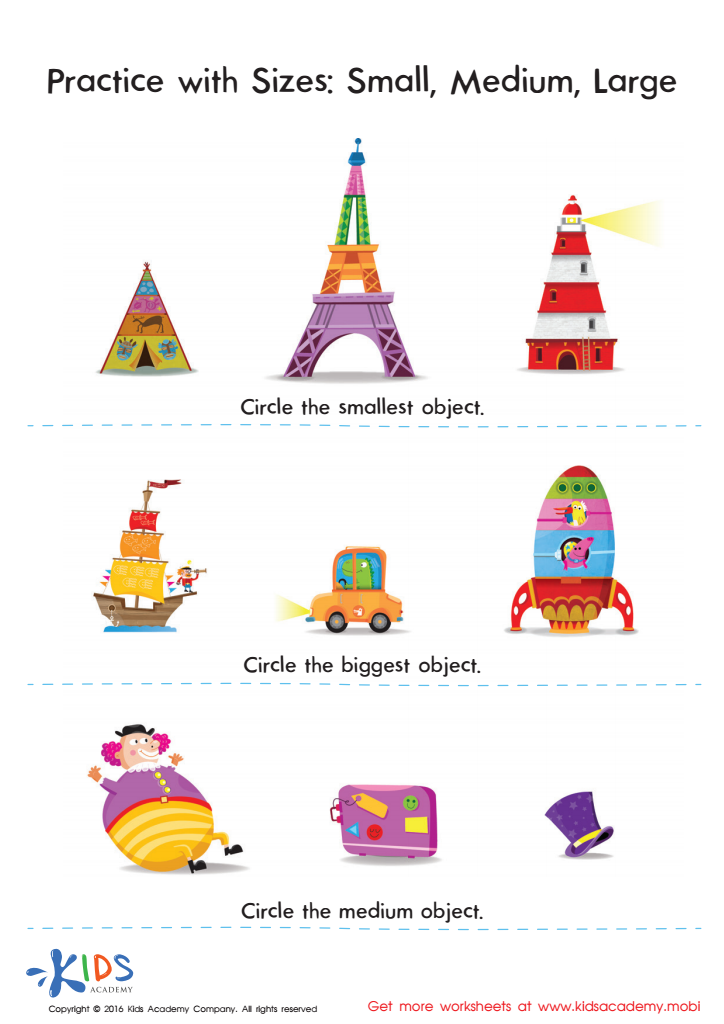
Explore our engaging "Understanding Sizes Math Worksheets" designed specifically for 6-year-olds! These worksheets provide a fun and interactive way for young learners to grasp the concept of sizes, including small, medium, and large. With colorful visuals and relatable examples, children will enhance their ability to compare and categorize objects effectively. Ideal for both classroom settings and home practice, these worksheets encourage critical thinking and improve foundational math skills. Help your child build confidence as they learn to identify, describe, and sort items based on size. Start the journey to mathematical understanding today with our carefully crafted resources!
Favorites
With answer key
Interactive
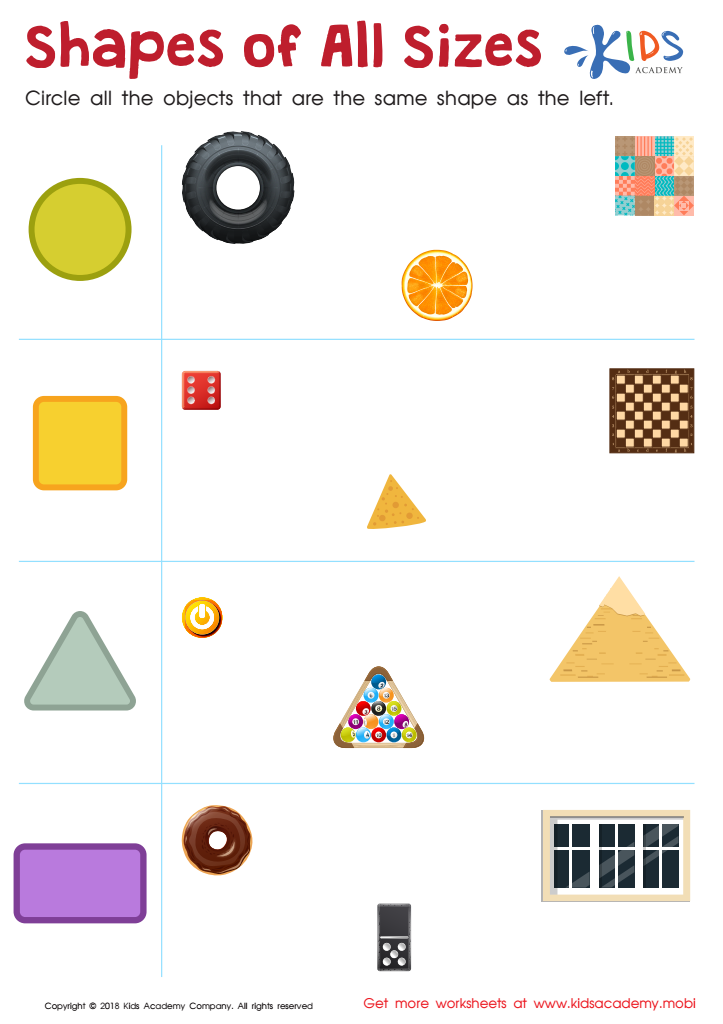
Shapes of All Sizes Worksheet
Students will have fun comparing basic shapes to familiar objects with this worksheet. It's an excellent way to help them recognize similarities in geometric shapes, building strong foundations for understanding congruence and similarity.
 Assign to My Students
Shapes of All Sizes Worksheet
Worksheet
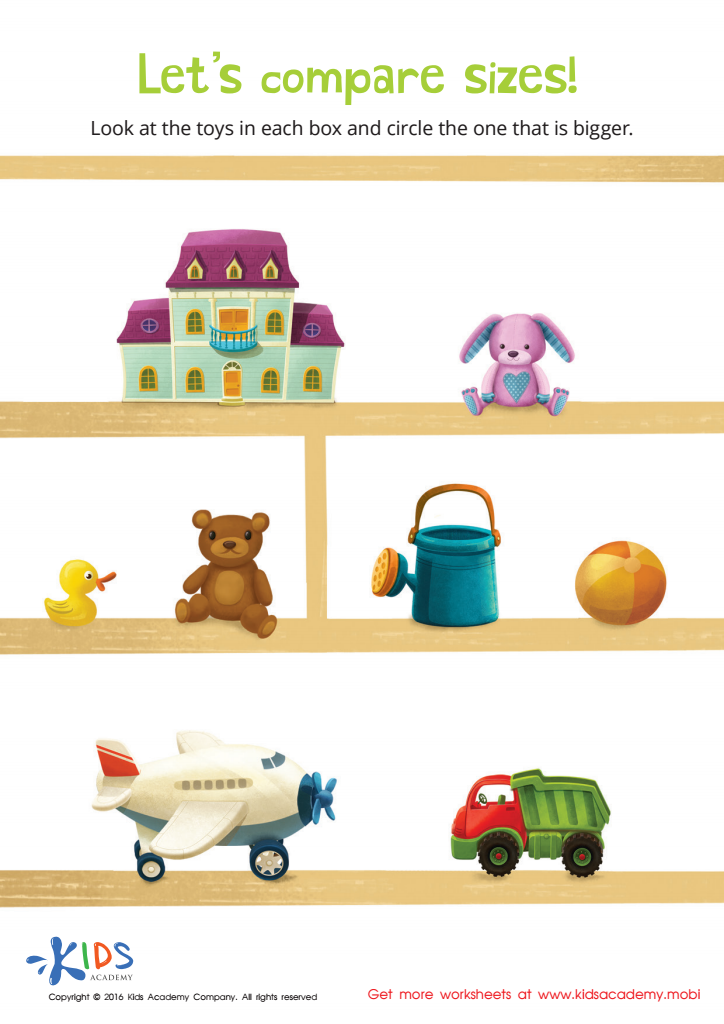
Classifying by Size Sorting Worksheet
Help your preschooler recognize differences in size using this fun worksheet! Your child will engage in important spatial recognition and problem-solving skills while talking with you about objects that can be small or large. Enjoy the vibrant pictures together!
Classifying by Size Sorting Worksheet
Worksheet
Join Kids Academy for Free
Who is primarily going to use this learning content?






.jpg)

Understanding sizes is a foundational mathematical concept for 6-year-olds that plays a crucial role in their cognitive and social development. Parents and teachers should care about this for several reasons. First, mastering the concept of sizes helps children make sense of the world around them. It enables them to compare objects, recognize patterns, and develop observational skills essential for more complex math concepts in the future.
Additionally, grasping sizes fosters critical thinking. For example, when children estimate whether a specific item will fit into a certain space, they practice problem-solving and analytical skills. This also lays the groundwork for geometry, measurement, and comparing quantities later on in their education.
Moreover, understanding size intervals fosters social skills in young learners by helping them articulate and express observations and preferences with peers. Engaging with discussions about size heightens language development and enhances communication abilities.
Finally, this knowledge cultivates a sense of independence. As children learn to assess sizes, they become more confident in making choices, whether it's selecting clothes or toys that fit their needs. In essence, nurturing an understanding of sizes not only supports early mathematical learning but promotes essential life skills for young children.








