Visual perception Measurement Worksheets for 6-Year-Olds
3 filtered results
-
From - To
Explore our engaging "Visual Perception Measurement Worksheets for 6-Year-Olds" designed to enhance your child's cognitive development and visual spatial skills. Perfectly tailored for young learners, these fun and interactive worksheets help children distinguish size, shape, pattern, and spatial relationships. Our evidence-based activities boost abilities essential for math success and overall academic progress. Encourage independent learning with vivid visuals and playful exercises that keep kids motivated. Ideal for both classrooms and at-home learning, these worksheets offer balanced challenges to nurture critical thinking and problem-solving skills in a joyful and educational manner. Unlock the full potential of your child's visual perception today!
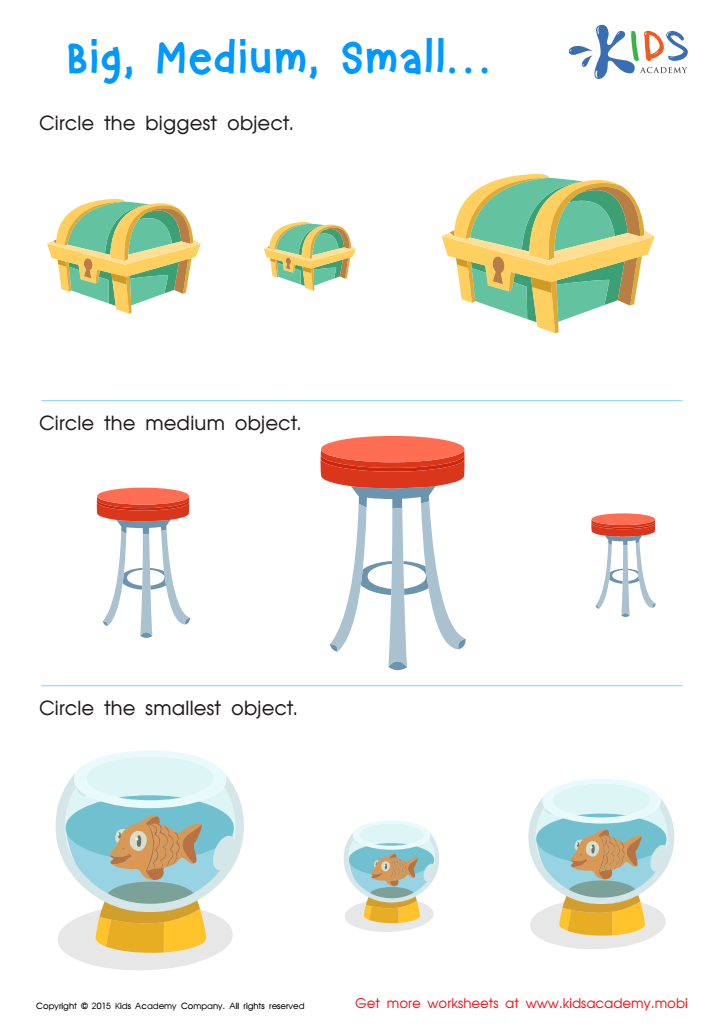
Big Medium Small Worksheet
 Assign to My Students
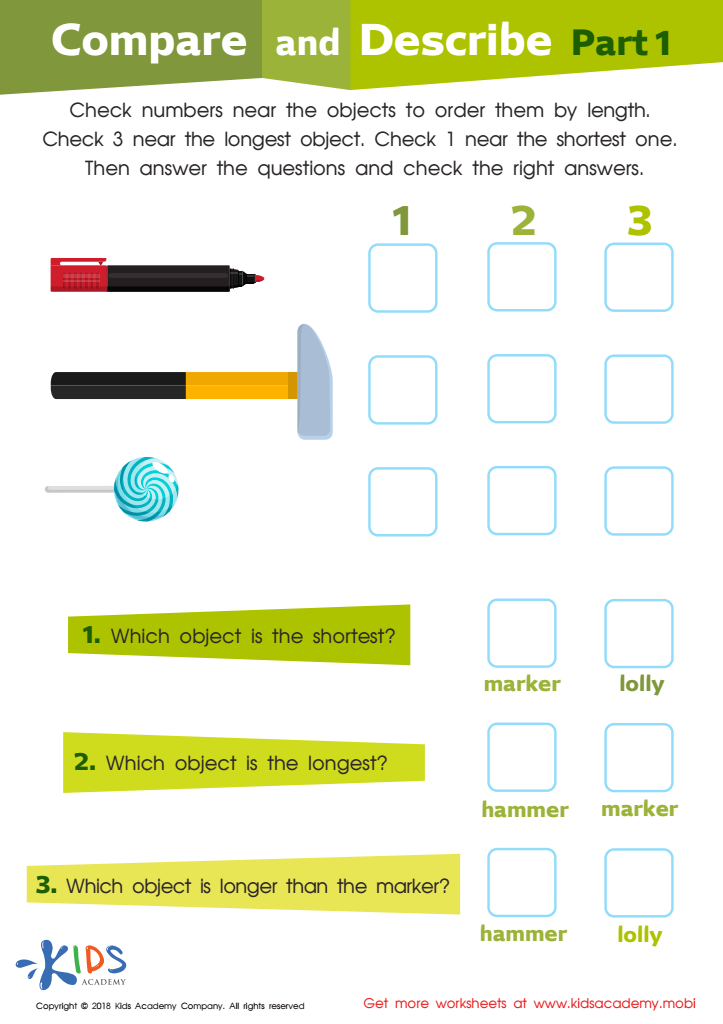
Compare and Describe: Part 1 Worksheet
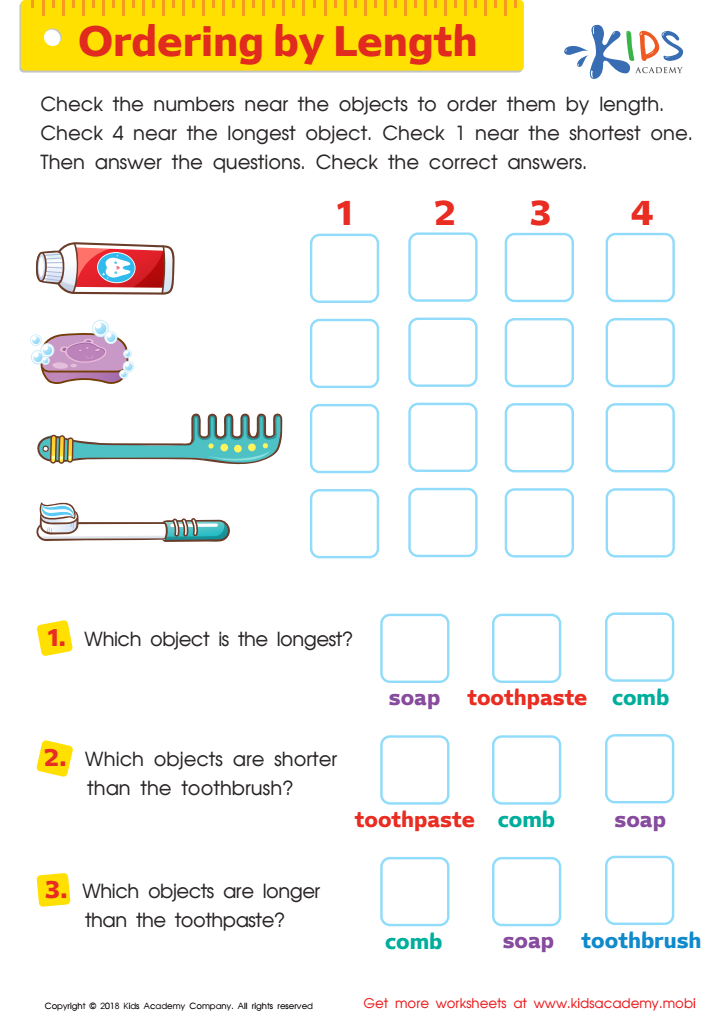
Ordering by Length Worksheet








Visual perception is the brain's ability to make sense of what the eyes see, and it is a crucial skill impacting a child's learning and development. For 6-year-olds, visual perception underpins foundational academic skills like reading, writing, and mathematics. Assessing and measuring visual perception capabilities can help parents and teachers identify potential issues early on, ensuring timely intervention and support.
Children with underdeveloped visual perception might struggle with recognizing letters, numbers, and shapes, which can impede their reading fluency and comprehension. They might also find it challenging to differentiate between similar-looking letters like 'b' and 'd' or misalign objects on a page, leading to frustration and decreased confidence.
Moreover, visual perception supports more than academics. It is integral to social development, hand-eye coordination, and daily activities such as tying shoelaces, drawing, and even playing sports. Delays or deficits in these areas could affect a child's ability to interact with peers and participate in regular activities.
By prioritizing visual perceptual assessments, parents and teachers can better understand each child's unique needs, create tailored learning environments, and employ strategies or exercises that can enhance visual perceptual skills. Consequently, this can set a solid foundation for future academic success and well-rounded development, fostering a more attentive, confident, and engaged learner.








