Reading clocks Time Worksheets for 6-Year-Olds
3 filtered results
-
From - To
Discover our engaging "Reading Clocks Time Worksheets for 6-Year-Olds," designed to make learning about time fun and interactive! These worksheets help young learners develop essential skills in reading analog clocks, understanding hours and minutes, and differentiating between digital and analog time displays. Each activity is tailored to promote critical thinking and boost confidence in time-telling abilities. Perfect for home or classroom use, our resources encourage a hands-on approach, helping children grasp this essential concept. Empower your child with the gift of time management through vibrant illustrations and thoughtful exercises that will make mastering clocks an enjoyable experience!
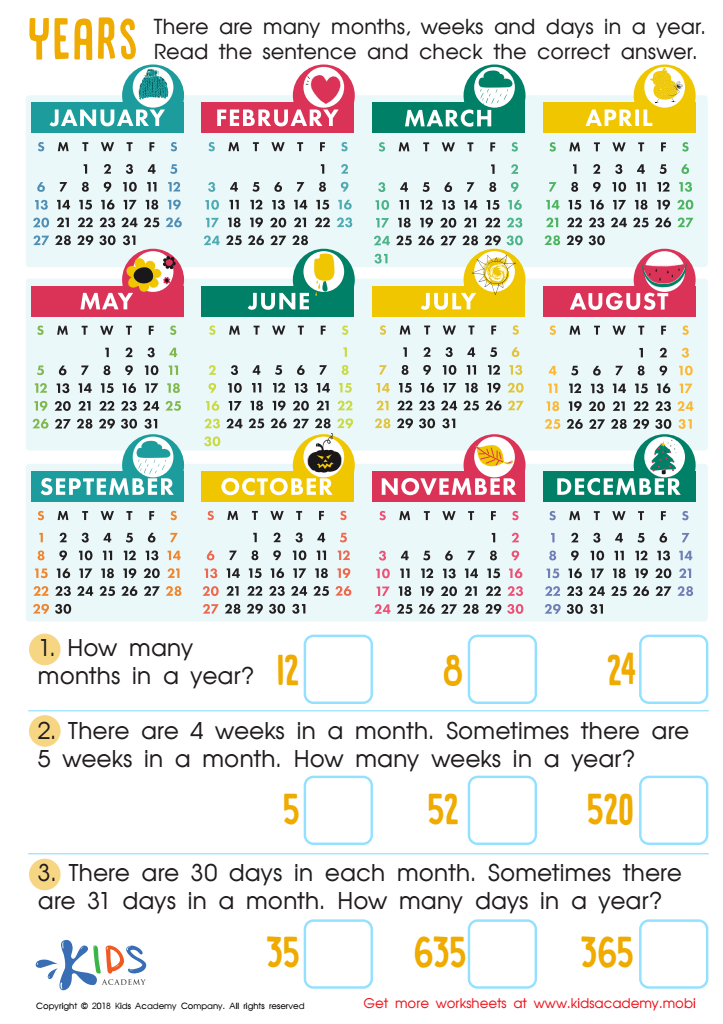
Years Worksheet
 Assign to My Students
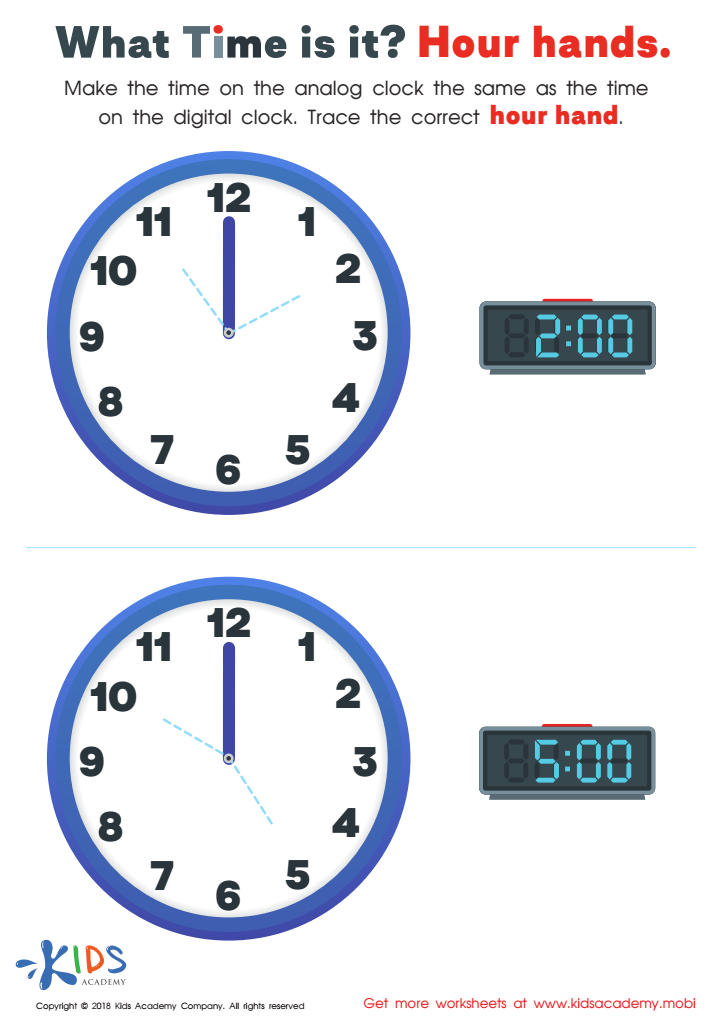
What Time Is it? Hour Hands Worksheet
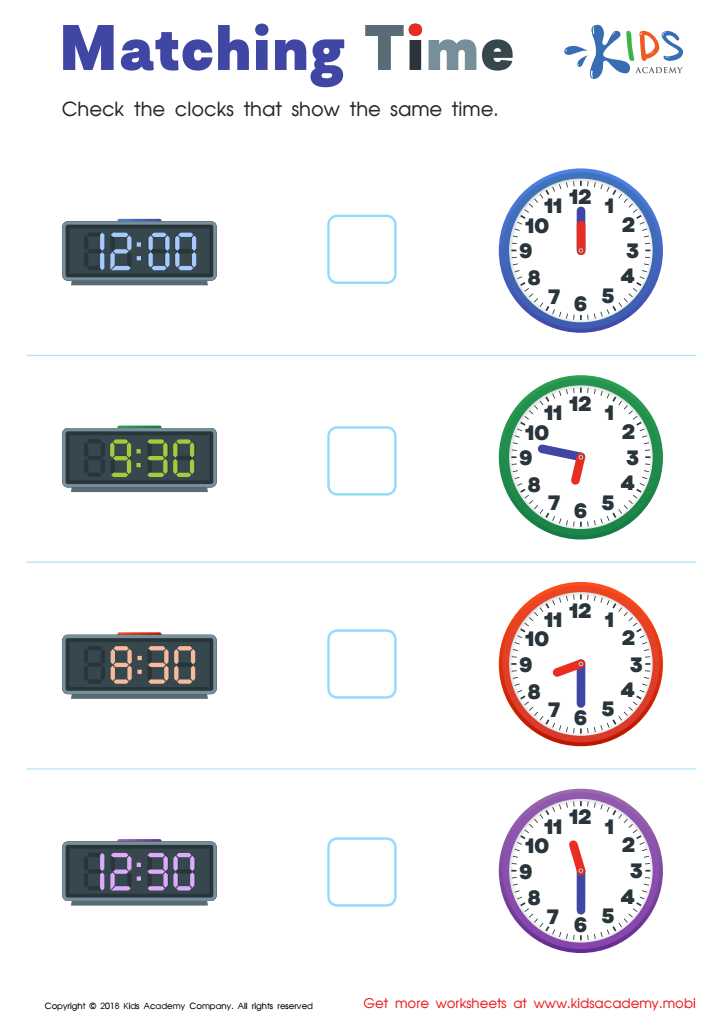
Matching Time Worksheet








Teaching 6-year-olds to read clocks is essential for several reasons. First, it fosters independence. Learning to tell time equips children with the skills to manage their daily routines, such as understanding when to get ready for school, eat meals, or complete homework. This sense of autonomy enhances their confidence and self-discipline.
Second, reading clocks supports cognitive development. It engages critical thinking as children learn to grasp abstract concepts like time, and develops their understanding of numbers, sequences, and increments. These foundational skills will benefit them in more complex math tasks later on.
Additionally, reading time promotes social skills. Children can engage in group activities, such as playdates or time-bound games, effectively managing their schedules. It also encourages conversations about routines and sharing experiences with peers and family.
Finally, for parents and teachers, fostering time-reading skills provides opportunities for engaging learning experiences. For instance, interactive clock games or storytelling that incorporates time concepts make learning fun. In essence, helping children understand how to read clocks not only aids their immediate needs but lays the groundwork for future academic and social success. Thus, both parents and teachers should prioritize this essential skill.








