Logical Reasoning Reading Fiction Worksheets for 6-Year-Olds
4 filtered results
-
From - To
Enhance your child's reading skills with our engaging Logical Reasoning Reading Fiction Worksheets designed specifically for 6-year-olds! These worksheets encourage young learners to think critically as they investigate fun, age-appropriate stories. By analyzing characters, settings, and plots, children develop essential reasoning and comprehension abilities while fostering a love for reading. Each worksheet is designed to encourage creative thought processes and improve problem-solving skills through entertaining narratives. Ideal for home or classroom use, these resources will make reading an enjoyable and educational experience. Equip your little ones with the tools they need to interpret and enjoy fiction in a thoughtful way!
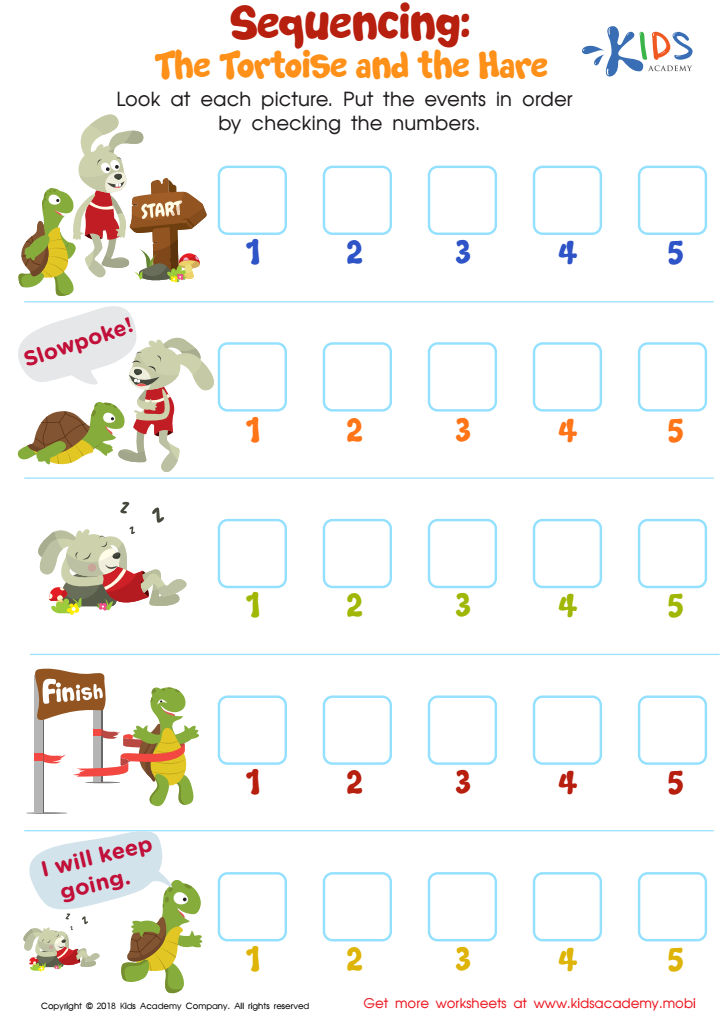
Sequencing: The Tortoise and the Hare Worksheet
 Assign to My Students
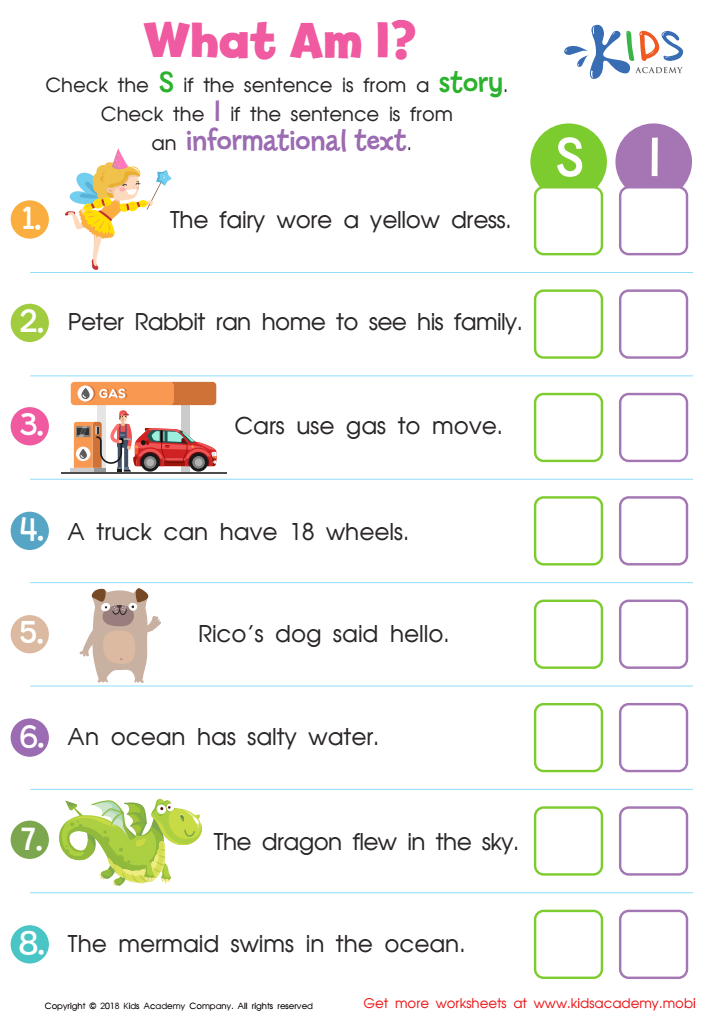
What Am I? Worksheet
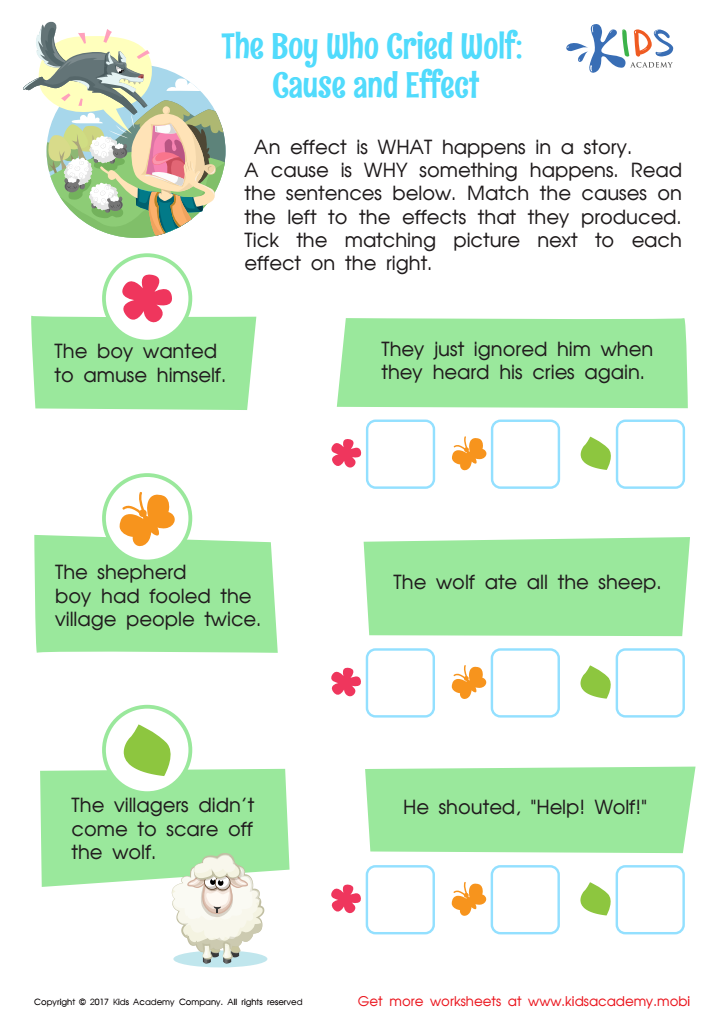
The Boy Who Cried Wolf: Cause and Effect Worksheet
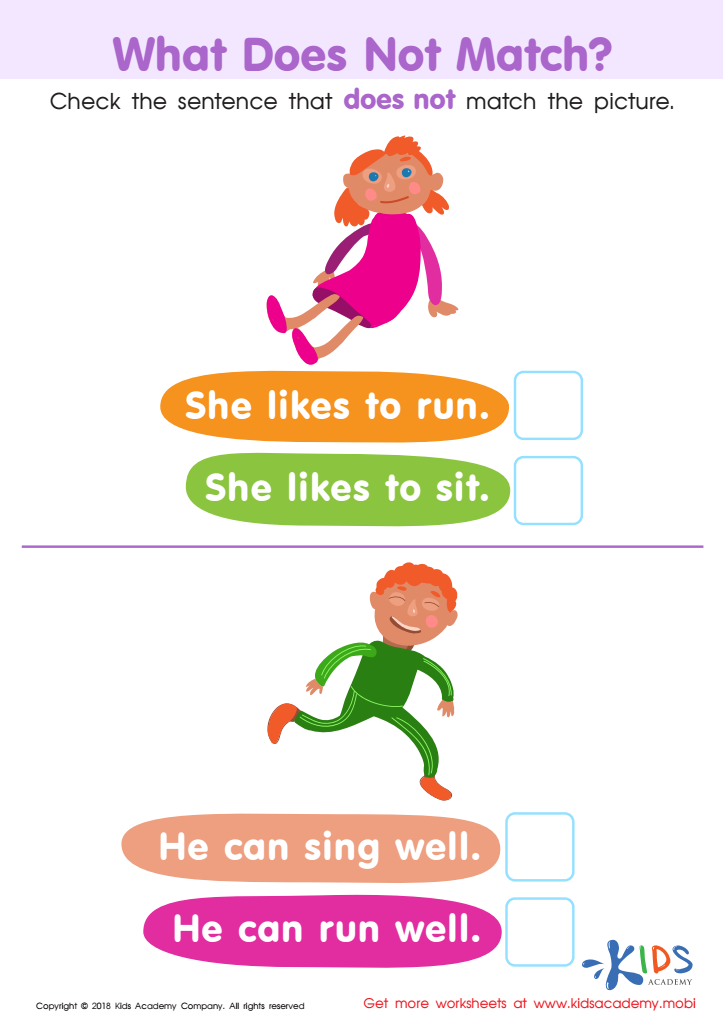
What Does Not Match? Worksheet





.jpg)

Logical reasoning through reading fiction is essential for 6-year-olds because it fosters critical thinking and comprehension skills at a foundational age. Engaging with stories helps children identify patterns, sequences, and cause-effect relationships, which are central to logical reasoning. When they encounter characters who face challenges, children learn to predict outcomes and decipher motives, thereby honing analytical skills.
Furthermore, fiction allows young readers to explore diverse perspectives and complex emotions. This promotes empathy and social understanding, critical components of emotional intelligence. Engaging with narratives helps them to make connections between texts and their own experiences, enriching their understanding of the world.
Teachers and parents should recognize that children's ability to reason logically correlates with their academic success across subjects, not just in language arts. By prioritizing logical reasoning in reading fiction, caregivers set the groundwork for problem-solving skills that will benefit children in mathematics and scientific thinking later on.
Ultimately, nurturing logical reasoning during reading fosters a love for literature while equipping children with the tools to analyze information critically, an invaluable skill for lifelong learning in an increasingly complex world. Making reading a meaningful and engaging experience paves the way for intellectual curiosity and academic proficiency.








