Understanding context Reading Fiction Worksheets for 6-Year-Olds
4 filtered results
-
From - To
Discover our engaging "Understanding Context Reading Fiction Worksheets" tailored for 6-year-olds! These worksheets foster essential reading comprehension skills by helping young learners interpret and analyze stories within their context. Designed to enhance critical thinking, they encourage children to connect text with illustrations and personal experiences. With fun activities focused on identifying keywords and inferring meanings, your child will become more confident in their reading abilities. Perfect for both classroom and home use, these printable resources support early literacy development and make learning enjoyable. Dive into the world of fiction and nurture your child's love for reading today!
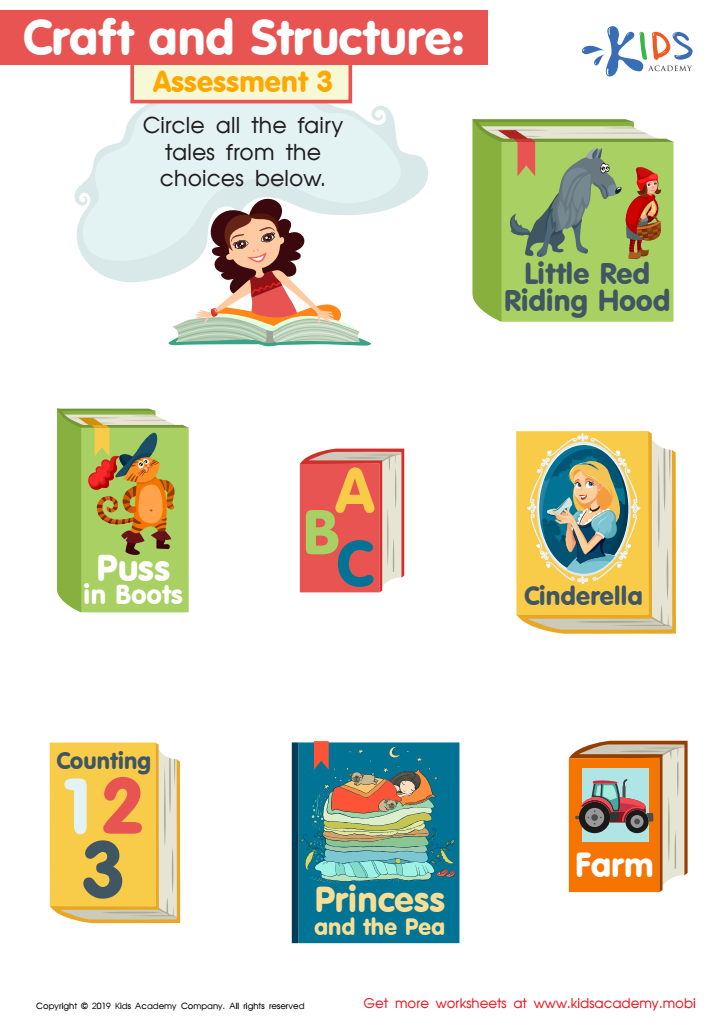
Craft and Structure: Assessment 3 Worksheet
 Assign to My Students
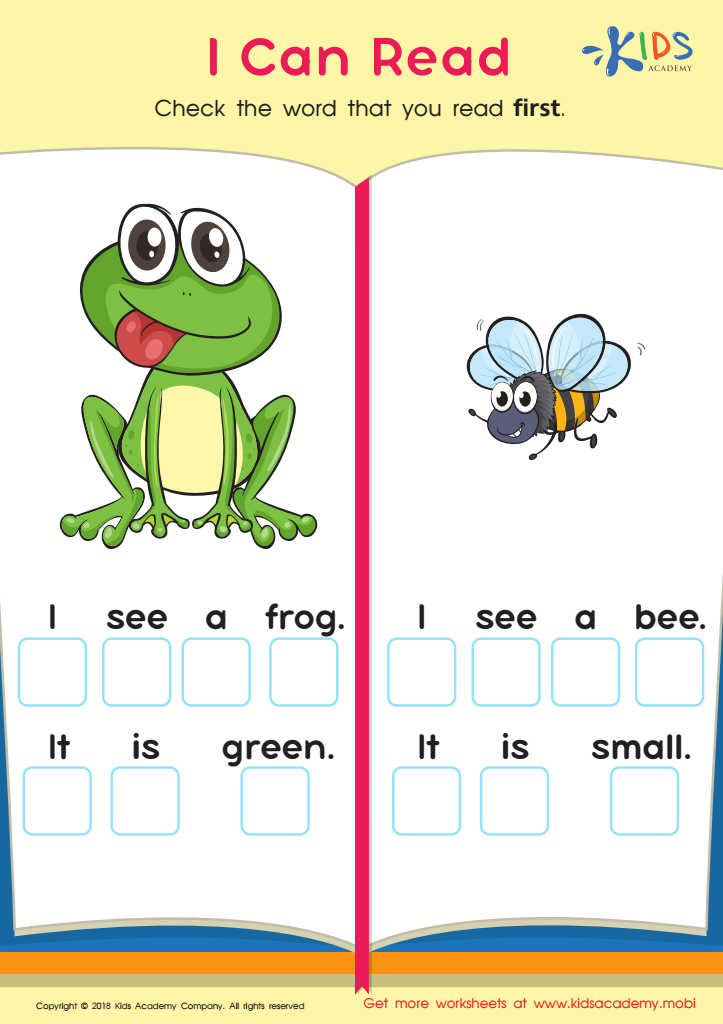
I Can Read Worksheet
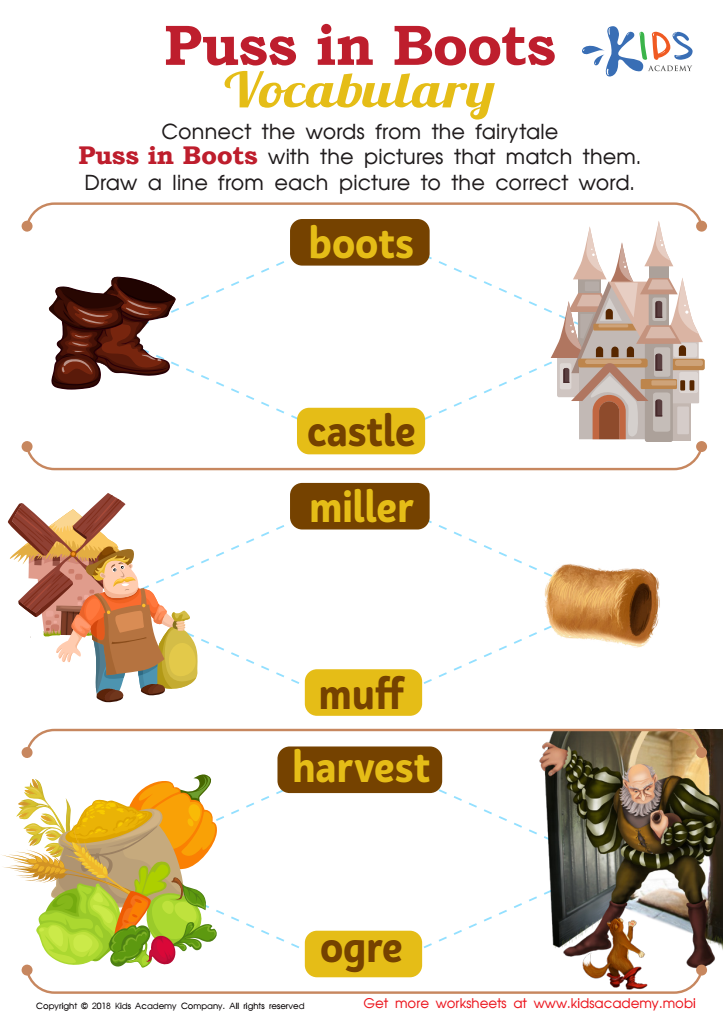
Puss in Boots Vocabulary Worksheet
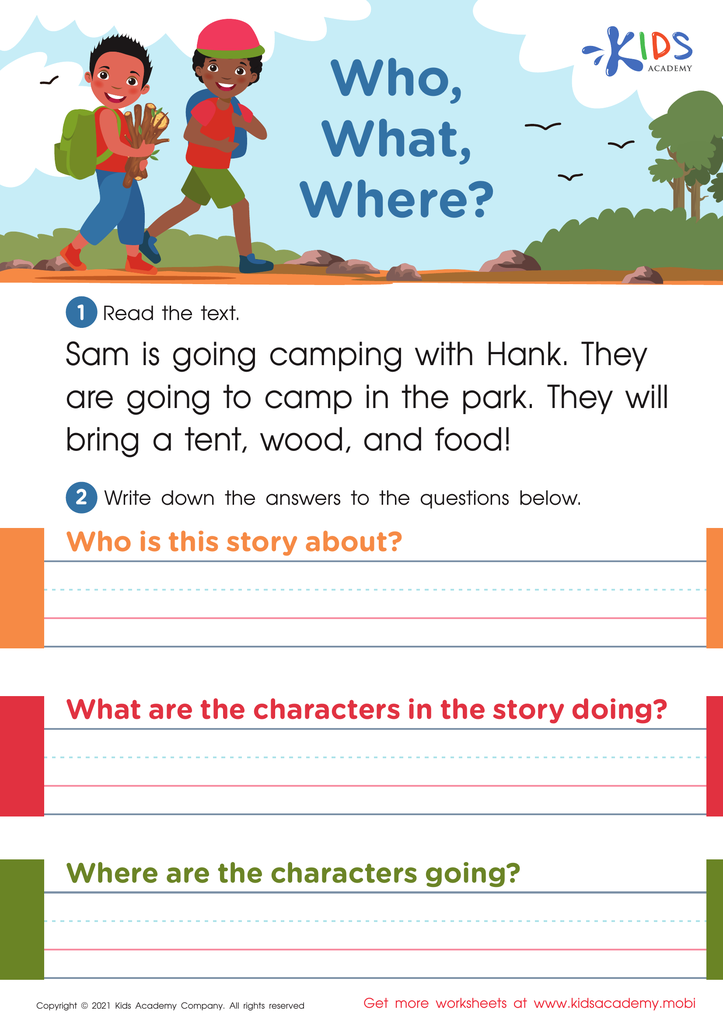
Who, What, Where? Worksheet







.jpg)
Understanding context when reading fiction is crucial for 6-year-olds as it supports their overall literacy development and comprehension skills. When parents and teachers prioritize context, they enable children to grasp the underlying messages of stories, enrich their vocabulary, and enhance their critical thinking. For young readers, context provides the backdrop against which characters act, guiding them in interpreting emotions, motivations, and outcomes.
Engaging with fictional narratives allows children to draw connections between their experiences and those of the characters, promoting empathy and a broader understanding of diverse perspectives. By discussing context, educators and parents can prompt young readers to ask questions about the story’s setting, plot, and character relationships, fostering a deeper engagement with the material.
Moreover, understanding context helps children make inferences and predictions, essential skills as they progress in their reading journeys. It lays a strong foundation for more complex texts in the future. Overall, both parents and teachers play pivotal roles in cultivating a rich reading culture that values context, ultimately nurturing not only proficient readers but also curious, empathetic, and reflective individuals.








